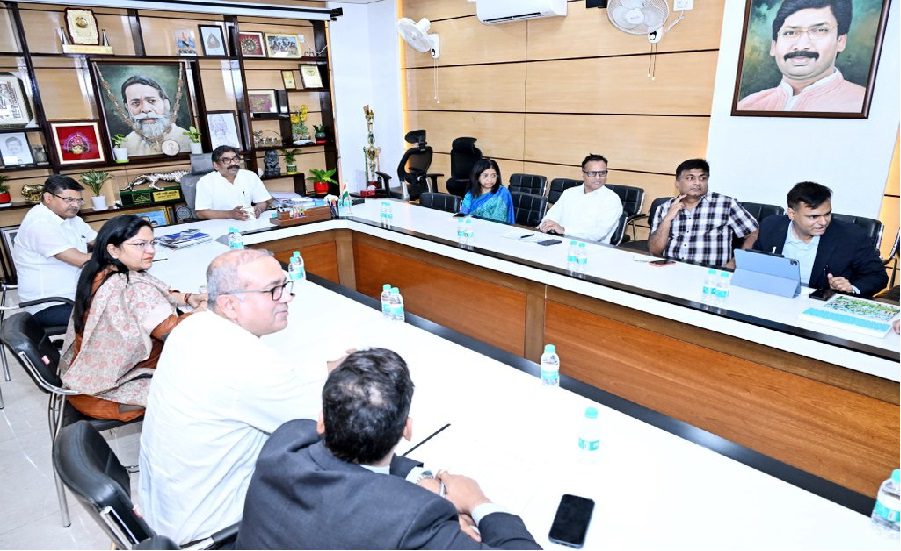
Ranchi: In a major push for education, healthcare, infrastructure and environmental conservation, the Jharkhand Cabinet, chaired by Chief Minister Hemant Soren, approved 49 key proposals during its latest meeting. Among the major decisions were the announcement of the Monsoon Session of the Jharkhand Legislative Assembly from August 6 to August 12, the rollout of AI-enabled classrooms in 1,000 government schools, and the approval for new zoos in Dumka and Giridih.
Briefing the media after the Cabinet meeting, Additional Chief Secretary Ajay Kumar Singh outlined the decisions, describing them as significant steps towards strengthening governance and public service delivery across the state.
Monsoon Session from August 6
The Cabinet approved convening the Jharkhand Legislative Assembly’s Monsoon Session from August 6 to August 12, 2026, with five sittings scheduled during the session.
AI-Powered Classrooms in 1,000 Schools
One of the Cabinet’s biggest education initiatives is the establishment of Artificial Intelligence (AI)-based virtual classrooms in 1,000 secondary schools across Jharkhand.
The School Education Department has received ₹176 crore for the project. Modern AI-enabled studios will also be established at District Institutes of Education and Training (DIETs) in the state’s five administrative divisions to support digital learning.
Two New Government Degree Colleges Approved
To strengthen higher education infrastructure, the Cabinet approved:
- A new degree college at Jamua, Giridih, at an estimated cost of ₹38 crore.
- A degree college at Mandu, Ramgarh, with an approved cost of ₹40.14 crore.
The Cabinet also approved amendments to the operational rules governing colleges affiliated with Vinoba Bhave University, Ranchi University, Sidhu Kanhu University, and J.C. Bose University.
Read also: Jharkhand CM Hemant Soren Orders Digital Forest Mapping, Boosts Eco-Tourism and Green Economy Plans
Relief for Students with Disabilities
The Cabinet granted a major academic relief by exempting students with disabilities who also suffer from serious illnesses—including Thalassemia, Type-1 Diabetes, and Hemophilia—from the mandatory 75% attendance requirement for appearing in board examinations.
Single-Engine Helicopter Ambulance Approved
To improve emergency healthcare access, the state government approved leasing a single-engine helicopter ambulance for rapid air evacuation of critically ill or injured patients.
In another health-related decision, the Cabinet approved the dismissal of Dr. Archana Chaudhary from the state medical service over charges of negligence in official duties.
New Zoos Planned in Dumka and Giridih
In a boost to wildlife conservation and eco-tourism, the Cabinet approved proposals to establish new zoos in the Dumka and Giridih forest divisions.
The initiative is expected to strengthen biodiversity conservation while promoting tourism in the Santhal Pargana and North Chotanagpur regions.
Infrastructure, Judiciary and Governance Get Major Boost
Several administrative and infrastructure projects also received Cabinet approval.
Among the key decisions:
- 63 new posts sanctioned for the Jharkhand High Court to improve judicial efficiency.
- ₹102 crore approved for constructing a 22-km road in East Singhbhum.
- Approval for a new road in Tangar Basti, Ranchi.
- ₹12 crore allocated to the Jharkhand Advocate Welfare Committee.
- ₹39 crore sanctioned for constructing a new administrative building for the Adityapur Municipal Corporation.
- ₹146 crore approved for strengthening the Mines and Geology Department.
- Amendments to Panchayati Raj bylaws, including streamlining building plan approvals for industries.
Other Important Cabinet Decisions
The Cabinet also approved several governance and welfare initiatives:
- Formation of district-level Hostel Construction, Management and Operation Committees to improve hostel facilities for students.
- ₹46 lakh sanctioned for accelerating digitisation in the Accountant General (AG) Office.
- Approval for expediting procedures relating to the Bundu Sub-divisional Court to help reduce the pendency of cases.
The decisions collectively reflect the state’s focus on digital education, healthcare accessibility, judicial strengthening, infrastructure development, environmental conservation, and administrative reforms.