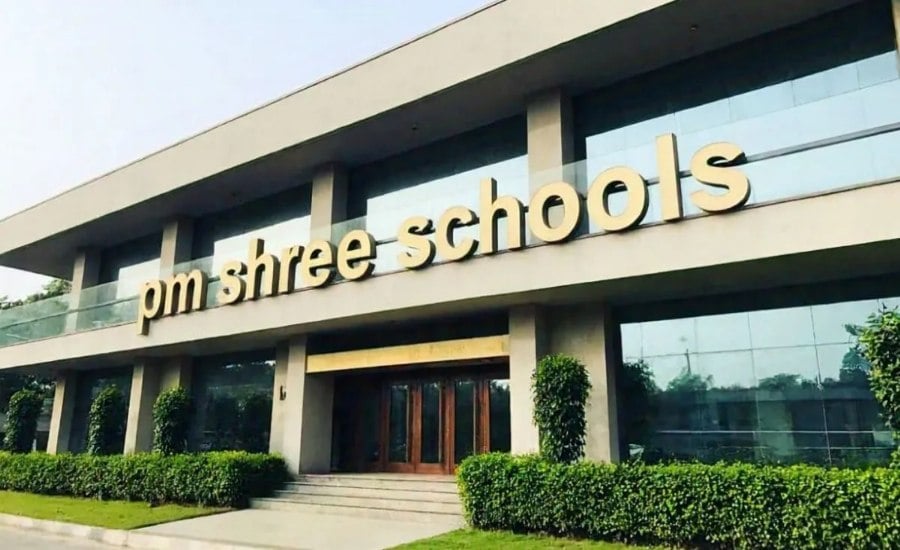
Ranchi: Jharkhand has 413 schools under the Pradhan Mantri Schools for Rising India (PM SHRI) Scheme, with selected institutions across all 24 districts being developed as model schools aligned with the National Education Policy (NEP) 2020.
The network includes 363 state government schools, 25 Kendriya Vidyalayas and 25 Jawahar Navodaya Vidyalayas. The initiative aims to improve school infrastructure, learning resources and teaching practices while creating institutions that can demonstrate new approaches to education for other schools in their regions.
413 Schools Spread Across All 24 Districts
The PM SHRI schools cover all 24 districts of Jharkhand. Palamu has the highest concentration, with around 28 schools, followed by districts including Garhwa and Ranchi.
The selected schools are being developed as exemplar institutions rather than focusing only on physical infrastructure. Their upgrades include modern smart classrooms, information and communication technology facilities, science laboratories, improved libraries and child-friendly infrastructure.
Campus development and beautification are also part of the initiative, with the broader objective of creating safe, stimulating and welcoming learning spaces for students.
For students, these improvements can mean better access to digital learning, practical science education, libraries and facilities designed around their safety and learning needs.
Read Also: Jharkhand Gets Centre’s Approval for Integrated NCD Model, Five Health Programmes to Be Combined
PM SHRI Links School Development With NEP 2020
The PM SHRI Scheme provides a school-level framework for implementing key priorities of NEP 2020. Instead of treating infrastructure development as an end in itself, the programme combines physical facilities with changes in pedagogy, assessment and student development.
The scheme was launched on September 7, 2022, as a Centrally Sponsored Scheme implemented by the Department of School Education and Literacy under the Ministry of Education.
With a total project cost of ₹27,360 crore, PM SHRI aims to strengthen more than 14,500 existing schools across the country as exemplar institutions.
As of July 2026, 13,092 schools had been selected as PM SHRI Schools across States and Union Territories, representing around 90 per cent of the envisaged target. The initiative is expected to directly benefit more than 20 lakh students.
Focus on Experiential and Future-Ready Learning
The PM SHRI approach goes beyond classrooms and buildings. It places emphasis on how students learn and how schools prepare them for future opportunities.
The programme promotes experiential, holistic, integrated, inquiry-based and learner-centred learning. Play- and toy-based approaches also receive attention, particularly during the foundational years.
Another focus is strengthening curriculum, pedagogy and assessment so that students improve their learning outcomes and learn to apply knowledge in practical situations.
The initiative also encourages exposure to 21st-century skills and aims to connect schools with local entrepreneurial ecosystems. This can help students understand emerging opportunities while building skills relevant to a changing economy.
Green Schools and Quality Infrastructure
Environmental sustainability forms another important component of PM SHRI schools. Selected institutions are expected to promote green and environment-friendly practices as part of school quality.
Infrastructure is assessed not simply on availability but also on functionality, safety and suitability for students. The approach covers areas such as school buildings, accessibility and the overall learning environment.
PM SHRI schools are also expected to create inclusive facilities that support children from different backgrounds and ensure that the school environment remains accessible and welcoming.
The School Quality Assessment Framework (SQAF) provides a structured mechanism for assessing and monitoring the quality of PM SHRI schools.
Schools Must Meet Minimum Standards
The selection process involves several eligibility and quality requirements. Schools must meet minimum standards related to buildings, safety, accessibility and basic facilities before they can qualify.
These include:
- A permanent building and barrier-free access
- Safety measures and separate toilets
- Drinking water, hand-washing facilities and electricity
- Library or sports facilities
- Teacher identity cards
Enrolment at elementary and senior secondary levels above the state average
Under the Challenge Method, schools in urban areas need to secure a minimum score of 70 per cent, while rural schools require at least 60 per cent.
The assessment also considers learning outcomes, pedagogy, PM POSHAN, vocational education, green initiatives and the commitment of stakeholders.
Model Schools to Influence Wider Education System
One of the key features of PM SHRI is the expectation that selected schools will serve as examples for other institutions.
The programme envisages PM SHRI schools as places where innovative teaching methods, technology-enabled education and inclusive practices can be tested and demonstrated. Successful approaches can then be shared with neighbouring schools and adapted according to local requirements.
This model is intended to create an impact beyond the 413 selected schools in Jharkhand. By demonstrating practical ways to implement NEP 2020, these institutions can potentially contribute to wider improvements in the state’s school education system.
The broader focus is on developing students who are capable, confident, creative and responsible, with knowledge and skills that can help them participate meaningfully in society.
For Jharkhand, the expansion of PM SHRI schools across all 24 districts brings together infrastructure improvement, technology, teacher development, experiential learning and environmental awareness. The initiative therefore places school-level implementation at the centre of the state’s efforts to build more inclusive and future-ready learning environments.
Read Also: Jharkhand’s Startup Ecosystem Picks Up Pace, Three New Ventures Emerging Every Month