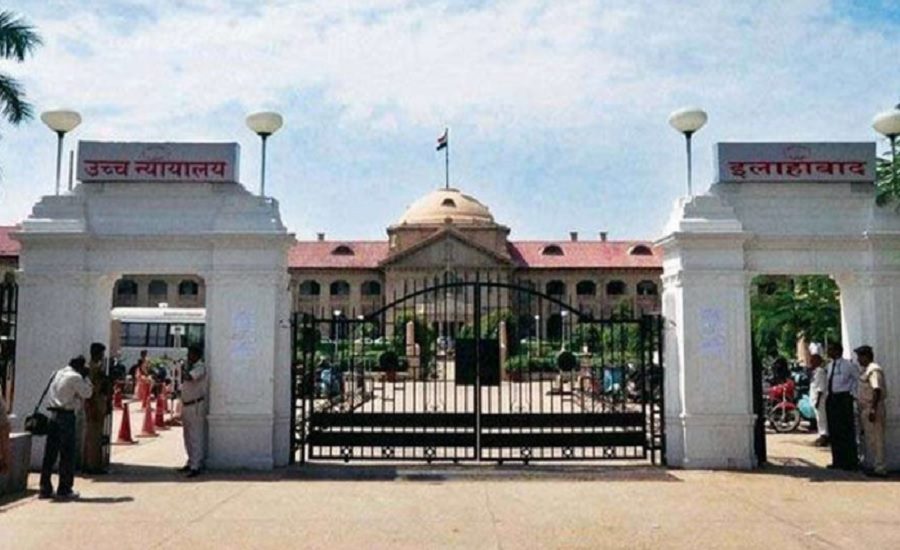
Lucknow: The Allahabad High Court called for a more participative and accountable system of administration within the High Court.
In a detailed judgment, the Allahabad High Court said that the current model of administration requires “recalibration” to ensure greater transparency, institutional accountability, and wider participation of judges in decision-making. The observations were made while dealing with cases that exposed concerns regarding the functioning of the subordinate judiciary.
The Court emphasized that judicial institutions must maintain effective checks and balances in their administrative functioning and ensure that administrative powers are exercised according to established legal procedures.
Why Did The Court Calls for Chief Justice-Centric Administration Recalibration
The Court examined how administrative powers are exercised within the High Court. It observed that important decisions relating to allocation of judicial work, committee functioning, promotions, and administrative responsibilities often remain concentrated among a limited group of senior judges.
Read also: Allahabad High Court Censures ACJM For Ignoring Compromise And Conducting Criminal Trial
According to the judgment, such concentration of administrative authority may reduce opportunities for broader institutional participation and accountability.
The Court noted that a High Court is not merely a hierarchical organization. All judges are constitutional functionaries and should have meaningful opportunities to contribute to institutional governance.
Details of Chief Justice-Centric Administration Recalibration Directive
The Court observed that there was limited space for meaningful dialogue among judges on administrative matters. It further noted that allocation of work was not always linked to measurable performance criteria and that there were no clearly codified and publicly notified parameters governing consideration for elevation and promotion.
The judgment stressed that administrative decisions should be guided by transparent rules and institutional processes rather than broad discretionary powers. According to the Court, a more collaborative model of administration would strengthen institutional confidence and improve judicial functioning.
“Who Judges The Judge?” — Court Discusses Accountability
A major part of the judgment focused on accountability when judges exercise administrative powers rather than judicial powers.
The Court explained that judicial decisions are generally subject to appeals and reviews. However, administrative decisions may not always face similar scrutiny even though they can significantly affect fairness, equality, and institutional integrity. The judgment raised an important question: Who reviews administrative decisions made by judges?
The Court observed that in the absence of formal review mechanisms, accountability often depends on internal discussions, collective deliberations, institutional checks, and public scrutiny. It therefore called for clearly defined administrative standards, reasoned decision-making, and limited but meaningful review mechanisms based on established rules.
High Court Administration Through 84 Committees
The Court also examined the committee system through which much of the High Court’s administrative work is carried out. It noted that administrative functions are currently handled through 84 committees. Over the previous three-and-a-half years, many of these committees were chaired by only a small group of senior judges who were simultaneously handling demanding judicial responsibilities.
The Court clarified that its concern was not merely the number of committees but the concentration of administrative responsibilities among a limited number of judges. According to the judgment, broader participation would improve institutional governance and strengthen accountability mechanisms.
Issues In The Subordinate Judiciary Also Discussed
The broader discussion emerged while the Court was dealing with cases that highlighted operational issues in the subordinate judiciary. One concern involved continued non-compliance with bail-related directions issued by higher courts.
The judgment referred to a large number of bail orders where directions were reportedly not followed properly. The Court stated that such issues should not be viewed merely as isolated mistakes by individual officers but as signs of wider institutional challenges.
Chief Justice-Centric Administration Recalibration: Need For Training And Institutional Reforms
The Court stressed that judicial character and professional standards require institutional support. It recommended regular training programs, accountability mechanisms, corrective measures for administrative lapses, and educational initiatives aimed at strengthening judicial discipline and professional development.
The judgment also suggested that promotions and elevations should be followed by structured training so that judicial officers better understand the consequences of administrative and judicial decisions.
Court Clarifies Its Observations
The Court clarified that its observations were not intended to question the functioning of the office of the Chief Justice or to evaluate the personal satisfaction of any Chief Justice.
Instead, the judgment focused on improving institutional processes, enhancing transparency, and ensuring that administrative powers are exercised through clear, rule-based procedures.
Read also: Allahabad High Court Delivers Key Ruling On Goondas Act And Personal Freedom
FAQs
It refers to a system where major administrative powers and decisions are heavily centered around the office of the Chief Justice and a small group of senior judges.
The Court observed that administrative responsibilities were concentrated among a limited number of judges and recommended greater participation, transparency, and accountability in decision-making.
The Court suggested broader participation of judges in administration, rule-based decision-making, greater transparency, institutional accountability, structured review mechanisms, and regular training programs.