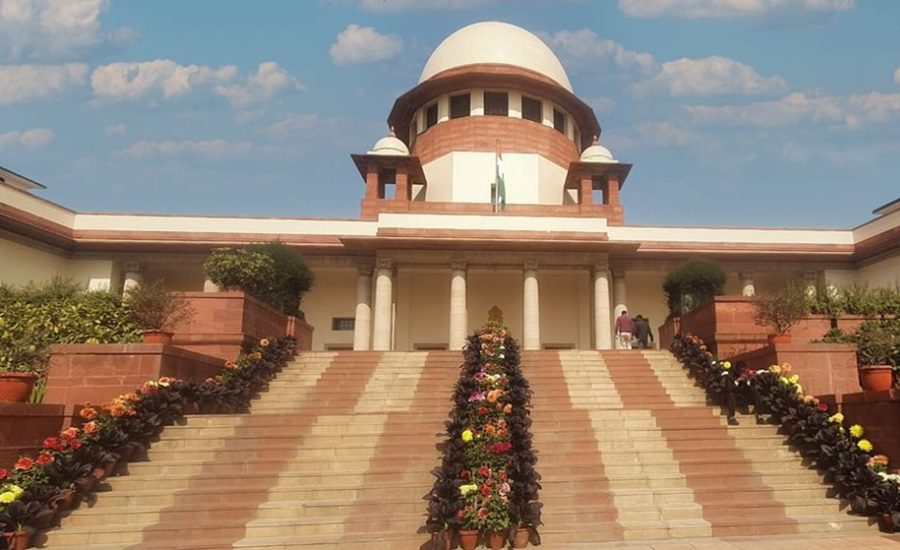
New Delhi: The Supreme Court of India has taken note of an alleged fake medical college in Uttar Pradesh that reportedly operated from a damaged farmhouse in Etah district. The institution allegedly offered several medical and paramedical courses, while an illiterate tea seller was shown as its chairman.
The Court has directed the University Grants Commission (UGC) and other regulatory authorities to issue public advisories asking students and the public to verify an educational institution’s authenticity before taking admission or dealing with it.
UP Fake Medical College Case: Supreme Court Directs UGC To Warn Students Against Fake Colleges
A bench of Justice Ahsanuddin Amanullah and Justice N.V. Anjaria issued the direction while hearing a case concerning the functioning of educational institutions across India.
Read also: Why The Supreme Court Called India’s Criminal Justice System A ‘Wounded Republic’
The case, Ayesha Jain v. Amity University, Noida & Ors., is registered as W.P. (C) No. 531/2025.
The Court said that the suggestion to issue public advisories was useful. It directed the UGC and all regulatory authorities to warn students, parents and members of the public against dealing with educational institutions without first checking their authenticity. The Supreme Court also directed the Union Government to monitor whether the regulatory authorities comply with its directions.
Background of UP Fake Medical College Case
The Supreme Court took note of a newspaper report published by The Indian Express about a purported fake medical college in Mahmoodpur Nagaria village in Uttar Pradesh’s Etah district.
According to the information placed before the Court, the institution was allegedly operating from an old and poorly maintained structure in the middle of a field.
The building reportedly had only two or three rooms, with no other visible structures nearby. The condition of the premises raised serious questions about the institution’s operations. However, the allegations concerning the institution must be distinguished from any final finding of guilt by a competent authority.
Illiterate Tea Seller Shown As Chairman Of The Institution
The Court’s order recorded that Bhagwan Das Singh Baghel, described as an illiterate tea seller, had been shown as the chairman of the institution.
When questioned, he reportedly expressed ignorance about the institution’s activities. However, he admitted that he regularly signed college documents provided by Satender Kumar, who was stated to be running the institution. The matter raised concerns about who was actually managing the institution and how its educational activities were being conducted.
UP Fake Medical College Case: Several Medical And Paramedical Courses Were Allegedly Offered
According to the material placed before the Supreme Court, the institution reportedly offered several courses, including:
- Diploma in Pharmacy (D.Pharma)
- Bachelor of Pharmacy (B.Pharma)
- Bachelor of Science in Nursing (B.Sc. Nursing)
- Diploma in Medical Laboratory Technology (DMLT)
- Bachelor of Medical Laboratory Technology (BMLT)
- Bachelor of Ayurvedic Medicine and Surgery (BAMS)
- General Nursing and Midwifery (GNM)
- Auxiliary Nurse Midwifery (ANM)
These programmes require the relevant recognition, affiliation or approval wherever applicable. Students must verify the status of both the institution and the specific course before paying fees or accepting admission.
Uttar Pradesh Police Initiates Action
Additional Solicitor General K.M. Nataraj informed the Court, on behalf of the Uttar Pradesh government, that local police had reportedly initiated action against Satender Kumar and three other persons following the newspaper report.
The State government had also ordered an independent inquiry into the matter. The Supreme Court appreciated the State government’s response and highlighted the importance of investigating such cases. It also stressed the need for regulatory authorities to develop safeguards to help prevent similar incidents in the future.
Supreme Court’s Directions To UGC And Regulatory Authorities
The Court’s directions focus on public awareness and the verification of educational institutions.
The UGC and other regulatory authorities have been directed to issue public advisories cautioning students, parents, institutions and the general public against taking admission or dealing with an educational institution before verifying its authenticity. The Union Government has also been directed to monitor compliance with these directions.
The aim is to help people identify questionable institutions before they lose money, enrol in unrecognised courses or rely on qualifications whose validity may be in doubt.
Read also: This Supreme Court Observation Could Redefine How Public Office Is Viewed In India
FAQs
According to the information placed before the Court, the institution reportedly offered D.Pharma, B.Pharma, B.Sc. Nursing, DMLT, BMLT, BAMS, GNM and ANM courses.
The Supreme Court took note of a report about an alleged fake medical college operating from a farmhouse in Etah district. It directed the UGC and other regulatory authorities to issue public advisories asking people to verify educational institutions before taking admission or dealing with them.
Students can check the official UGC website at https://www.ugc.gov.in/ to verify a university’s status. They should also confirm course-specific approval and affiliation with the relevant regulatory authority or university before taking admission.