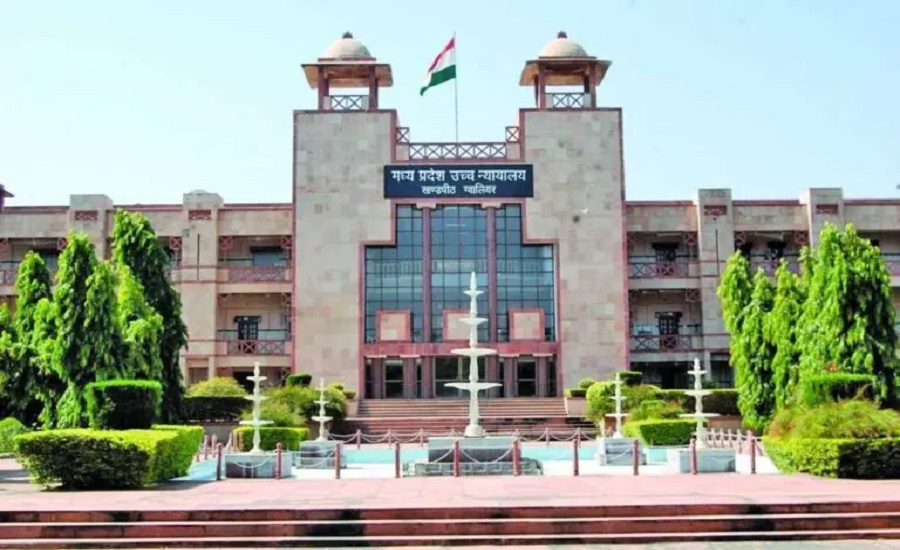
New Delhi: The MP High Court dismissal of civil judge case has reaffirmed that judicial independence does not provide immunity from disciplinary action. The Madhya Pradesh High Court upheld the dismissal of a former Civil Judge, ruling that judicial officers can face action when their conduct reflects a reckless disregard for settled legal principles. The judgment highlights the importance of judicial accountability, integrity and adherence to law within the judiciary.
Details of MP Civil Judge Dismissal
The Madhya Pradesh High Court dismissed a petition filed by a former Civil Judge who challenged his removal from service.
A Division Bench comprising Justice Anand Pathak and Justice B.P. Sharma upheld the State Government’s 2015 order dismissing the judge after a departmental inquiry found him guilty of misconduct while performing judicial duties.
Court Says Judicial Independence Is Not Absolute Immunity
The High Court emphasized that judicial independence is essential for the justice system. However, the Court clarified that independence cannot be treated as protection against disciplinary proceedings when judicial powers are exercised recklessly or in disregard of established legal principles.
The Bench observed that disciplinary authorities are concerned not only with the correctness of an order but also with the manner in which judicial power is exercised.
MP Civil Judge Dismissal: Charges Against the Former Civil Judge
The disciplinary proceedings were based on two separate incidents. The first related to a forest offence case in which the judge ordered the release of a tractor and trolley allegedly involved in illegal sand transportation despite ongoing confiscation proceedings under the Indian Forest Act.
The Court noted that a similar request had already been rejected earlier and that rejection had been upheld up to the High Court level.
MP Civil Judge Dismissal: Second Charge Involved Excise Act Proceedings
The second allegation arose from a criminal case under the Madhya Pradesh Excise Act. According to the findings, after convicting an accused who pleaded guilty, the judge issued notice to a third person even though there was no FIR, charge sheet or cognizance order against that individual. The proceedings were later closed without the person appearing before the court.
Inquiry Found Charges Proven
The departmental inquiry concluded that both charges were established. The inquiry officer found that the judge had consciously exercised judicial powers in disregard of settled legal principles and acted with improper intent. These findings were later accepted by the Administrative Committee and the Full Court, which recommended dismissal.
MP Civil Judge Dismissal: High Court Rejects Petitioner’s Arguments
The petitioner argued that judicial officers should not face punishment merely because a higher court disagrees with their orders. He relied on several Supreme Court judgments that protect judges from disciplinary action for bona fide judicial errors. However, the High Court held that the present case involved more than a simple error of judgment.
The Bench found that the actions reflected recklessness and disregard for legal procedures rather than an honest judicial mistake.
MP Civil Judge Dismissal: Court Finds No Procedural Irregularity
The High Court also rejected claims that the inquiry process was unfair. It held that the disciplinary proceedings were conducted properly and that the former judge was given adequate opportunity to present his defence.
The Court further ruled that the punishment of dismissal was not disproportionate considering the seriousness of the misconduct.
Read also: Justice Siddharth Mridul Controversy: How an LPG Dealership Sparked Questions Over Judicial Ethics