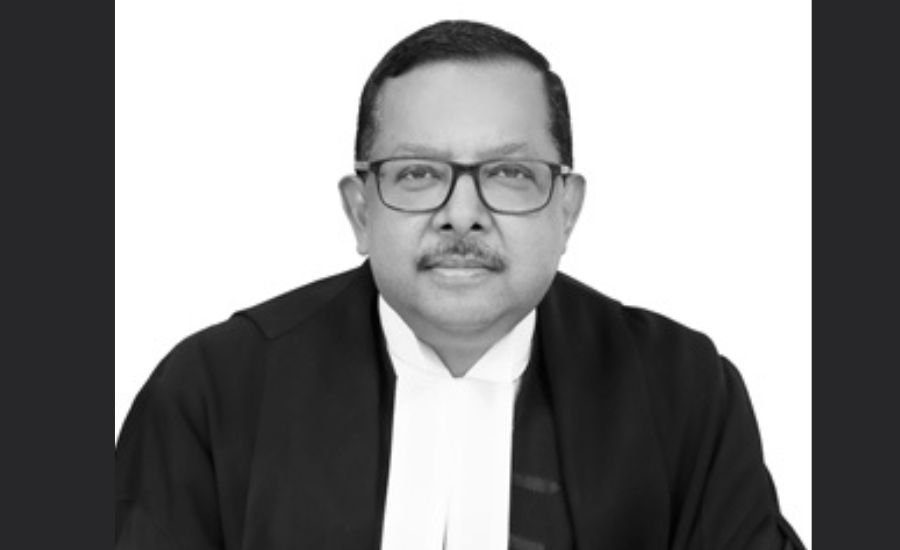
New Delhi: Students cannot be threatened for questioning, said Justice Ujjal Bhuyan, a judge of the Supreme Court of India. Speaking at the 13th Convocation of National Law University (NLU) Delhi, he stressed that the right to ask questions and express different opinions is a core part of democracy, citizenship, and constitutional responsibility.
Justice Bhuyan said that punishing students for expressing different views goes against constitutional values and weakens democratic principles.
13th Convocation of National Law University: Justice Ujjal Bhuyan Highlights Importance Of Questioning
Addressing postgraduate students at NLU Delhi, Justice Bhuyan said that questioning authority and expressing opinions are important rights in a democratic society. He stated that students should never face threats or punitive action for asking questions or presenting a different point of view.
Read also: Justice Ujjal Bhuyan Urges More Openness in Supreme Court Judge Appointments
According to him, the right to question is not an act of defiance. Instead, it is an essential expression of liberty, citizenship, and constitutional responsibility.
Key Statement By Justice Bhuyan
Justice Bhuyan said:
“When students express a different point of view, when students ask questions, they cannot be threatened with punitive action. That is unconstitutional. That is a misuse of power and office.”
His remarks underline the importance of protecting free thought and open discussion in educational institutions.
13th Convocation of National Law University: Dissent Is Essential For A Healthy Democracy
Justice Bhuyan emphasized that dissent plays a vital role in a constitutional democracy.
He explained that democracy does not require everyone to think alike. Instead, it creates a framework where people with different beliefs, opinions, and convictions can live together with equal dignity. According to him, tolerance of disagreement is one of the strongest pillars of democratic governance.
Democracy Thrives On Different Opinions
Justice Bhuyan said a democratic society cannot be built on the expectation that everyone will share the same views. He noted that differences of opinion are natural and should be accommodated within the constitutional framework.
He added that constitutional democracy requires:
- The State listens to citizens.
- Citizens listen to one another.
- Institutions to remain accountable.
- Society to respect dissenting voices.
Constitution Supports Tolerance And Diversity
Justice Bhuyan referred to the landmark Supreme Court judgment in Bijoe Emmanuel v. State of Kerala delivered by Justice O. Chinnappa Reddy.
Recalling the famous observation from the case, he highlighted that India’s tradition, philosophy, and Constitution all encourage tolerance. He said those words remain highly relevant even today.
Tolerance Is A Constitutional Value
Justice Bhuyan explained that tolerance is not merely a matter of personal courtesy. He described it as a constitutional value that strengthens democracy.
According to him, democracy becomes meaningful when different voices can coexist, be heard, and be treated with dignity.
13th Convocation of National Law University: Intolerance Is Against The Spirit Of The Constitution
Justice Bhuyan warned that intolerance is incompatible with constitutional values. He said an intolerant mindset is contrary to the spirit of the Constitution and harms democratic culture.
The judge observed that the true test of a democracy is not how it treats popular opinions but how it responds to difficult and unpopular viewpoints.
Respecting Dissent Strengthens Democracy
Justice Bhuyan said that the ability to live with disagreement is not just a social virtue. It is a fundamental feature of a liberal constitutional democracy.
He stressed that respecting differing opinions helps preserve democratic institutions and constitutional freedoms.
Universities Must Encourage Independent Thinking
Justice Bhuyan also highlighted the special role of universities in promoting free thought and open discussion. He said universities should be among the first places where the habit of thinking freely develops.
According to him, educational institutions should encourage students to question ideas, engage in debate, and develop independent perspectives.
Why Universities Matter
The judge said universities should not become spaces where ideas are accepted without examination. Instead, they should foster critical thinking, intellectual freedom, and constructive dialogue.
Such an environment helps create informed citizens who can contribute positively to democracy.
Read also: Justice Ujjal Bhuyan Flags Executive Interference in Judge Transfer, Questions Collegium Integrity
FAQs
He said democracy thrives on different viewpoints and constructive disagreement. Dissent helps ensure accountability, liberty, and constitutional governance.
Justice Bhuyan said students cannot be threatened or punished for asking questions or expressing different opinions. He called such actions unconstitutional.
Justice Bhuyan said universities should encourage independent thinking, free expression, critical analysis, and open debate among students.