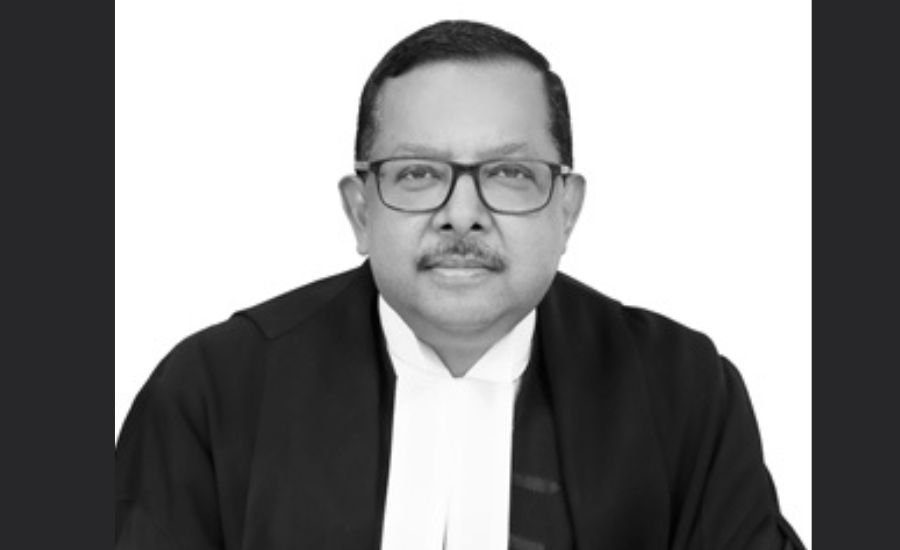
New Delhi: Justice Ujjal Bhuyan has raised serious concerns about the transparency of the Supreme Court Collegium, saying that not giving reasons for recommending judges is doing a disservice to deserving members of the judiciary. Speaking at a legal discussion, the Supreme Court judge said citizens have a right to know why judges are appointed and warned that the recent trend of issuing collegium resolutions without reasons weakens public confidence in the judicial system.
Justice Bhuyan Calls for Greater Transparency
Justice Ujjal Bhuyan said the judiciary should not hesitate to explain why a person is recommended for appointment as a judge. He stressed that providing reasons does not weaken the institution. Instead, it strengthens public trust and recognizes judges who have earned elevation through merit.
Read also: “Why Should IAS Officers’ Children Get Reservations?” Supreme Court Raises Creamy Layer Concern
Recent Collegium Resolutions Lack Reasons
Justice Bhuyan pointed out that the last three Supreme Court Collegium resolutions, including the latest one in 2025, did not mention any reasons for recommending candidates for elevation. According to him, this is a major departure from earlier practice, where recommendations usually included at least brief justifications. Even if those reasons were sometimes standard or repetitive, they still explained the decision.
Justice Ujjal Bhuyan: “Is This a Step Back From Transparency?”
Questioning the recent approach, Justice Bhuyan asked whether the judiciary was moving away from the principle of transparency. He said openness is important because citizens have the right to know how constitutional institutions function and who is appointed to constitutional courts.
Justice Ujjal Bhuyan: Public Has the Right to Know
Justice Bhuyan emphasized that people are entitled to know about judges and their work. He said transparency in judicial appointments helps build confidence in the justice system and ensures accountability without harming judicial independence.
Earlier Collegium Resolutions Were More Detailed
Recalling earlier practices, Justice Bhuyan referred to collegium resolutions issued during the tenure of former Chief Justice U.U. Lalit. He noted that those resolutions contained detailed and well-reasoned explanations supporting recommendations for judicial appointments.
Example of the January 18, 2023 Resolution
Justice Bhuyan cited the Supreme Court Collegium’s resolution dated January 18, 2023, which reiterated the recommendation for Senior Advocate Saurabh Kirpal’s appointment as a judge of the Delhi High Court. He said the reasoning given in that resolution was convincing, even though the recommendation has remained pending for more than three years.
Justice Ujjal Bhuyan: Opacity in the Collegium System
Justice Bhuyan observed that the collegium process remains highly confidential. He said the reasons for rejecting or delaying recommendations are rarely disclosed, and the standards used in decision-making are not publicly available, making the process less transparent.
Senior Advocate Saurabh Kirpal Supports Disclosure
Senior Advocate Saurabh Kirpal, who also participated in the discussion, agreed that recording reasons prevents arbitrariness. He compared India’s collegium process with judicial confirmation hearings in the United States, where nominees face extensive public scrutiny before appointment.
Justice Bhuyan Suggests Reviewing the Collegium System
Justice Bhuyan recommended that the JALDI research team examine the lack of transparency in the collegium system. He said discussing these issues does not damage the judiciary. Instead, it helps improve public understanding and confidence in judicial institutions.
Light-Hearted Closing Remark
Ending his address on a lighter note, Justice Bhuyan joked that just as retired judges are sometimes expected to observe a cooling-off period, perhaps judges should also have a cooling-off period after delivering public lectures.
Why This Matters
The Supreme Court Collegium is responsible for recommending appointments and transfers of judges in the higher judiciary.
Justice Bhuyan’s remarks have renewed the debate over balancing confidentiality with transparency in judicial appointments. His comments highlight the importance of giving clear reasons for recommendations to strengthen public trust and recognize deserving judges.
Read also: Justice Ujjal Bhuyan Flags Executive Interference in Judge Transfer, Questions Collegium Integrity