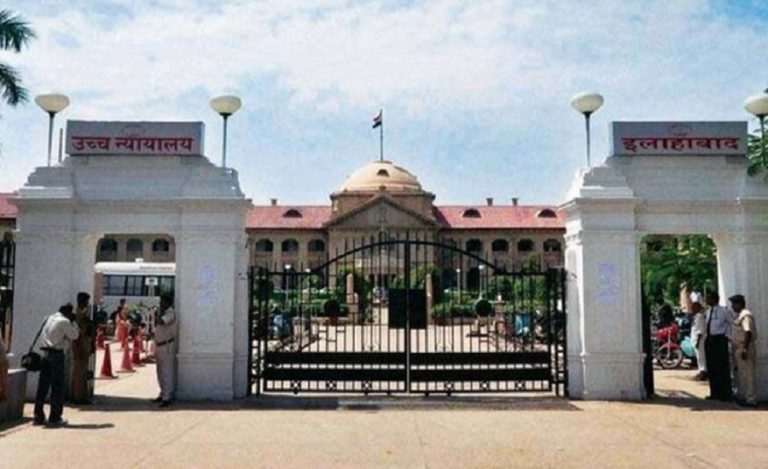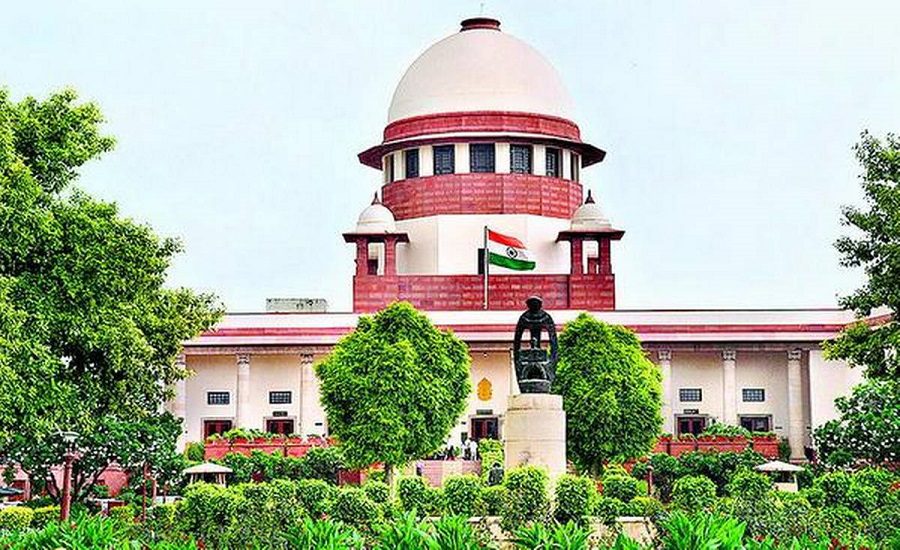
The Supreme Court on Friday raised important questions over whether children from economically and educationally advanced OBC families should continue receiving reservation benefits.
Hearing a petition related to Karnataka’s creamy layer policy, Justice BV Nagarathna observed that families that have already gained social and economic advancement through reservation should eventually move beyond the system to ensure benefits reach those who still remain disadvantaged.
The remarks came during proceedings before a bench comprising Justice Nagarathna and Justice Ujjal Bhuyan.
Court Raises Concern Over Social Mobility
During the hearing, Justice Nagarathna pointed to the larger purpose behind reservation policies and questioned whether benefits should continue across generations once a family has achieved upward mobility.
She remarked that if both parents are IAS officers or hold senior government positions, the family has already attained educational and economic empowerment, which also improves social standing. In such cases, she questioned the need for children to continue availing themselves of reservation benefits.
The court stressed the need to maintain balance while implementing reservation policies meant for socially and educationally backward communities.
Justice Nagarathna noted that reservation had helped many families progress, but continuing the same benefits indefinitely could defeat the larger objective of uplifting genuinely disadvantaged sections.
Karnataka Candidate Challenged Creamy Layer Exclusion
The case relates to a candidate from the Kuruba community, classified under Category II(A) among Karnataka’s backward classes, who was selected for the post of assistant engineer (electrical) in Karnataka Power Transmission Corporation Limited under the reserved category.
However, the District Caste and Income Verification Committee denied him a caste validity certificate after concluding that he belonged to the creamy layer category.
Authorities assessed the family’s annual income at nearly Rs 19.48 lakh. Both parents were government employees, and officials held that their income exceeded the prescribed limit for reservation eligibility.
The Karnataka High Court later upheld the exclusion, ruling that the candidate could not claim reservation benefits under the state’s creamy layer policy.
Debate Over Salary Income and Creamy Layer Rules
Appearing for the petitioner, advocate Shashank Ratnoo argued that salary income alone cannot determine creamy layer status in the case of government employees.
He submitted that under existing rules, the status of parents—such as whether they belong to Group A or Group B services—is considered more important than salary figures. He also argued that income from salary and agriculture should not be counted while assessing creamy layer eligibility.
Ratnoo warned that treating salary as the sole criterion could result in even lower-ranking government staff, including clerks and drivers, losing reservation benefits.
He further argued that including all forms of income in creamy layer calculations would blur the distinction between OBC reservation and Economically Weaker Section (EWS) reservation.
The petitioner also relied on a Karnataka government clarification stating that salary and allowances of state government employees should not be considered while determining creamy layer status.
However, the Karnataka High Court had earlier ruled that this exemption applied only to reservations under the Union government and not to state-level reservations in Karnataka.
The Supreme Court is continuing to examine the broader legal and constitutional questions surrounding creamy layer criteria and the future scope of reservation benefits for socially advanced OBC families.