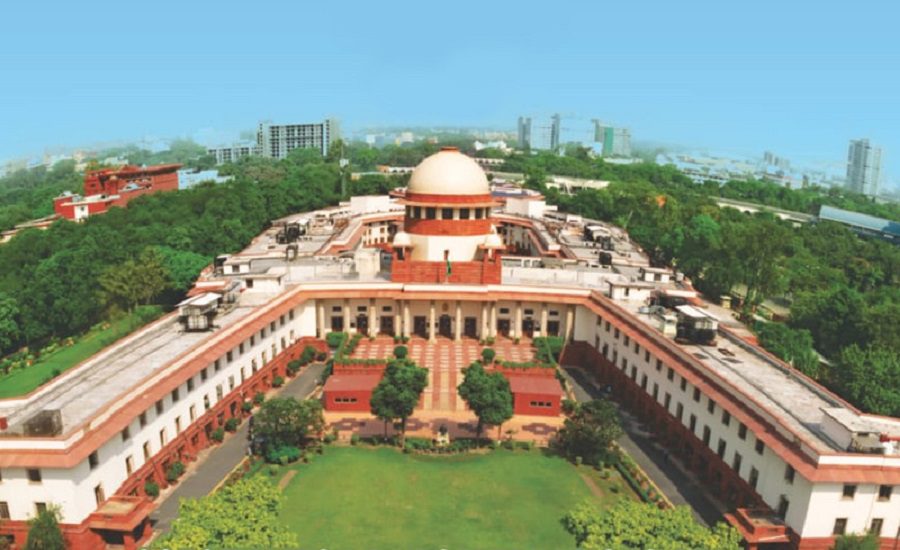
New Delhi: The media reporting rules have been clarified by the Supreme Court of India. The Court has said that recognised news organisations can continue reporting court proceedings, but they cannot circulate audio or video clips of hearings without prior permission. The clarification removes confusion over an earlier interim order while protecting both media freedom and the integrity of judicial proceedings.
The clarification came in a Bench led by Chief Justice of India Surya Kant, along with Justices Joymalya Bagchi and V. Mohana, during the hearing of the case related to the use of court recordings.
Media Reporting Rules: What Did the Supreme Court Clarify
The Supreme Court said its earlier interim order should not be interpreted as a complete ban on media reporting. Recognised news outlets can continue covering court proceedings and inform the public about important legal developments and judicial decisions. However, the Court made it clear that audio and video clips of court hearings cannot be extracted, circulated, uploaded, reposted, transmitted, modified, stored, hosted, or monetised without prior permission from the competent authority.
Media Reporting Rules: Why Was This Clarification Needed
The Court noted that some confusion had arisen after its earlier interim order issued on July 31, 2026. To remove any misunderstanding, the Bench clarified that the restrictions apply only to the use and circulation of audio and video recordings, not to factual reporting by recognised media organisations.
Permission Required for Court Recordings
The Court said anyone wishing to use audio or video recordings of court proceedings must first obtain permission from:
- The Secretary General of the Supreme Court, or
- The Registrar General of the concerned High Court.
Without approval, the recordings cannot be shared on social media or other digital platforms.
Media Reporting Remains Unaffected
The Supreme Court reaffirmed that recognised news organisations remain free to report courtroom proceedings. Journalists can continue informing the public about legal developments, court observations, and judgments, provided they do not use restricted audio or video clips from hearings.
This clarification aims to balance press freedom, public access to justice, and the need to prevent the misuse of official court recordings.
Media Reporting Rules: Other Directions Issued by the Supreme Court
The Bench also directed the Union Government to submit a proposal, prepared in consultation with the concerned ministries, to implement the reliefs sought in the petition. In addition, all High Courts have been asked to file status reports on the adoption of the Model Rules for Live Streaming and Recording of Court Proceedings.
They have also been asked to explain the feasibility of providing continuous and uninterrupted live streaming of court proceedings.
Next Hearing
The matter has been listed for September 18, 2026, when the Supreme Court is expected to consider further steps regarding the regulation of court recordings and live streaming.