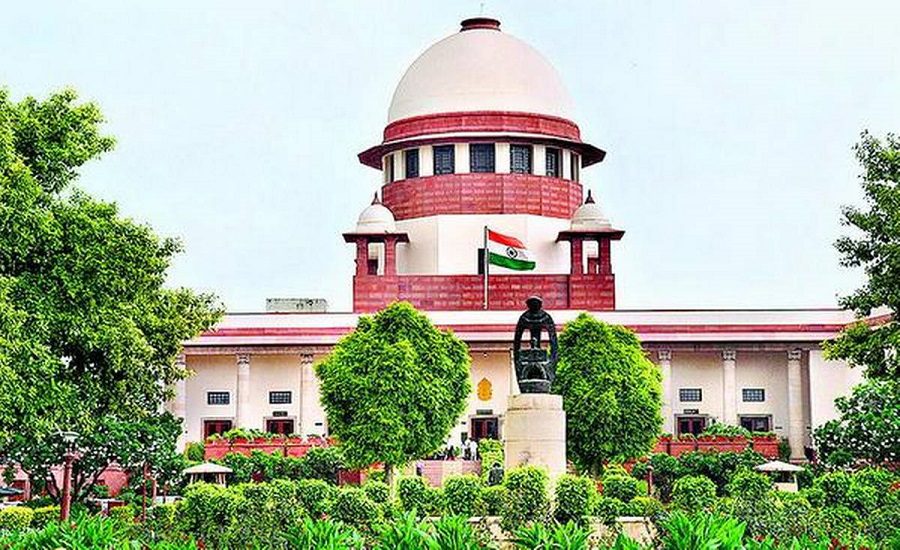
New Delhi: Supreme Court environmental compensation guidelines are set to bring greater clarity and consistency in handling violations of the Solid Waste Management Rules, 2026. The Supreme Court has directed the Ministry of Environment, Forest and Climate Change (MoEFCC) to frame detailed guidelines for determining and imposing environmental compensation. The Court also laid down eight guiding principles to ensure that compensation is fair, transparent and based on the actual environmental harm caused.
Solid Waste Management Rules: Why Did The Supreme Court Issue This Direction
A Bench of Chief Justice Alok Aradhe and Justice P.S. Narasimha observed that environmental compensation should not be left entirely to the discretion of regulators, tribunals or courts. The Bench said there should be a structured framework so that people know in advance what consequences may follow for different types of environmental violations. This will improve transparency and strengthen enforcement of environmental laws.
Read also: Supreme Court Panel Seeks Public Suggestions on Aravalli Hills Protection and Environmental Issues
What Are The Solid Waste Management Rules, 2026
The Solid Waste Management Rules, 2026 were notified by the Central Government on January 28, 2026 and came into force on April 1, 2026, replacing the 2016 Rules.
The new rules introduce mandatory four-way waste segregation, stronger responsibilities for waste generators, digital monitoring and environmental compensation based on the “Polluter Pays” principle.
Supreme Court Lays Down Eight Principles
The Supreme Court outlined the following principles:
- Environmental compensation is in addition to fines or penalties and cannot replace them.
- Compensation should continue until the environmental damage has been fully reversed.
- Authorities must properly assess the environmental damage and recover compensation needed for restoration.
- Both tangible and intangible environmental damage should be considered while calculating compensation.
- Compensation may be imposed even where actual damage has not yet occurred if there is an imminent risk of environmental harm.
- Factors such as the polluter’s financial capacity, assessment costs, environmental losses and remediation expenses should be considered.
- Compensation must be proportionate to the environmental damage and have a clear connection with the pollution caused.
- Courts and tribunals must record the reasons, valuation methods and formulas used while determining compensation.
These principles are intended to create a more uniform and legally sound approach across India.
Solid Waste Management Rules: Directions Issued To The Centre
The Court directed the MoEFCC to prepare comprehensive guidelines under the Solid Waste Management Rules, 2026. While framing these guidelines, the Ministry has been asked to consider the principles laid down by the Court as well as existing waste management regulations. The Ministry must also place an affidavit before the Court on the progress made in preparing the guidelines.
Existing Mechanisms Will Help Frame The Guidelines
The Bench noted that existing compensation mechanisms under the Plastic Waste Management Rules and Hazardous Waste Management Rules could provide useful guidance.
These frameworks already consider factors such as the nature of the violation, the quantity of waste, environmental damage and repeat offences.
Why This Judgment Is Important
The ruling is expected to:
- Make environmental compensation more transparent.
- Reduce arbitrary decision-making.
- Improve enforcement of waste management laws.
- Ensure better restoration of environmental damage.
- Promote accountability among polluters.
- Support the constitutional right to a clean and healthy environment.
Read also: Thiruparankundram Hill Case: Supreme Court Issues Notice, No Stay On Madras High Court Order