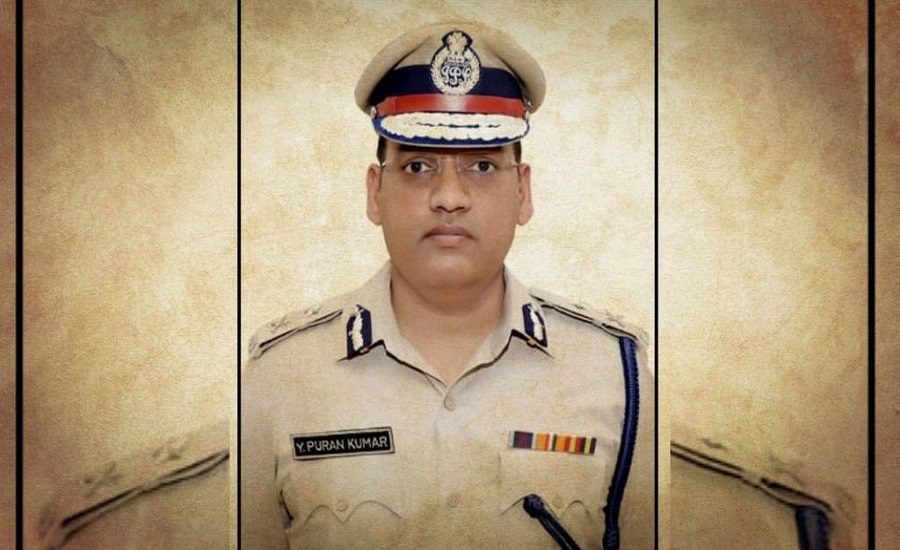
Haryana: A senior Haryana-cadre IPS officer Y Puran Kumar allegedly died by suicide on October 7, 2025, in Chandigarh.
A public interest litigation (PIL) had demanded that the investigation be handed over to the Central Bureau of Investigation (CBI), citing alleged caste-based harassment and institutional bias. However, on November 12 (2025), the Punjab & Haryana High Court rejected the PIL, stating that the current Special Investigation Team (SIT) probe shows no signs of undue delay or laxity, and that the criteria for transfer to CBI have not been met.
Background of the Case
On October 7, 2025, Y Puran Kumar, a senior IPS officer serving in the Haryana cadre, was found dead in his Sector 11 residence in Chandigarh. He reportedly ended his life by a self-inflicted gunshot.
A few days later, the police registered FIR No. 156/2025 (Chandigarh) on October 9. The FIR stemmed from the suicide note left by Kumar, in which he named multiple senior officers—including the then Haryana DGP Shatrujeet Kapur and former Rohtak SP Narendra Bijarniya—alleging caste‐based discrimination, harassment, humiliation and institutional bias.
Simultaneously, another related tragic event occurred: an ASI of Haryana Police, Sandeep Lather, who had accused Kumar and made a suicide note after arresting one of Kumar’s aides, also died by suicide on October 14.
Following public outcry, an SIT was constituted by the Chandigarh administration headed by IGP Pushpender Kumar to probe the matter.
About Officer Y Puran Kumar
Y Puran Kumar was a senior IPS officer of the Haryana cadre. Reports indicate he came from a modest background and rose through the ranks, making his death all the more shocking in the policing community.
His suicide note is considered deeply significant: it names senior officers and details alleged years of caste‐based harassment and institutional bullying. His status as a Dalit officer has added an extra layer of sensitivity to the case.
His wife, Amneet P. Kumar, is a senior IAS officer, which has further intensified public and media scrutiny around the case.
Why the Y Puran Kumar Suicide Investigation Is Important
1. Institutional Integrity & Police Accountability: When a senior IPS officer resorts to suicide amid allegations of harassment, it calls into question the internal accountability mechanisms of police forces.
2. Caste & Discrimination in Service – The suicide note’s allegations of caste‐based humiliation strike at the heart of discrimination in Government services and law enforcement.
3. Public Confidence in Investigation – The demand to hand over the investigation to a central agency like the CBI signals worry over local probe credibility and potential influence or bias.
4. Legal Precedence for CBI Transfer – This case raises fundamental questions about when and how a case may be transferred to the CBI — the standard “exceptional circumstances” test comes into play.
The Legal Journey Of Y Puran Kumar Suicide Investigation & Major Challenges
PIL & HC Hearing
- A PIL was filed by one Navneet Kumar (Ludhiana resident) on October 17, seeking a CBI investigation into the matter.
- On November 10, the High Court asked for status reports: “What is the latest position? Has the investigation reached anywhere?” the bench asked.
- The bench emphasised that to hand over to CBI, the petitioner must show evidence of bias, delay or institutional failure — and merely omnibus allegations will not suffice.
Court’s Decision
- On November 12, the Punjab & Haryana High Court rejected the PIL for CBI transfer. Key points:
- The court noted that an SIT probe is already underway and “does not appear that there is any unnecessary delay or laxity in investigation till date.”
- It held that “no case for handing over investigation to any independent agency is made out” at this stage.
Key Challenges Highlighted
Delay & Progress: Although the court was fairly satisfied, several media reports point out that no arrests have yet been made (as of the hearing) and accused ultra‐senior officers remain in prominent postings.
Scope of Investigation: The suicide note names multiple high‐ranking officials, alleging harassment and caste bias. The court asked how far the probe has gone in examining these names.
Transfer Criteria: The “exceptional circumstances” test for invoking CBI jurisdiction remains the legal hurdle. The court pressed the petitioner to identify specific and concrete evidence of institutional bias or unfairness.
Public Trust & Symbolism: The case has symbolic value for policing, service ethics and caste justice, making every step of the investigation sensitive to public perception and fairness.
Implications
- For the Police & Administration: Upholding the rule of law: If a high‐ranking officer alleges harassment and discrimination, the state machinery must ensure that the probe is transparent, credible and seen to be fair.
- Credibility of internal investigations: The reliance on the SIT—rather than transfer to CBI—puts a spotlight on the state’s ability to investigate its own police system impartially.
- Institutional discrimination: Whether or not the allegations are true, public acknowledgement of such claims influences morale and trust in policing from within.
- For Judiciary & CBI Transfer Doctrine: This case reinforces the importance of judicial gate‐keeping of CBI transfers — only when institutional/investigational bias or failure is convincingly made out will a transfer be ordered.
- Sets precedent for how courts weigh the evidence of bias, progress of investigation and whether any undue delay or conflict of interest exists.
- Shows that being a high‐profile case does not on its own warrant a CBI probe unless criteria are met.
- For Public Trust & Social Equity: The officer’s caste identity and alleged discrimination raise questions about equity in the civil services and police leadership. The case becomes a litmus test for how India treats even its most senior public servants from historically disadvantaged backgrounds.
- If the investigation is seen as weak, delayed, or biased, it risks deepening public distrust in law enforcement and government institutions.
Way Forward
- Transparent Progress Reporting – The Chandigarh administration and SIT must periodically publish clear updates on investigation progress: number of accused named, arrests made, forensic analysis completed, status of each named individual in the note.
- Independent Oversight Mechanism – To bolster credibility, appoint an independent observer (retired judge or senior civilian oversight committee) to monitor the SIT investigation and ensure no influence is exerted.
- Thorough Forensic & Witness Examination – Ensure all named officers (in the suicide note) are adequately questioned; ensure forensic evidence, CCTV footage and digital trails are fully audited.
- Institutional Reform Measures – The revelations (or allegations) of caste‐based harassment must prompt a wider review of discrimination and harassment policies within the police and civil services; training, complaint redressal and diversity‐commitment must be emphasised.
- Judicial Review of Delay & Action – If the SIT investigation fails to make arrests or finalise a chargesheet within a reasonable time frame, then the gate may open for CBI transfer. The court must vigilantly monitor timelines.
- Public Communication Strategy – To restore public confidence, authorities must communicate in simple language the steps being taken and the approximate timeline. Silence breeds mistrust.
Read Also: Laptop May Hold Answers: Court Allows SIT to Probe Digital Evidence in IPS Y Puran Kumar’s Death