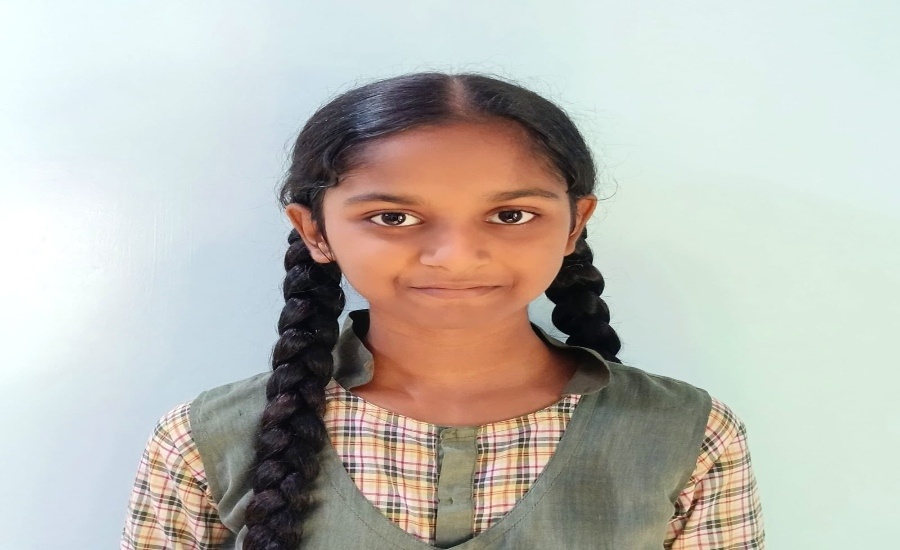
Hyderabad: Kandula Jessie selected for Mission ShakthiSAT is an inspiring story from Andhra Pradesh, where a 14-year-old Class 10 student from a government school has earned a place in a major global space programme. Jessie, the daughter of a carpenter, is among the Indian students selected to participate in Mission ShakthiSAT, an all-girls international space initiative led by Space Kidz India.
Her journey started in a government school laboratory. It has now taken her towards a programme involving thousands of girls from more than 100 countries.
Who is Kandula Jessie
Kandula Jessie is a Class 10 student at Zilla Parishad Girls High School (ZPGHS) in Dowleswaram, Andhra Pradesh. According to reports, she is 14 years old and is the daughter of a carpenter. Her family had earlier moved her from a private school to a government school because of financial difficulties. Despite these challenges, Jessie continued her education and developed a strong interest in science.
Read also: Who Is Riddhi Chauhan? Indian-Origin Teen Selected for US Navy-Backed NJROTC Programme
Her physical science teacher and Atal Tinkering Lab in-charge, Manimala, noticed her interest and encouraged her to join the Mission ShakthiSAT programme.
She is now moving from learning basic science at school to gaining exposure to satellite technology and space science.
What is Mission ShakthiSAT
Mission ShakthiSAT is an international space initiative led by Space Kidz India. According to Space Kidz India, the mission involves around 12,000 girls from 108+ countries and aims to encourage more young women to enter science, technology, engineering and mathematics (STEM).
The organisation describes ShakthiSAT as the world’s first all-girls mission focused on advanced lunar surface mapping and resource identification.
The mission plans to study the lunar surface, identify possible resources such as water ice and improve understanding of the Moon’s environment.
How did Kandula Jessie Get Selected
Jessie’s selection came after months of learning and preparation. According to the reports, she attended nearly 550 online sessions across 21 modules. The subjects included satellite systems, propulsion, thermodynamics and other areas of space technology. These topics were much more advanced than the normal Class 10 syllabus.
The final selection process reportedly included online learning, a one-hour interview with scientists and programme coordinators, and a short video about Mission ShakthiSAT and the importance of STEM education.
Jessie also Worked on Her English Communication
One of Jessie’s challenges was communicating with international experts in English. She reportedly spent weeks improving her English communication skills with support from teachers and educational videos before facing the interview. Her efforts eventually paid off when she secured a place in the programme.
Jessie’s story shows how access to teachers, school laboratories and the right learning opportunities can help students explore subjects far beyond their regular classroom syllabus.
Why is Mission ShakthiSAT important
Women remain an important focus of efforts to expand participation in STEM and space science.
Mission ShakthiSAT aims to address this at the school level by introducing thousands of girls to satellite technology and space exploration.
Space Kidz India says the programme brings together around 12,000 girls from 108+ countries with the wider goal of developing the next generation of women in STEM.
For students such as Kandula Jessie, that means an opportunity to move beyond textbooks and experience how real space missions are developed.