Bhopal: Madhya Pradesh has begun a fresh push to expand its dairy economy, with Union Home and Cooperation Minister Amit Shah and Chief Minister Dr. Mohan Yadav launching a series of dairy and cooperative initiatives in Bhopal. The programme included the virtual foundation stone for a ₹255-crore milk processing plant in Ujjain, new dairy infrastructure in Bhopal and Shivpuri, financial benefits for dairy cooperative members and a target to take milk collection through cooperatives to 50 lakh litres per day.
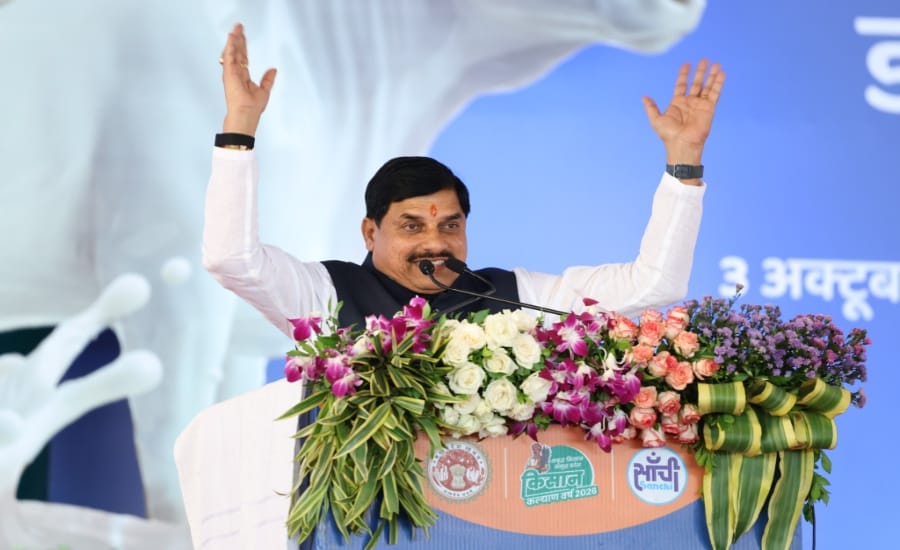
The initiatives were announced at the state-level Gopalak Sammelan at BHEL Dussehra Maidan on October 3. The event also featured a state-level exhibition on the new criminal laws. The dairy measures are part of the broader White Revolution 2.0 approach, which focuses on expanding dairy cooperatives, improving milk procurement and processing, increasing market access and strengthening the participation of livestock-rearing families, particularly women. The Union government’s White Revolution 2.0 framework includes the creation of 75,000 new dairy cooperative societies and strengthening of 46,422 existing societies.
₹255-Crore Dairy Plant in Ujjain
One of the biggest announcements was the virtual bhoomi pujan of a milk processing plant in Ujjain. The project, estimated at ₹255 crore, will have the capacity to process 3 lakh litres of milk per day.
In Bhopal, a ₹16.5-crore product dairy plant with a processing capacity of 40,000 litres per day was inaugurated. A state-level central laboratory costing ₹12.42 crore and strengthening works at a mini dairy plant in Shivpuri costing ₹6.5 crore were also inaugurated.
According to the government, these facilities are expected to strengthen milk collection, testing, processing and value addition. They can also create opportunities around dairy processing, transportation, marketing and other allied activities. The projects announced for the programme were also confirmed in the Union Cooperation Ministry’s pre-event release.
Read also: From Gandhi’s Swadeshi to India’s Self-Reliance: CM Mohan Yadav Pays Tribute on October 2
50 Lakh Litres Daily Milk Collection Target
A major focus of the programme was increasing the role of dairy cooperatives in the state. Shah said Madhya Pradesh would work towards taking milk production and collection through the cooperative network to 50 lakh litres a day over the next three years, with the Centre assuring support for the target.
Chief Minister Mohan Yadav said milk collection through dairy societies has already reached around 12 lakh litres per day, while the state produces more than 2 crore litres of milk daily.
The state currently has more than 1,700 dairy cooperative societies, according to BJP state president Hemant Khandelwal, who also said the objective is to expand collection to 50 lakh litres per day.
The focus is not only on producing more milk but also on ensuring that producers have better access to organised markets, processing facilities and value-added products such as curd, butter and paneer.
Cooperative Model to Strengthen Dairy Incomes
Shah said dairy producers selling through cooperative societies can receive better returns compared with selling through intermediaries, referring to a figure of up to ₹55 per litre for cooperative procurement.
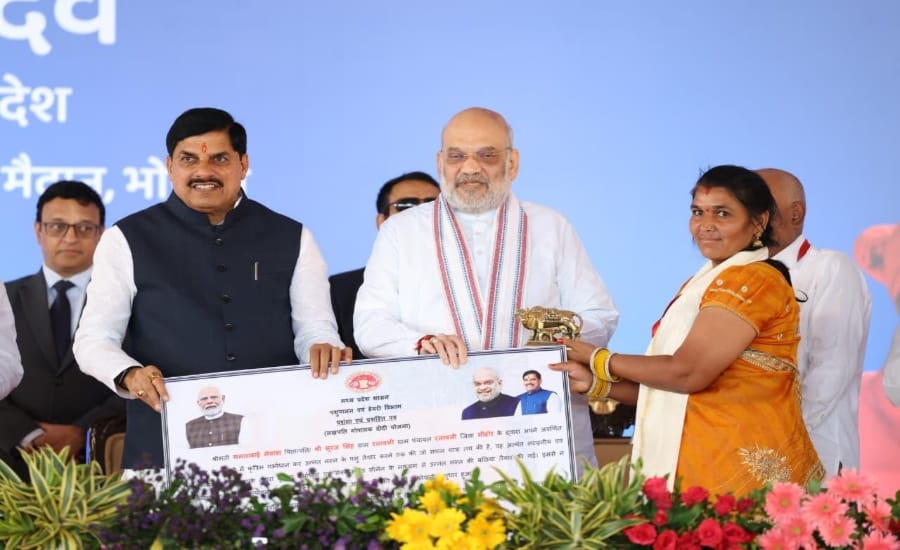
The programme also included the distribution of bonuses to members associated with the Bhopal and Indore milk unions. A total of ₹15.10 crore in dividends was distributed among members of dairy cooperative societies. Financial assistance was also provided to registered gaushalas, while five Gopalak Didis were felicitated. Beneficiaries of the Dr Bhimrao Ambedkar Kamdhenu Yojana received approval letters.
The Kamdhenu scheme is aimed at supporting cattle-rearing units, with the Chief Minister stating that eligible beneficiaries keeping 25 cows under a ₹40-lakh project can receive a ₹10-lakh subsidy.
Breed Improvement and Cattle Services
Breed improvement was another major component of the plan. Shah announced a programme involving 50 acres of land for improving cattle and buffalo breeds and promoting better breeding practices.
The state government also plans to promote breeds such as Gir and Sahiwal and strengthen cattle-rearing activities through gaushalas and village-level initiatives.
Madhya Pradesh has around 3,500 gaushalas, according to the Chief Minister, where about five lakh cattle are being protected. The state is also developing Vrindavan villages at the block level and plans to hold competitions for improved breeds there.
The government currently operates 406 gaushala ambulances, with another 168 ambulances planned for cattle treatment and care.
White Revolution 2.0 and Rural Women
The dairy expansion also has a strong cooperative and women-centric component. The Union government says White Revolution 2.0 is designed to improve market access for small dairy farmers, increase remunerative returns and expand women’s participation in the dairy economy.
At the Bhopal event, Gopalak Didis were recognised for their work, highlighting the growing role of women in dairy-based livelihoods.
The wider national programme aims to establish 75,000 new dairy cooperative societies and strengthen 46,422 existing societies. As of August 2026, the Centre reported that 24,097 new societies had been formed and 31,394 existing societies strengthened under the initiative.
Bhopal Nagar Van MoU Also Signed
The programme also brought an environmental initiative. KRIBHCO and the Madhya Pradesh State Biodiversity Board signed an MoU for developing a Nagar Van in Bhopal under the Morvan Project.
The proposed urban forest is intended to expand green cover, support biodiversity conservation and create a better natural environment for residents.
New Criminal Laws Exhibition and Drug-Free Target
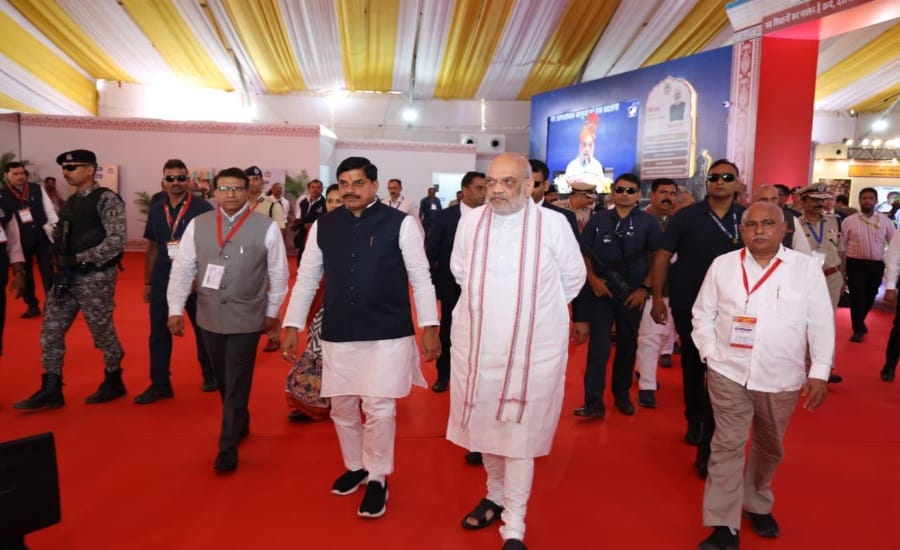
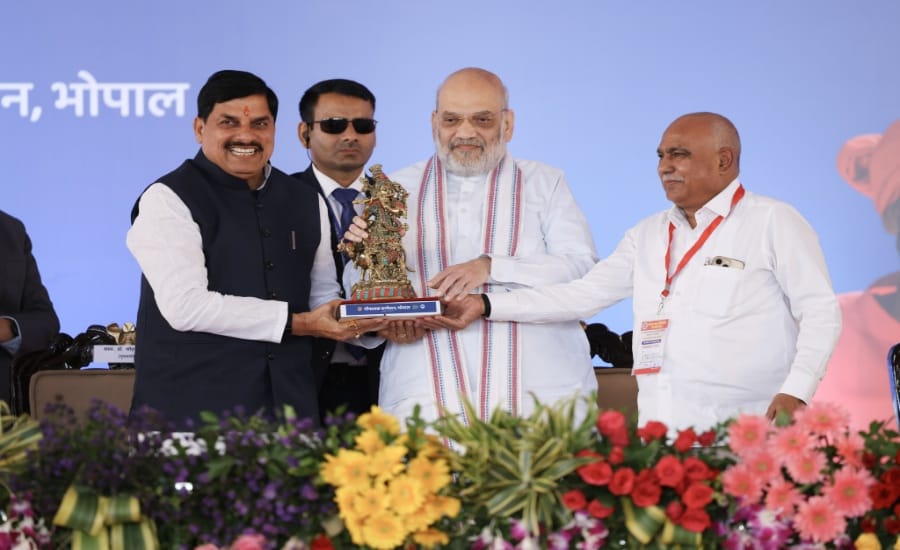
Alongside the Gopalak Sammelan, Shah inaugurated a state-level exhibition on the new criminal laws. The exhibition presented information on provisions of the new legal framework, their implementation and their expected relevance for citizens. It also showcased aspects of Madhya Pradesh Police’s implementation of the new laws.
Shah highlighted provisions relating to online FIRs, video conferencing and forensic science while explaining the government’s approach to modernising the justice system.
He also announced a target of making Madhya Pradesh drug-free before December 31, 2029, with the state expected to work on programmes aimed at preventing substance abuse and providing young people with alternative opportunities.
What the Dairy Push Means for Madhya Pradesh
For Madhya Pradesh’s livestock-rearing families, the key change will be the expansion of an organised dairy value chain — from cattle breeding and milk collection to testing, processing and marketing.
The new infrastructure, expansion of cooperative societies and planned increase in milk collection are intended to give producers greater access to formal markets while creating opportunities for dairy-based employment and self-employment.
The state’s challenge now will be converting these targets and infrastructure investments into sustained procurement, better productivity and reliable returns for milk producers. If the cooperative network expands as planned, White Revolution 2.0 could become an important part of Madhya Pradesh’s rural income and dairy development strategy.