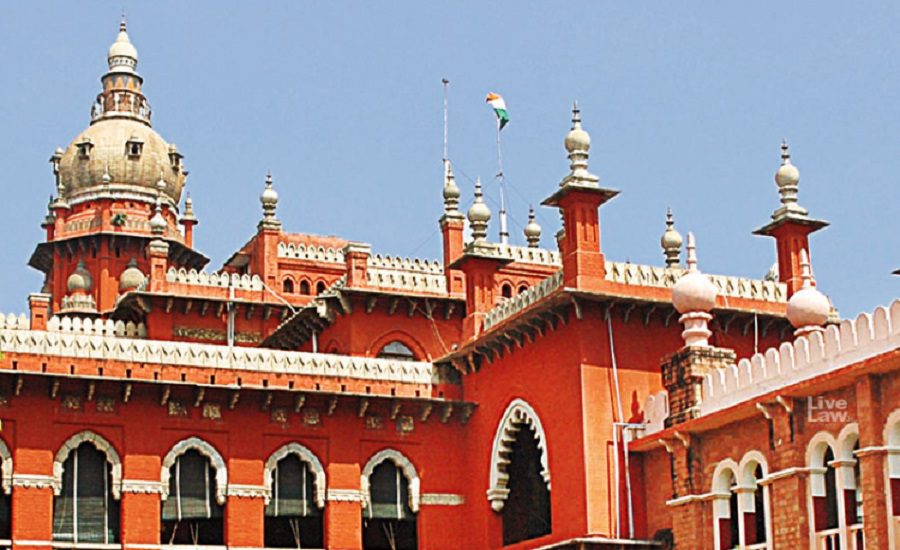
Chennai: In a significant judicial intervention on Wednesday, the Madras High Court directed the Tamil Nadu Home Secretary to constitute district-level monitoring committees to ensure effective implementation of its orders abolishing the orderly system in the state.
Details of Madras High Court Orderly System Ruling
The division bench comprising Justice S.M. Subramaniam and Justice C. Kumarappan instructed that the district monitoring committees be formed within a strict deadline of two weeks.
Read also: Who Is IAS Supriya Sahu? Tamil Nadu Officer Wins UN’s Highest Environmental Honour
Each committee is to be headed by the District Collector and include:
- One revenue officer not below the rank of District Revenue Officer, and
- Two police officers not below the rank of Deputy Superintendent of Police or Assistant Commissioner of Police, directly nominated by the District Collector.
The Court emphasized that the structure is intended to ensure strict compliance with previous judicial orders abolishing the practice across districts.
What Is the ‘Orderly System’?
The term orderly system refers to the practice where uniformed police personnel are assigned to serve as personal aides or orderlies to senior government officials — including retired officers — performing household or personal duties rather than active policing work.
Critics and the judiciary have repeatedly termed the practice outdated, noting that it stems from a “colonial mindset” and diverts essential security personnel from public duties.
Efforts to abolish it have been ongoing for years, with prior directives dating to at least 2022.
Court’s Skepticism Over Government Compliance
During Wednesday’s hearing, the court expressed reservations about the state’s compliance with earlier directions.
A report previously submitted by the Director General of Police (DGP) claiming that the orderly system had been abolished was rejected by the bench.
The court noted reports in the media and affidavits suggesting that uniformed personnel continued to serve as orderlies in several districts, raising concerns about the authenticity of the official position.
To address this gap between policy and ground reality, the bench suo motu impleaded the Chief Secretary and Home Secretary as parties and requested explanations from them in court.
Government Position and Advocate General’s Submission
In court, the Advocate General presented a government letter dated January 2, 2026, issued by the Additional Secretary of the Home Department.
The letter directed the DGP/Head of Police Force to ensure that the policy abolishing the orderly system is implemented in letter and spirit, in compliance with the court’s orders.
Notably, the Advocate General suggested that district-level monitoring committees could be an effective mechanism to supervise implementation — a recommendation the bench accepted and endorsed.
Previous Judicial Directives and Continued Enforcement Challenges
This is not the first time the Madras High Court has dealt with this issue.
In August 2022, Justice Subramaniam had issued an order for the complete abolition of the orderly system across Tamil Nadu, explicitly stating that police personnel should not be deployed for tasks unrelated to official duties.
However, even after these orders, the practice reportedly continued, with recent recordings showing police staff engaged in non-official roles. The court’s refusal to accept the DGP’s report earlier signals judicial impatience with the recurrence of the practice.
Key Implications of Madras High Court Orderly System Ruling
The High Court’s directive underscores broader concerns about the separation between public duty and personal privilege within law enforcement agencies. By assigning police personnel to perform personal tasks for senior officials, critics argue that:
- Public safety resources are diverted from frontline duties,
- Institutional accountability weakens, and
- Democratic norms about the appropriate role of police services are undermined.
The formation of monitoring committees — with representation from both administrative and police leadership — is intended to bring transparency and accountability to the abolition process.