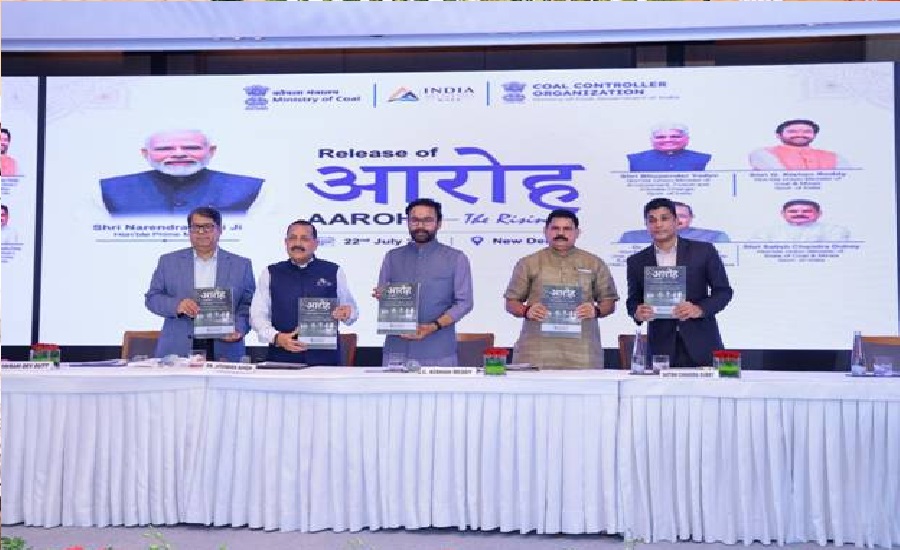
New Delhi: The Ministry of Coal has released ‘AAROH: Annual Report on Mine Closure’, India’s first comprehensive report documenting scientific mine closure and mine repurposing practices. The report highlights India’s progress in transforming closed coal mines into environmentally restored, socially beneficial, and economically productive assets.
The report was launched at an event held at The Oberoi, New Delhi, in the presence of Union Minister of Coal and Mines Mr. G. Kishan Reddy, Union Minister of State (Independent Charge) for Science & Technology and other portfolios Dr. Jitendra Singh, Minister of State for Coal and Mines Mr. Satish Chandra Dubey, German Ambassador to India Dr. Philipp Ackermann, Deputy Head of the EU Delegation Dr. Ewa Suwara, and senior officials from government, coal companies, industry, academia, and international organisations.
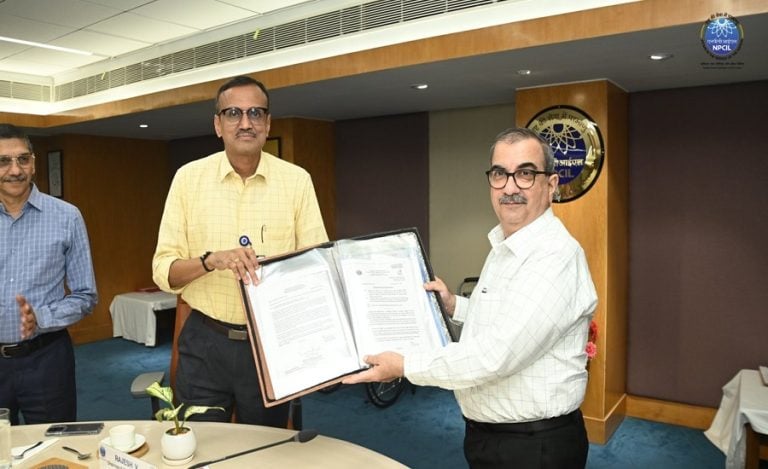
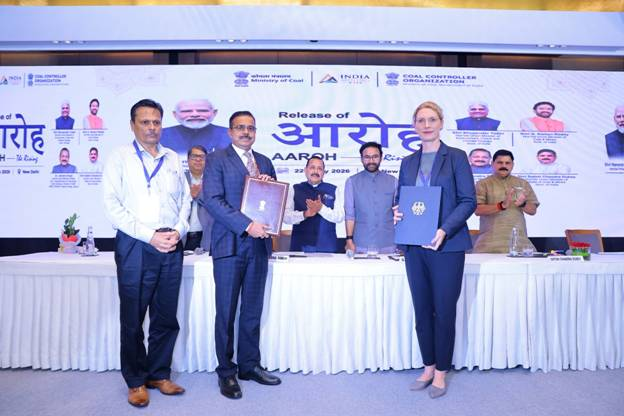
The event also witnessed the signing of an implementation agreement between the Ministry of Coal and Germany’s Deutsche Gesellschaft für Internationale Zusammenarbeit (GIZ) to strengthen cooperation in scientific mine closure and sustainable mine repurposing.
AAROH Report Documents Transformation of 42 Closed Coal Mines
Developed by the Coal Controller Organisation, AAROH presents India’s first detailed documentation of scientific mine closure initiatives. The report covers the transformation journey of 42 scientifically closed coal mines, showcasing how abandoned and exhausted mining areas are being restored through ecological rehabilitation, sustainable land utilisation, and community development initiatives.
Each mine profile featured in the report includes:
- Scientific closure methods adopted at mine sites
- Post-mining land-use outcomes
- Before-and-after photographs showing transformation
- Community development initiatives
- QR code-enabled documentary videos highlighting reclamation efforts
The report acts as a knowledge repository for future mine closure projects and provides valuable insights into sustainable mining practices.
Read also: Ministry of Coal Invites Applications for ₹37,500 Crore Coal and Lignite Gasification Scheme
India’s New Approach: From Mine Closure to Mine Repurposing
The Ministry of Coal has shifted its approach from viewing mine closure as the end of mining activity to seeing it as the beginning of new opportunities for communities, environment, and economic development.
The AAROH report highlights several key frameworks introduced by the Ministry, including:
- RECLAIM Framework for scientific assessment and reclamation
- L.I.V.E.S. Framework for sustainable mine closure
- SUVIKALP – Mine Repurposing Tool
- SUVIKALP Samvaad platform for stakeholder participation and knowledge sharing
These initiatives aim to ensure that post-mining landscapes are converted into productive assets through renewable energy projects, eco-tourism, agriculture, water conservation, and community infrastructure.
India-Germany Partnership to Strengthen Scientific Mine Closure
A major highlight of the event was the signing of an Implementation Agreement between the Ministry of Coal and GIZ for technical cooperation on “To-be Closed Mines.”
The partnership will focus on:
- Developing sustainable mine closure strategies
- Sharing global best practices
- Building technical capacity
- Promoting mine repurposing solutions
- Supporting environmentally responsible mining transitions
The project has been commissioned by Germany’s Federal Ministry for Economic Cooperation and Development (BMZ) and co-financed by the European Union.
The total project volume is EUR 10 million until 2030, with cooperation planned for the next four years.
The initiative aims to combine Germany’s expertise in mine closure and just transition with India’s mining scale, policy framework, and implementation capabilities.
Coal NEER Plants Convert Mine Water into Safe Drinking Water
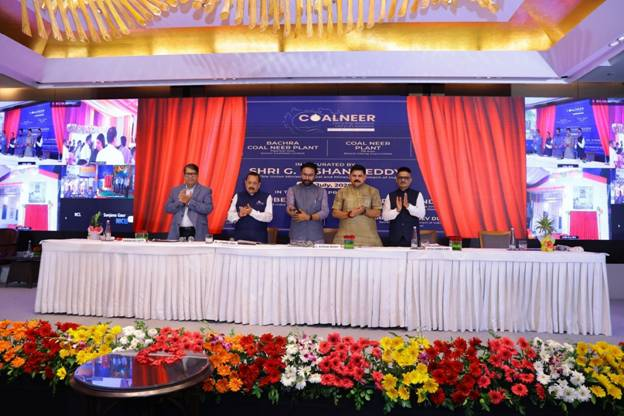
During the event, Union Minister G. Kishan Reddy virtually inaugurated Coal NEER Plants established by Coal India Limited subsidiaries:
- Bharat Coking Coal Limited (BCCL)
- Central Coalfields Limited (CCL)
- Mahanadi Coalfields Limited (MCL)
- South Eastern Coalfields Limited (SECL)
The initiative focuses on converting treated mine discharge water into safe and affordable drinking water for communities living in coal-bearing regions.
Under the ‘Waste to Wealth’ vision, these plants use advanced purification technologies, including:
- Reverse Osmosis (RO)
- Ultraviolet (UV) treatment
- CDI technology
The purified water is marketed under the brand name ‘Coal Neer’.
Apart from providing drinking water access, the project will also create livelihood opportunities for local Self Help Groups, particularly women-led groups in nearby villages.
Coal PSUs are already supplying nearly 300 lakh kilolitres of treated mine water annually, benefiting around three lakh people, including drinking water supply initiatives for Chennai.
Jharia Rehabilitation Gets Boost Through New Industry Partnerships
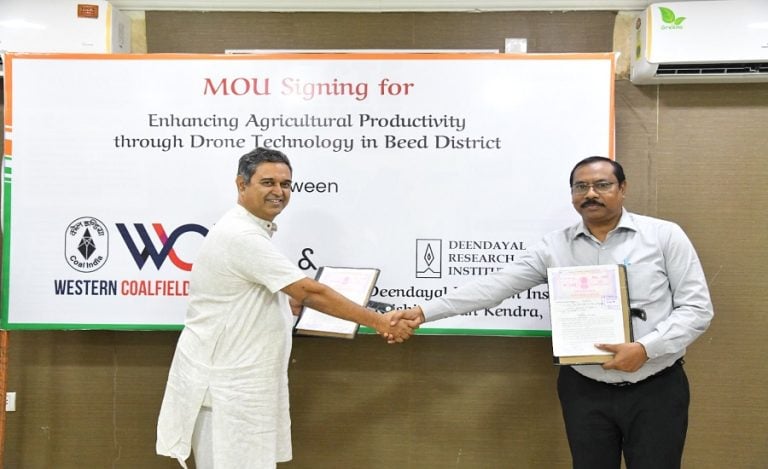
The event also witnessed the signing of tripartite Memorandums of Understanding (MoUs) involving:
- Bharat Coking Coal Limited (BCCL)
- Jharia Rehabilitation and Development Authority (JRDA)
- Hindalco Industries Limited
- Rajdhani Universal Fabrics Private Limited
These partnerships aim to support rehabilitation, skill development, employment generation, and socio-economic growth in the Jharia coalfield region.
Industry-Linked Skill Centre with Hindalco
The MoU between BCCL, JRDA, and Hindalco will establish an Industry-Linked Skill Centre to train youth from the Dhanbad region.
The centre will provide industry-relevant skills to help young people secure employment in modern apparel manufacturing units.
Textile Manufacturing Ecosystem with Rajdhani Universal Fabrics
The partnership with Rajdhani Universal Fabrics aims to create a world-class integrated technical textile manufacturing ecosystem.
The project is expected to:
- Generate large-scale employment
- Promote skill development
- Support rehabilitated families
- Strengthen industrial growth in the region
India Scientifically Closed 42 Coal Mines, Plans 147 More Closures
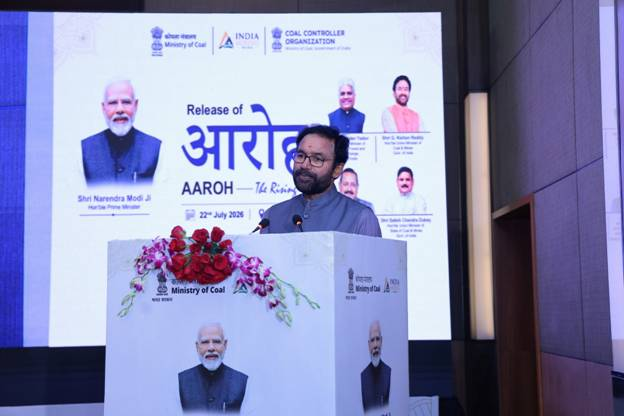
Addressing the gathering, Union Minister G. Kishan Reddy said scientific mine closure has become a national priority under the vision of Viksit Bharat 2047.
He highlighted that India has already scientifically closed 42 coal mines, including 33 mines in the last year alone.
The government has set an ambitious target of scientifically closing 147 additional mines over the next two to three years.
The Minister stated that the Ministry has created a comprehensive ecosystem for mine closure through:
- RECLAIM Framework
- SUVIKALP digital platform
- A.R.T.H.A. Framework
- District Collector-led Mine Closure Advisory Committees
He also announced that under the Mine Closure Guidelines, 2025, people and sustainability have been placed at the centre of mine closure planning.
For the first time, 25% of approved mine closure costs have been allocated for community development, creating an investment opportunity of nearly ₹10,000 crore over the next decade.
The government has also created a dedicated corpus of more than USD 5 billion (around ₹40,000 crore) for scientific mine closure and progressive closure activities.
Reclaimed Mines to Support Renewable Energy and Sustainable Development
The Coal Minister highlighted examples where restored mining areas are being converted into productive assets.
Reclaimed mine lands are now being used for:
- Renewable energy projects
- Eco-tourism
- Agriculture
- Water conservation
- Community infrastructure
- Sustainable livelihood programmes
Successful examples include:
- West Bokaro
- Bishrampur
- Viveknagar Solar Project
The Minister said India aims to develop its own model of mine closure by combining environmental protection, technology, community participation, and economic opportunity.
Dr. Jitendra Singh Calls for Changing “Mine Closure” into “Mine of Wealth”
Dr. Jitendra Singh said the time has come to transform the concept of mine closure into a “mine of wealth.”
He praised the Ministry of Coal’s initiatives, stating that the restoration of 42 coal mines demonstrates how degraded mining areas can become productive assets through:
- Ecological restoration
- Afforestation
- Water conservation
- Renewable energy projects
- Community-focused development
He said these initiatives reflect the principles of a circular economy by converting waste into wealth and support India’s commitment to achieving Net Zero emissions by 2070.
Ministry Emphasises People-Centric and Sustainable Mining Future
Minister of State for Coal and Mines Mr. Satish Chandra Dubey said mining benefits must extend beyond coal production and improve the lives of people living in mining regions.
He emphasised that scientific mine closure must combine:
- Environmental restoration
- Community participation
- Sustainable livelihoods
- Regional development
He added that the India-Germany cooperation project will strengthen institutional capacity and help India adopt international best practices in mine closure.
Mine Closure Is Beginning of New Opportunities: Coal Secretary
Coal Secretary Mr. Vikram Dev Dutt stated that mining must be guided by responsibility, with people and communities at the centre of development.
He said mine closure is a crucial stage in the mining lifecycle where resource extraction transitions into:
- Environmental restoration
- Land repurposing
- Sustainable development
He highlighted that the Mine Closure Guidelines, 2025 have transformed mine closure from a regulatory obligation into a planned and people-centric process.
He also noted that the EUR 10 million Indo-German technical cooperation project will help India adopt global practices while creating opportunities for communities and the environment.
India-EU and India-Germany Partnership for Green Mining Transition
German Ambassador Dr. Philipp Ackermann highlighted the importance of India-Germany cooperation in sustainable development.
He said the GIZ partnership would support:
- Technical knowledge exchange
- Sustainable mine repurposing
- Just transition in mining regions
Dr. Ewa Suwara, Deputy Head of the EU Delegation to India, said the agreement represents a practical step towards strengthening cooperation on sustainable development through technical assistance, capacity building, land restoration, and skill development.
Ministry of Coal’s Vision for Sustainable Post-Mining Development
The launch of AAROH, the Coal NEER initiative, and new rehabilitation partnerships underline the Ministry of Coal’s commitment to responsible mining practices.
Through scientific mine closure, technological innovation, international cooperation, and community-focused development, India is working towards transforming closed mines into opportunities for environmental recovery, economic growth, and improved livelihoods.
These initiatives support the broader vision of Viksit Bharat 2047 by ensuring that mining regions continue to contribute to sustainable development even after mining activities end.