Bhubaneswar: Odisha is strengthening its preparedness for chemical accidents, with Chief Secretary Anu Garg (IAS: 1991: OD) calling for faster response, better coordination and stronger post-accident management to protect lives and property.
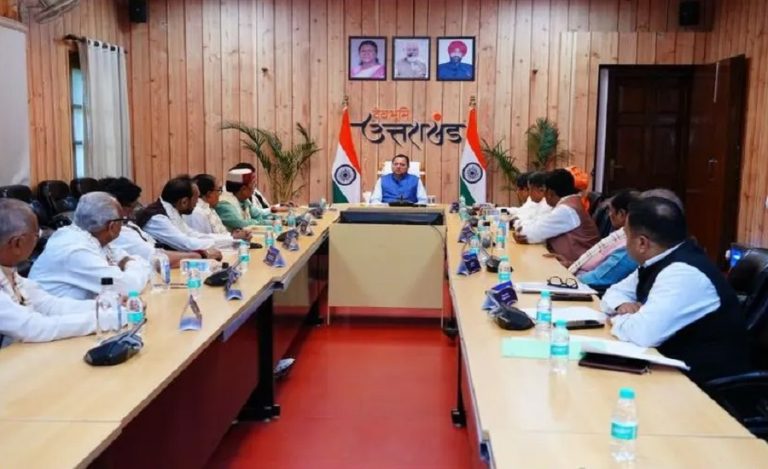
Garg made the remarks while chairing a meeting of the State Crisis Group (SCG) at Lok Seva Bhawan on Wednesday. The meeting reviewed several measures aimed at improving the state’s ability to prevent, respond to and manage chemical emergencies.
The discussions covered chemical accident databases, medical preparedness, public awareness, safety audits and the capacity of emergency control centres.
Human Life and Property to Remain the Priority
Garg stressed that protection of human life and property should remain the top priority whenever a chemical accident occurs.
She said that safety systems need to keep pace with industrial growth and called for advanced preparedness at the district and local levels. The Chief Secretary emphasised that emergency response should not begin only after an accident but should be supported by advance risk identification and planning.
She directed officials to prepare and strengthen district and local-level emergency plans, conduct regular mock drills and improve safety audits and risk assessments by identifying potential hazards in advance.
Garg also stressed stronger coordination among departments and agencies so that emergency response can be carried out quickly and effectively when a chemical mishap occurs.
Read Also: 19 Officers from IAS, IFS, IDAS, Railways and IInfoS Empanelled for Joint Secretary-Level Posts
Hazard Data and GIS Mapping to Strengthen Preparedness
Development Commissioner D.K. Singh highlighted the importance of maintaining accurate and regularly verified information on chemical hazards.
He called for regular verification of hazard-related data so that authorities have updated information while preparing for or responding to emergencies.
Singh also emphasised the need to review off-site emergency plans for vehicles transporting hazardous materials away from industrial installations and factories across districts.
Such planning can help authorities prepare for incidents that may occur outside industrial premises while hazardous chemicals are being transported through populated or vulnerable areas.
He also stressed the use of GIS-based mapping to strengthen preparedness and help authorities identify and understand potential risk locations.
Fire Services Pushes for Trained Teams and Equipment
DG, Fire Services Sudhansu Sarangi stressed that effective response to chemical accidents requires trained personnel, appropriate equipment and specialised emergency vehicles.
He called for ensuring the availability of adequate manpower and resources so that emergency teams can respond without delay.
Sarangi also emphasised the importance of regular mock drills to test the preparedness of response agencies. These exercises can help identify gaps in coordination, equipment and response procedures before an actual emergency occurs.
He further called for strengthening rescue and safe evacuation processes, particularly where chemical incidents may pose risks to workers and nearby communities.
Stronger Coordination During Chemical Emergencies
Chemical accidents can require multiple agencies to act simultaneously, making coordination a critical part of emergency management.
Sarangi stressed coordination among Fire Services, district administration, industrial institutions and other emergency organisations to ensure a unified response.
The State Crisis Group meeting also emphasised the need for stronger inter-departmental and inter-agency coordination. The objective is to ensure that different response agencies understand their roles and can work together during an emergency.
Such coordination is particularly important during incidents involving hazardous substances, where delays in evacuation, rescue or medical response can increase risks to people and property.
Medical Preparedness and Public Awareness
The meeting also discussed strengthening medical preparedness for chemical accidents.
Medical teams and facilities need to be prepared to respond to people exposed to hazardous substances and provide timely assistance. Better preparedness can also support the referral and treatment of victims when an accident occurs.
Alongside emergency response, the State Crisis Group discussed the importance of public awareness. Communities living near industrial areas or along routes used to transport hazardous materials can benefit from greater awareness of emergency procedures and safety precautions.
Public awareness, combined with regular drills, can help residents and local authorities respond more effectively during an emergency.
Focus on Safety Audits and Emergency Control Centres
The meeting also reviewed the role of safety audits and risk assessment in preventing chemical accidents.
Regular safety audits can help identify weaknesses in industrial safety systems and encourage corrective action before an incident occurs. The emphasis on identifying hazards in advance is aimed at moving chemical accident management towards prevention and preparedness rather than relying only on response after an accident.
Officials also discussed increasing the capacity of emergency control centres, which play an important role in receiving information, coordinating agencies and supporting decision-making during emergencies.
Strengthening these centres can improve communication between district authorities, emergency services, industries and other stakeholders.
Building a Stronger Chemical Emergency System
The State Crisis Group’s discussions underline Odisha’s effort to create a more coordinated system for managing chemical emergencies, covering the stages before, during and after an accident.
The approach combines advance hazard identification, emergency planning, mock drills, trained manpower, specialised equipment, medical preparedness and public awareness. GIS-based mapping and updated hazard databases are also expected to support more informed decision-making.
The focus on post-accident management is equally important, as chemical incidents can require continued coordination even after the immediate danger has passed.
For Odisha, where industrial activity and the movement of hazardous materials require robust safety systems, strengthening emergency preparedness can help reduce risks to workers, communities and public infrastructure.
The State Crisis Group meeting therefore places swift response, coordinated execution and post-accident management at the centre of the state’s chemical safety preparedness, with the broader aim of protecting lives and property while supporting safer industrial development.
Read Also: Ladakh Cooperative Row: Who Is IAS Prasanna Ramaswamy? Removed as Chairman, Leh DC to Take Charge