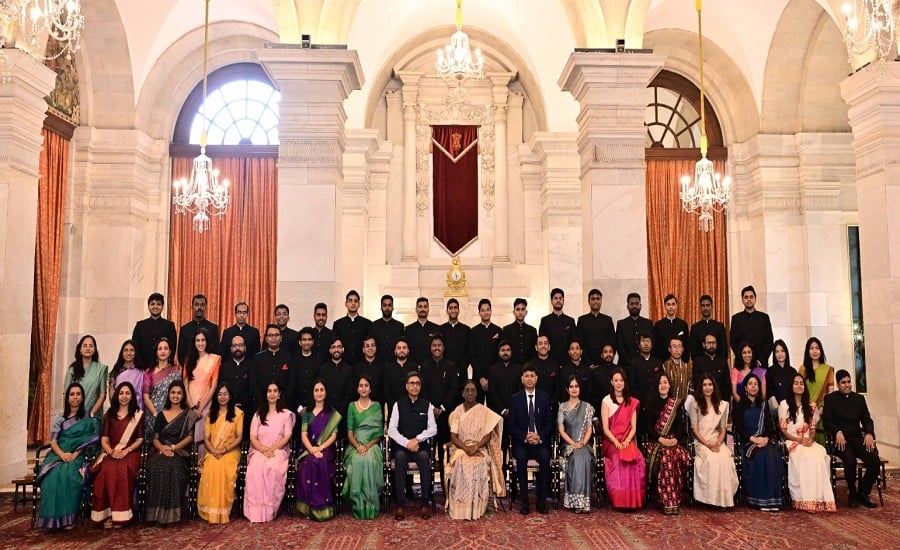
NEW DELHI: President Droupadi Murmu on Thursday said India’s engagement with the world should always remain closely aligned with the aspirations of its people, urging young diplomats to uphold “Rashtrahit Sarvopari” as an enduring principle throughout their professional lives.
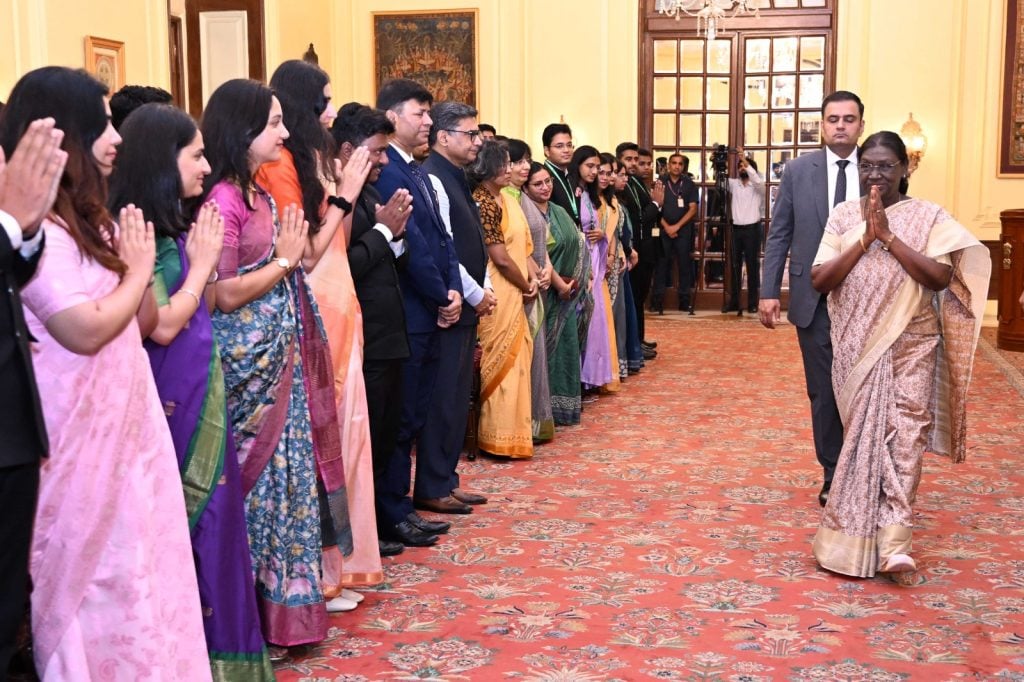
The President was speaking to the Officer Trainees of the Indian Foreign Service (IFS), 2025 batch, along with two diplomats from Bhutan who are currently undergoing an induction training programme at the Sushma Swaraj Institute of Foreign Service (SSIFS). The officer trainees called on the President at Rashtrapati Bhavan on August 27.
Congratulating the officer trainees, Murmu said they would have the privilege as well as the responsibility of representing India abroad, advancing the country’s interests and strengthening relations with nations across the world.
She emphasised that their role would extend beyond traditional diplomatic engagement and would require them to understand India’s aspirations, economic priorities and development goals while representing the country overseas.
Economic Rise Opens New Opportunities for Indian Diplomacy
The President said India’s economic rise is creating new possibilities for the country’s engagement with the world.
She advised the young diplomats to remain alert to emerging opportunities in areas such as investment, technology, manufacturing, renewable energy and innovation.
According to Murmu, diplomats should actively work towards building international partnerships that advance India’s national interests and contribute to the country’s economic growth.
She stressed that diplomacy should not operate in isolation from India’s economic objectives and must contribute directly to the nation’s prosperity.
The expanding economic footprint of India, she said, creates opportunities for diplomats to facilitate partnerships, attract investment, promote technology collaboration and strengthen India’s position in emerging areas of global economic activity.
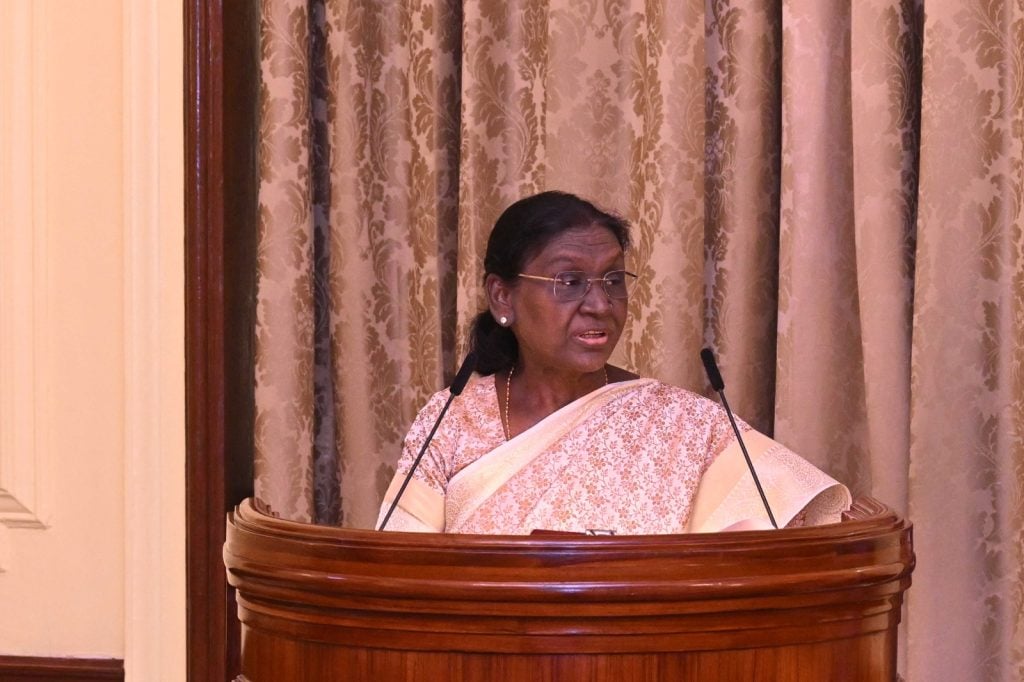
‘Rashtrahit Sarvopari’ Must Guide IFS Officers
Murmu underlined that India’s engagement with the international community must remain closely connected to the aspirations of the Indian people.
She described “Rashtrahit Sarvopari”, or national interest above all, as a principle that should remain an enduring part of the professional lives of Indian Foreign Service officers.
The President also highlighted the expanding role of diplomacy as India works towards the goal of becoming Viksit Bharat by 2047.
As India’s global economic and strategic role expands, diplomats will increasingly be required to connect India’s domestic development priorities with its international partnerships.
Diplomacy Must Go Beyond Government Offices
The President advised the officer trainees not to restrict their diplomatic engagement to government offices, official meetings and traditional diplomatic channels.
She urged them to establish meaningful connections with a much wider cross-section of society, including:
- Universities and academic institutions
- Businesses and researchers
- Innovators and cultural institutions
- Civil society organisations
- Local communities
- The Indian diaspora
Such engagement, she said, would help diplomats develop a deeper understanding of the countries where they are posted and create broader opportunities for cooperation with India.
Murmu particularly highlighted the importance of engaging with the Indian diaspora, including younger members of diaspora communities.
She encouraged diplomats to help young people of Indian origin remain connected with India and identify avenues through which they can contribute to the country’s development journey.
Technology Is Transforming Diplomacy
The President said the nature of diplomacy itself is undergoing rapid change as technology transforms how nations communicate, businesses operate and citizens access public services.
She emphasised that India’s Missions abroad must keep pace with this transformation.
Technology, she said, should be used as an instrument of better governance and deeper engagement.
However, Murmu cautioned that technology should never replace empathy.
The message is particularly relevant for India’s diplomatic missions, which increasingly serve not only as centres of diplomatic engagement but also as important points of contact for Indian citizens living, working or travelling abroad.
Indian Missions Must Remain Accessible During Emergencies
Murmu urged diplomats to ensure that Indian Missions remain accessible and available to Indian nationals whenever they require assistance.
She said Missions should continue the tradition demonstrated through India’s major evacuation and humanitarian operations in recent years.
Every Indian seeking assistance, she said, should feel that the country’s Mission abroad is approachable, compassionate and dependable.
The President’s emphasis placed citizen services at the heart of India’s diplomatic responsibilities, alongside broader strategic and economic objectives.
As India’s overseas presence expands and more Indians travel, study and work abroad, the role of Missions in providing timely assistance during emergencies is becoming increasingly important.
Representing Both India’s Civilisational Heritage and Aspirational Future
Murmu told the young diplomats that they would represent a country whose civilisational journey spans thousands of years, while also representing a young, dynamic and aspirational India.
She highlighted India’s civilisational values of peace, pluralism, dialogue, coexistence and respect for diversity, describing them as deeply embedded in the country’s ethos of Vasudhaiva Kutumbakam.
The President said these values have an important role to play in India’s engagement with an increasingly uncertain and complex world.
For IFS officers, representing India therefore involves communicating both its historical civilisational identity and its contemporary ambitions.
Diplomats Must Be Agile, Curious and Humble
Murmu said diplomats would operate in an international environment that is increasingly uncertain and complex.
She advised the officer trainees to remain agile, curious and continuously willing to learn.
At the same time, she stressed the importance of humility in diplomatic service.
The President urged the young officers to understand the significance of the responsibility they carry whenever they travel or serve abroad.
They would represent not merely the Government of India, she said, but 1.4 billion Indians and their hopes and aspirations.
Integrity and Professionalism Paramount
Murmu called upon the officer trainees to maintain the highest standards of integrity, probity and professionalismthroughout their careers.
The advice comes as India’s diplomatic responsibilities continue to expand alongside its growing economic, technological and strategic footprint.
The young officers will be expected to balance India’s national interests with the requirements of diplomacy, while building relationships across governments, businesses, academia, civil society and communities.
The President’s interaction with the 2025-batch officer trainees thus highlighted a broad vision of Indian diplomacy — one that combines national interest, economic opportunity, technological transformation, citizen assistance, diaspora engagement and India’s civilisational values.
As India moves towards Viksit Bharat 2047, Murmu’s message to the next generation of diplomats was clear: India’s growing engagement with the world must ultimately serve the aspirations of its people, with Rashtrahit Sarvopariremaining at the centre of their professional conduct.