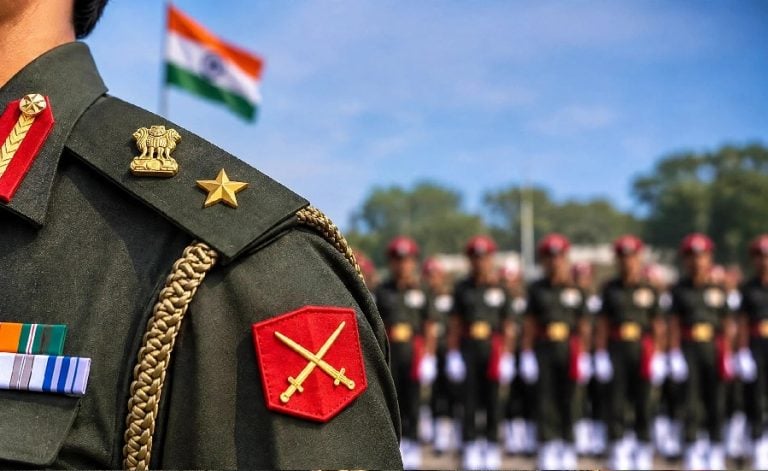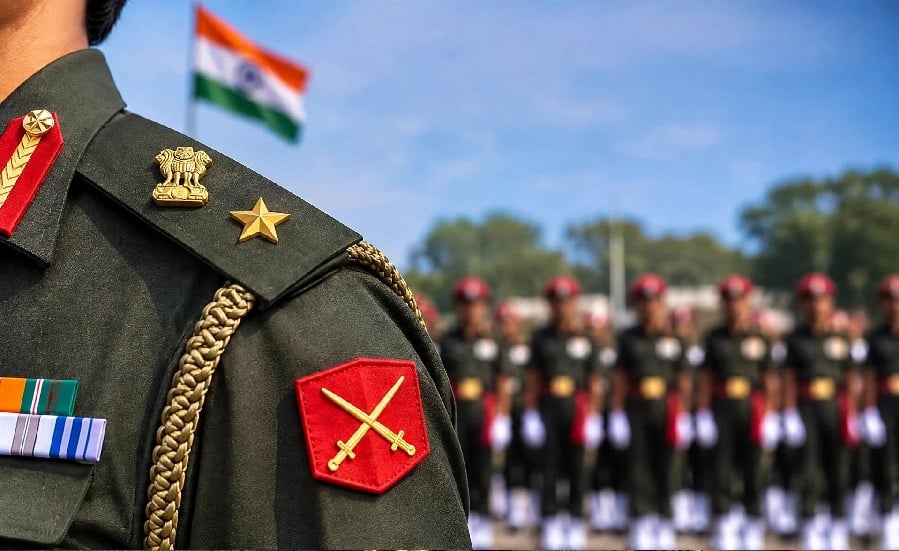
New Delhi: The Indian Army is considering a major restructuring of its officer rank system, including a proposal to abolish the rank of Brigadier and introduce direct promotion from Colonel to Major General. The proposed changes aim to accelerate career progression, reduce delays in promotions and address the perceived gap in career advancement between armed forces officers and their counterparts in civil services.
According to defence sources, the Army is preparing to formally submit the proposal to the Eighth Central Pay Commission through the Ministry of Defence. The recommendations are expected to be finalised soon and may be sent to the commission by the end of this month or next month.
If approved, the proposal could bring significant changes to the Army’s rank structure, command responsibilities and officers’ career progression.
Why Is the Indian Army Considering the Removal of the Brigadier Rank?
The Indian Army currently follows a pyramid-shaped rank structure, with a large number of officers serving at the Lieutenant Colonel level and below, while the number of positions at higher ranks remains limited. This creates bottlenecks in the promotion process and often results in delays in career advancement.
According to the information cited in the proposal, Army officers take an average of 32–33 years to reach the pay level associated with the rank of Major General. In comparison, officers of the Indian Administrative Service (IAS), Indian Police Service (IPS) and Indian Forest Service (IFS) reportedly reach an equivalent level in around 16–18 years.
The proposed restructuring is intended to address this difference, improve career progression and bring greater parity in pay levels and positions between defence officers and civil services officials.
Read also: Indian Army’s 540 Kamikaze Drone Programme Attracts 11 Firms; Pokhran Trials Ahead
What Will Change Under the Proposed New Rank Structure?
Under the proposal, the rank of Brigadier would be removed, allowing officers to move directly from Colonel to Major General.
One of the key changes would involve the distribution of command responsibilities. Major Generals would take charge of brigades, a responsibility currently held by Brigadiers. They would also continue to handle responsibilities at the division level.
The proposal also envisages making Major General the minimum retirement rank for regular officers. This could provide greater career stability and improve opportunities for advancement within the Army.
However, the proposal is still under consideration, and its final structure will depend on the recommendations submitted and the government’s decision.
Proposal to Be Sent to the Eighth Pay Commission
The possibility of abolishing the Brigadier rank is not entirely new. The issue was discussed during a cadre study in 2018, when General Bipin Rawat was serving as the Chief of the Army Staff. However, the proposal was not implemented at that time.
Now, the Army is considering taking the proposal forward through a formal recommendation to the Eighth Central Pay Commission. The Ministry of Defence is expected to serve as the channel for submitting the recommendations.
The final decision on the proposal will depend on the commission’s consideration and the government’s approval.
Impact on the Indian Navy and Indian Air Force
The proposed restructuring could also have implications for the Indian Navy and the Indian Air Force, as both services have ranks equivalent to Brigadier.
The rank of Commodore in the Navy and Air Commodore in the Air Force is equivalent to Brigadier in the Army. Therefore, any major change in the Army’s rank structure may require coordination across all three services to maintain consistency in their rank and command systems.
The adjustment of existing posts and the redistribution of responsibilities would need careful consideration before the proposal could be implemented.
Link With the Army’s Operational Restructuring
The proposed rank changes are also being considered at a time when the Indian Army is undertaking broader changes to its operational organisation.
The Army has already activated five Integrated Battle Groups (IBGs) and one Fire Support Group as part of its efforts to improve operational effectiveness. Each IBG comprises around 5,000 personnel, making it larger than a brigade but smaller than a division. These groups are commanded by Major Generals.
The Army’s experience with this operational structure could be relevant to the proposed changes in the rank and command framework. Assigning brigade-level responsibilities to Major Generals may further align the rank structure with the evolving operational organisation.
Benefits and Challenges of the Proposed Restructuring
The proposed removal of the Brigadier rank could offer several benefits, including faster career progression, improved promotion opportunities and better career stability for regular officers. It may also help improve morale and retain experienced talent within the armed forces.
However, implementing the changes would involve several challenges. These include adjusting existing Brigadier-level positions, redistributing command responsibilities and ensuring coordination with the Navy and Air Force.
The transition would require careful planning to ensure that the revised rank structure does not create gaps in operational command or administrative responsibilities.
What Happens Next?
The Indian Army is expected to finalise its recommendations and submit them to the Eighth Central Pay Commission through the Ministry of Defence. The proposal’s consideration by the commission and the government’s subsequent decision will determine whether the Brigadier rank is abolished and direct promotion from Colonel to Major General is introduced.
If approved, the restructuring would represent a significant change in the Indian Army’s officer career framework and command architecture, forming part of its wider efforts to modernise its organisational structure.
Read also: Indian Army Targets 300 Critical Spares To Reduce Defence Import Dependence