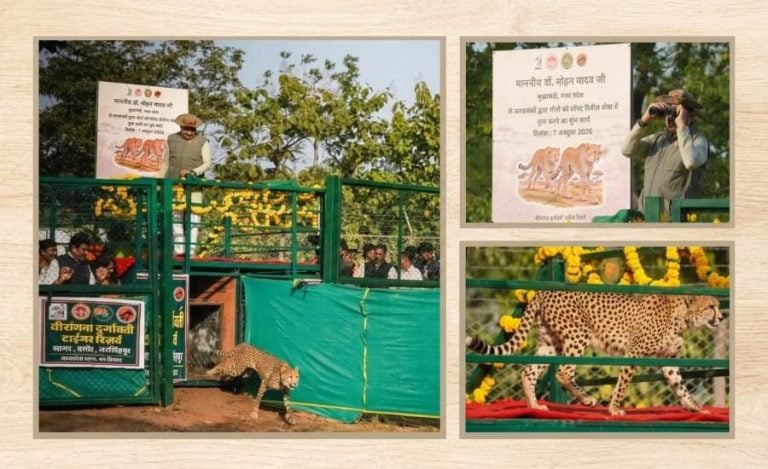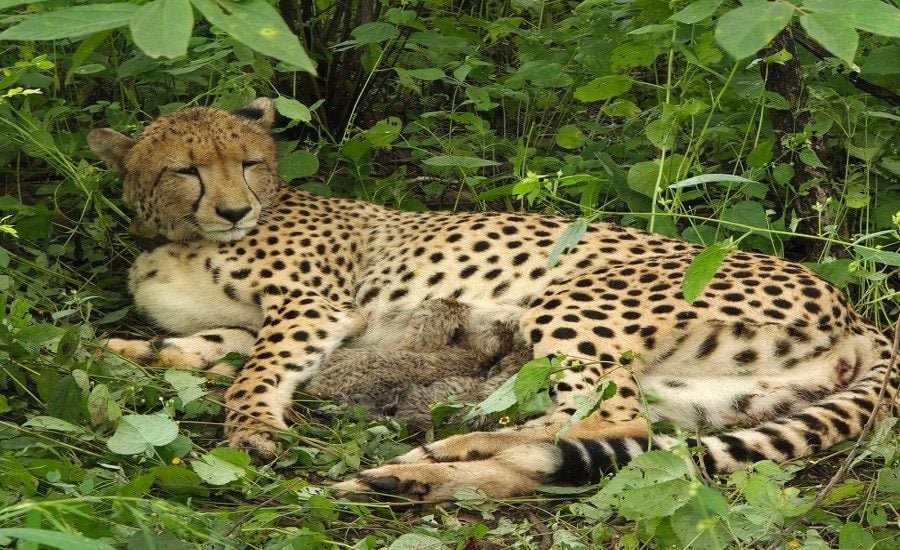
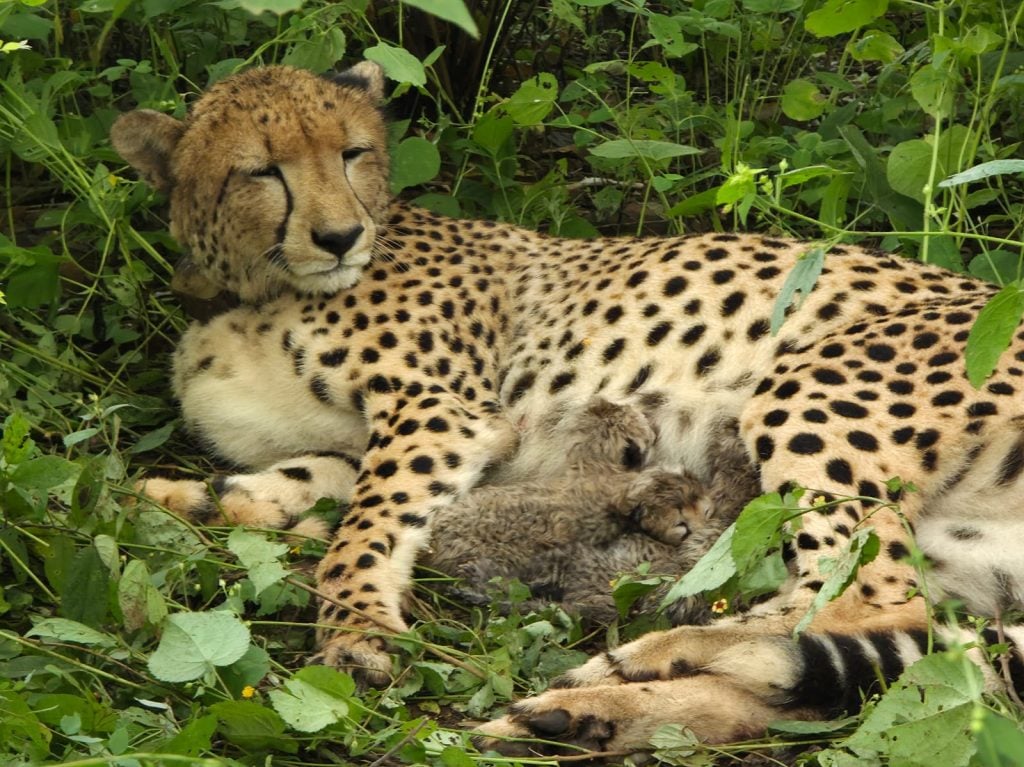
Bhopal: Kuno National Park in Madhya Pradesh has recorded another milestone in India’s cheetah conservation journey, with KGP12, a female cheetah born in India, giving birth to four cubs on September 18, 2026.
With the arrival of the four cubs, India’s cheetah population has risen from 52 to 56.
The latest births mark another step in Project Cheetah’s transition from the initial phase of reintroducing the species to establishing breeding populations on Indian soil.
Project Cheetah was launched at Kuno National Park on September 17, 2022, when eight cheetahs from Namibia were brought to India. Twelve more arrived from South Africa in February 2023, while nine cheetahs were brought from Botswana in February 2026.
KGP12 Gives Birth to Four Cubs in Kuno
KGP12, a female cheetah born in India, delivered four cubs at Kuno National Park on September 18.
The birth is significant because KGP12 herself was born as part of India’s ongoing cheetah breeding programme. Her cubs therefore represent another generation of cheetahs born on Indian soil.
With four new births, the total number of living cheetahs in India has reached 56.
The latest development comes months after India crossed the 50-cheetah mark in March 2026, when Namibian cheetah Jwala gave birth to five cubs at Kuno, taking the population to 53 at that time.
From 52 to 56 Cheetahs
Before the latest births, India had 52 living cheetahs.
The four cubs born to KGP12 have now increased the population to 56. The number of cheetahs born in India has also reached 36, according to the latest project figures.
The milestone reflects the growing contribution of natural breeding to the population, alongside the periodic introduction of cheetahs from African countries.
Earlier official data recorded 33 thriving Indian-born cubs in March 2026, after Jwala gave birth to five cubs.
The Four-Year Journey of Project Cheetah
India’s cheetah reintroduction programme began on September 17, 2022, when eight cheetahs from Namibia arrived at Kuno National Park.
The next major batch arrived from South Africa in February 2023, when 12 cheetahs were brought to India. In February 2026, nine more cheetahs from Botswana joined the programme.
The project was designed not merely to bring individual animals back to India but to establish a viable population through reintroduction, breeding and expansion into suitable habitats.
The first successful births on Indian soil occurred in 2023, marking the return of cheetah reproduction to the country after the species had been declared extinct in India in 1952. Official government material has described Project Cheetah as the world’s first intercontinental translocation of a large carnivore.
Cheetah Conservation Expands Beyond Kuno
Kuno National Park remains the primary centre of Project Cheetah, but conservation efforts have also expanded to Gandhi Sagar Wildlife Sanctuary in Madhya Pradesh.
According to the latest figures supplied for the project, 49 cheetahs were in Kuno and three were in Gandhi Sagar before the birth of the four cubs. With the new births, Kuno’s population has risen to 53, while Madhya Pradesh accounts for all 56 cheetahs currently in India.
The expansion to Gandhi Sagar is part of the broader effort to develop multiple habitats capable of supporting the species rather than concentrating the entire population at a single location.
From Reintroduction to Natural Breeding
The latest birth also highlights an important shift in the conservation programme.
The initial phase of Project Cheetah involved bringing cheetahs from Namibia, South Africa and Botswana and allowing them to acclimatise to Indian conditions. Subsequent breeding has produced successive generations on Indian soil.
In December 2025, government material highlighted the birth of five cubs to Mukhi, an India-born female, describing the event as a milestone for second-generation viability.
KGP12’s latest litter adds another layer to this breeding success. As an India-born female giving birth to four cubs, she represents the continuation of the population through animals born and raised within India.
Madhya Pradesh at the Centre of Project Cheetah
Madhya Pradesh has emerged as the central hub of India’s cheetah conservation programme, with Kuno National Park serving as the country’s first cheetah reintroduction site.
Kuno was selected because of its suitable habitat, prey availability and relatively low human disturbance. The government has also been developing additional habitat for the species, including Gandhi Sagar.
The Forest Department, wildlife experts, veterinarians and field personnel remain involved in monitoring the animals, managing their health and ensuring protection of the cheetahs and their habitat.
Project Cheetah Enters a New Phase
The birth of four cubs to KGP12 adds to a series of breeding milestones recorded since the launch of Project Cheetah.
The programme has moved from the initial reintroduction of an extinct species to India towards establishing successive generations through breeding within the country.
With 56 living cheetahs now recorded in India, including 36 born on Indian soil, the latest development marks another milestone in the effort to establish a sustainable cheetah population across suitable Indian landscapes.
The next phase will depend on the continued survival and breeding of the animals, effective habitat management, veterinary care, monitoring and the gradual expansion of the population across suitable conservation areas.
Read also: Kuno National Park Shock: 4 Cheetah Cubs Found Dead Near Den in MP; Predation Suspected