Partnered Content
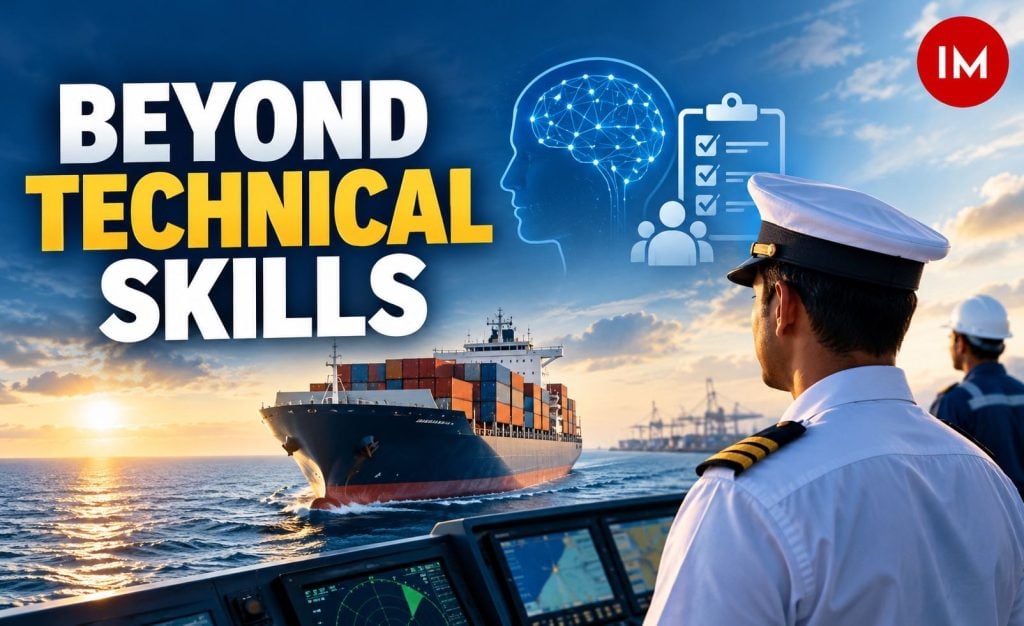
India plays an increasingly important role in supplying trained maritime professionals to domestic and international shipping operations. The country supplied 311,936 maritime professionals in 2026, representing 12.16% of the global seafaring workforce.
Technical certification remains fundamental because marine positions require verified training, occupational competence, and compliance with established watchkeeping and safety standards. However, certification does not fully explain how candidates process operational information, communicate within diverse crews, or respond during changing conditions.
A psychometric assessment adds structured evidence about these job-related human factors without replacing technical evaluation. Let us understand how Indian maritime recruiters can combine verified competence with cognitive and behavioral evidence during workforce selection.
Why Psychometric Assessment Matters for Maritime Hiring in India
India became the world’s second-largest supplier of seafarers in 2026, increasing the importance of consistent talent evaluation across maritime roles. Indian professionals now serve across officer, rating, engineering, deck, offshore, and other operational positions supporting international shipping.
A psychometric assessment can add comparable evidence after recruiters confirm mandatory qualifications, sea service, and technical eligibility. It can measure competencies that influence performance when professionals work within multinational crews, changing operating environments, and clearly defined safety systems.
This additional assessment layer supports competency-based selection while keeping statutory certification as the essential foundation for deployment.
5 Human Factors Maritime Recruiters Should Evaluate
Maritime operations depend upon technical competence and human performance working together across daily and safety-critical situations. International maritime guidance identifies communication, situational awareness, leadership, teamwork, and decision-making as important competence areas for seafarers.
A psychometric assessment in hiring can examine five job-related dimensions alongside technical selection methods.
- Situational Awareness
Measures how candidates recognize relevant information, monitor changing conditions, and maintain an accurate understanding of operational circumstances.
- Problem-solving
Evaluates logical analysis, critical reasoning, information interpretation, and the ability to identify workable responses during unfamiliar situations.
- Safety Orientation
Examines procedural discipline, risk awareness, accountability, and the candidate’s approach toward established safety requirements and operating procedures.
- Team Collaboration
Assesses communication, coordination, conflict handling, and willingness to incorporate information from other crew members during shared decisions.
- Adaptability
Measures how candidates adjust their approach when responsibilities, schedules, equipment, operational priorities, or environmental conditions change.
These competencies give recruiters a broader view of behavioral readiness without treating personality results as substitutes for professional maritime competence.
Connecting Assessments With Indian Maritime Hiring Requirements
Indian seafarer recruitment operates within clearly defined training, certification, and verification requirements administered through the country’s maritime regulatory system.
Recruitment and Placement Service License (RPSL) agencies must verify applicable Certificates of Competency (CoC), Certificates of Proficiency (CoP), and approved Standards of Training, Certification, and Watchkeeping (STCW) training documentation.
After eligibility is established, a psychometric assessment can explore competencies that certification records may not directly measure.
| Indian Maritime Hiring Check | Evidence Available | Additional Assessment Focus |
| CoC or CoP Verification | Certified occupational competence | Judgment and behavioral tendencies |
| STCW Training | Required safety preparation | Safety orientation |
| Sea-service Record | Practical operating exposure | Adaptability and learning agility |
| Technical Assessment | Role-specific knowledge | Problem-solving approach |
| Structured Interview | Previous workplace examples | Communication and teamwork |
| Psychometric Assessment | Standardized behavioral evidence | Competency alignment |
This assessment sequence preserves the role of statutory requirements while adding evidence about how candidates may approach work-related situations.
Where Indian Maritime Recruiters can Apply Role-Specific Assessments
A psychometric assessment should reflect actual responsibilities because deck, engineering, offshore, and supervisory positions require different competency profiles.
- Deck Officers
Assess situational awareness, critical reasoning, communication, decision-making, leadership, and risk recognition alongside navigation-related technical competence.
- Marine Engineers
Examine mechanical reasoning, problem-solving, attention, procedural discipline, and decision-making during equipment or system-related operating conditions.
- Ratings and Watchkeeping Personnel
Evaluate sustained attention, reliability, teamwork, communication, and adherence to established operating procedures during assigned duties.
- Offshore Operations Teams
Measure adaptability, coordination, situational judgment, safety orientation, and response consistency within demanding operational environments.
- Future Supervisors
Assess delegation, accountability, conflict management, communication, decision-making, and leadership potential before assigning broader responsibilities.
A marine psychometric test becomes more useful when competency mapping reflects actual vessel duties instead of applying one universal candidate profile.
How Recruiters Can Build a Maritime Assessment Battery
One assessment cannot measure every capability required for safe and effective maritime performance. Recruiters should therefore combine different selection methods according to role requirements.
A psychometric assessment can measure cognitive ability, personality traits, behavioral tendencies, motivations, and work-related preferences. Technical examinations can confirm occupational knowledge, while structured interviews provide evidence from previous maritime experiences.
Simulation exercises can assess decision-making within realistic operating situations, while communication assessments can examine clarity across crew and stakeholder interactions. A marine psychometric test can then provide standardized behavioral evidence that recruiters compare with these other results.
This multi-method assessment battery improves construct coverage because technical knowledge, cognitive potential, behavioral preference, and demonstrated performance represent different candidate dimensions.
What are the Technical Standards That Strengthen Assessment Quality?
A psychometric assessment requires scientifically interpretable scores before recruiters use results for selection or development decisions. International test guidance emphasizes appropriate validity, reliability, standardization, fairness, and score interpretation across professional assessment programs.
- Construct validity confirms that each scale measures the cognitive or behavioral characteristic it claims to evaluate.
- Reliability indicates whether scores remain sufficiently consistent across comparable assessment conditions and relevant candidate populations.
- Norm groups provide suitable reference populations for interpreting percentile ranks and comparing candidate results appropriately.
- Standardization keeps instructions, administration, scoring, timing, and report interpretation consistent across assessment participants.
- Criterion-related validity examines whether assessment scores demonstrate meaningful relationships with relevant measures of workplace performance.
Recruiters should also review assessment benchmarks when vessel technology, responsibilities, competency requirements, or target candidate populations change.
How Psychometric Insights Support Maritime Talent Development
Assessment information can remain useful after recruitment when organizations connect results with structured learning and workforce planning. A psychometric assessment may identify development priorities related to leadership, communication, decision-making, adaptability, or problem-solving.
For example, an experienced officer showing strong technical ability but developing delegation skills may receive focused preparation before taking supervisory responsibility. Aggregate competency data can also support training needs analysis, succession planning, leadership pipelines, and internal mobility across maritime functions.
A marine psychometric test should remain one evidence source within these decisions. Performance records, sea-service experience, supervisor observations, training outcomes, and operational results provide additional context for development planning.
Build Indian Maritime Teams With Broader Talent Evidence
India’s growing contribution to the global seafaring workforce creates a strong case for structured, role-specific talent evaluation alongside established certification systems. A psychometric assessment can help employers in the maritime sector examine reasoning, situational awareness, communication, adaptability, teamwork, and safety orientation after confirming required professional credentials.
Recruiters should interpret these findings alongside technical examinations, structured interviews, sea-service records, simulations, and documented performance evidence. Start by identifying the human-factor competencies affecting one critical maritime role and build an assessment battery around those requirements.
A psychometric assessment can then add measurable behavioral insight while preserving technical certification as the foundation of professional maritime selection.
(This is third-party “Partnered Content.” All such content is for informational purposes only, and we do not claim ownership or responsibility for it)