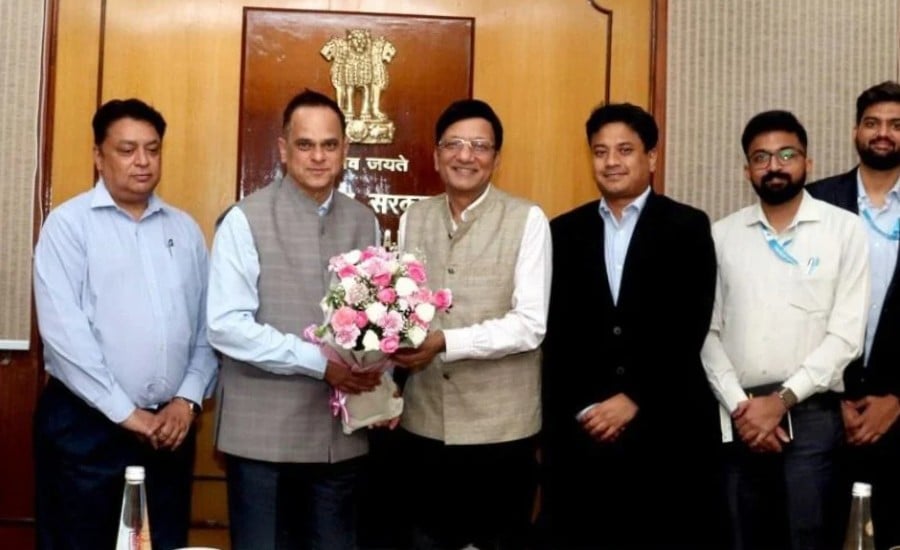
Jaipur: Rajasthan is preparing an administrative reform plan aimed at making the state’s bureaucracy more efficient, digitally enabled and aligned with the long-term Viksit Rajasthan@2047 vision.
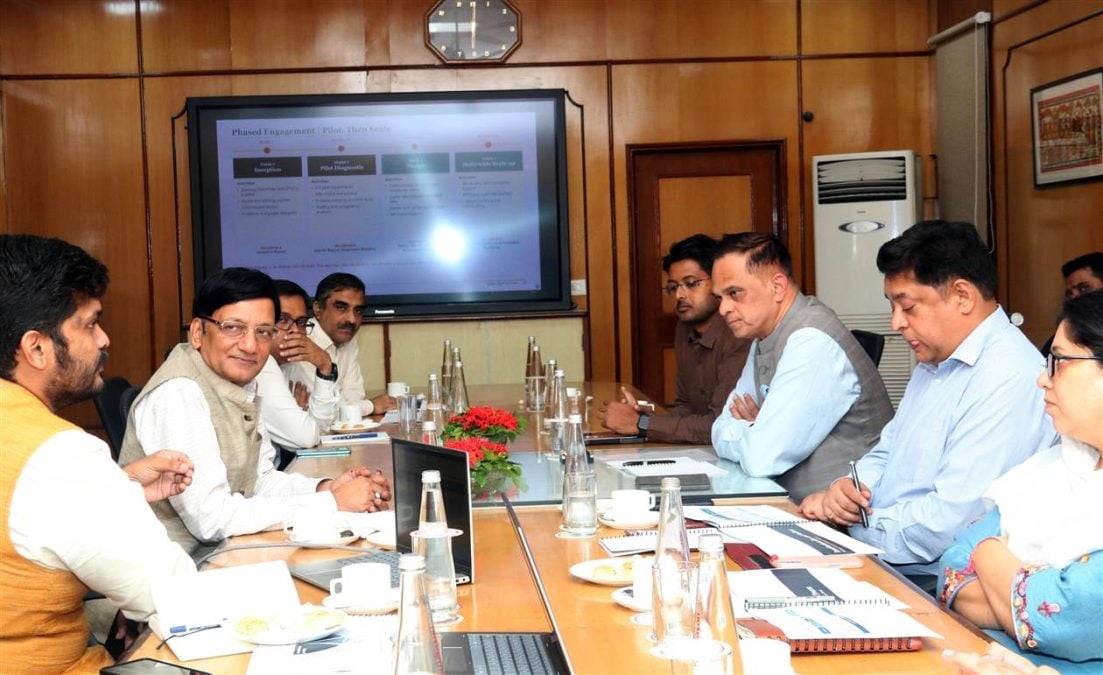
Chief Secretary V. Srinivas, a 1989-batch IAS officer of the Rajasthan cadre, chaired a meeting in Jaipur where the Quality Council of India (QCI) presented a proposed action plan covering administrative reforms, human-resource assessment, process improvement and digital transformation. The plan will initially be tested through a diagnostic study in six departments.
Six Departments to Undergo Pilot Diagnostic Study
Under the first phase, QCI will conduct a diagnostic assessment across six departments. The exercise will examine departmental functions, organisational structures, staffing requirements, skills and competencies, as well as possible overlaps in responsibilities.
The findings are expected to inform decisions on cadre and activity requirements, manpower norms, cadre rationalisation, recruitment-rule changes, process optimisation and the proposed HR Stack.
The plan will subsequently provide technical support and capacity-building assistance to departments for wider implementation.
The proposed sequence is:
- Phase 1: Diagnostic study in six departments
- Next phase: Cadre rationalisation, manpower norms, recruitment-rule changes, process optimisation and HR Stack framework
- Statewide phase: Technical support and capacity building for implementation
Focus on Simpler, Time-Bound Government Processes
The meeting discussed standard operating procedures for repetitive tasks, removal of unnecessary steps and greater use of digital technology and Artificial Intelligence.
Process mapping and time studies will be used to assess how long individual tasks take, with the aim of making workflows simpler and more result-oriented. The proposed framework also includes the use of a RASIC matrix to define responsibility and accountability at different levels and reduce ambiguity in task execution.
QCI Secretary General Chakravarty T. Kannan emphasised the need to make better use of human resources, work methodologies and technology while scientifically assessing departmental functions and organisational structures.
HR Assessment to Match Skills With Future Needs
The proposed study will also examine the state’s present and future human-resource requirements. This includes assessing the number of personnel required, their skills and competencies, and whether these align with departmental responsibilities and future programmes.
The exercise will also examine overlapping functions across administrative levels and the requirements of citizen-centric service delivery.
Srinivas said, “In the next phase, technical support and capacity building will be provided to the concerned departments to facilitate state-wide implementation.”
Administrative Reform Linked to Viksit Rajasthan@2047
The proposed reforms are being positioned as part of Rajasthan’s broader administrative transformation under the Viksit Rajasthan@2047 vision. The state has previously identified governance and institutional reforms, along with technology adoption and citizen-centric administration, as components of its long-term development strategy.
The meeting was attended by senior officials including Principal Secretary, General Administration Department, Naveen Jain (IAS: 2001: RJ); Secretary, Information Technology & Communication, Ravi Kumar Surpur (IAS: 2004: RJ); Secretary, Personnel, Archana Singh (IAS: 2008: RJ); Joint Secretary, Personnel, Dheeraj Kumar Singh (IAS: 2020: RJ); Joint Secretary, Finance, Pratap Singh (IAS: 2016: RJ); and Rajasthan Institute of Transformation and Innovation CEO Satyendra Kumar (IPS: 2007: RJ).