Jaipur: Rajasthan Chief Secretary V. Srinivas, a 1989-batch IAS officer of the Rajasthan cadre, has outlined key administrative priorities for 16 officers recently promoted from the Rajasthan Administrative Service (RAS) to the Indian Administrative Service (IAS), emphasising public trust, transparent decision-making and technology-enabled governance.
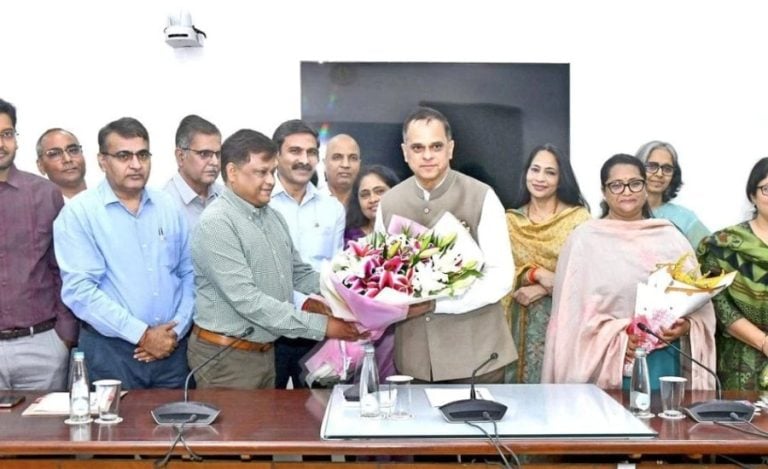
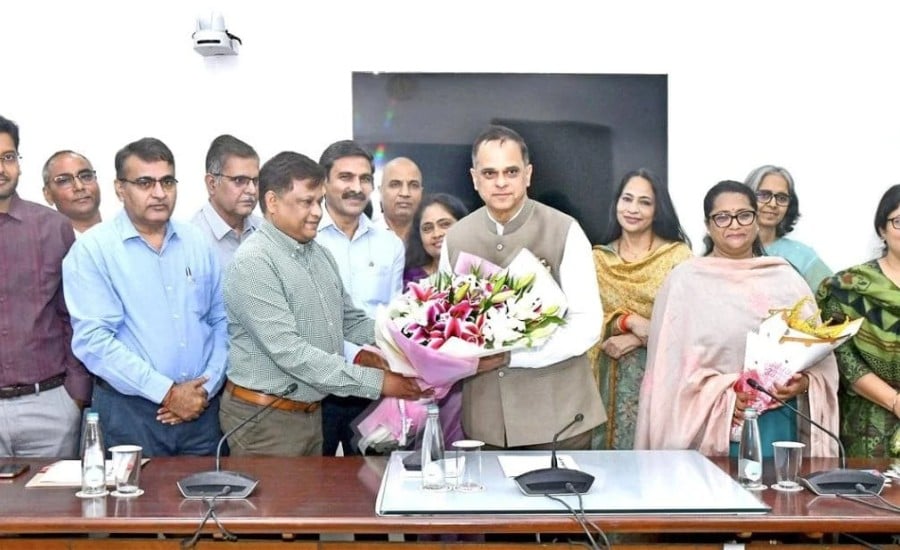
During an interaction at the Government Secretariat, Srinivas congratulated the officers and urged them to focus on good governance, effective implementation of public welfare schemes and making government institutions more accountable.
He highlighted the importance of maintaining public confidence in the civil services through fair, impartial and transparent decisions.
16 Newly Promoted IAS Officers Attend Interaction
The meeting brought together 16 officers who were recently elevated from state administrative services to the IAS.
The officers are:
- Gopal Ram Birda
- Meghna Chaudhary
- Om Prakash Jain
- Rajesh Singh
- Mukesh Kumar Sharma
- Mahendra Kumar Sharma
- Anju Rajpal
- Vivek Kumar
- Madan Lal Nehra
- Dinesh Kumar Jangid
- Poonam Prasad Sagar
- Ummed Singh
- Mahaveer Kharadi
- Dr Bhagchand Badhal
- Aslam Sher Khan
- Narendra Kumar Bansal
Srinivas encouraged the officers to approach their new responsibilities with a strong sense of purpose, professionalism and commitment to public welfare.
Public Trust and Impartial Decision-Making
Emphasising the responsibility that accompanies the IAS, Srinivas said public confidence in the civil services rests on the expectation that administrative decisions will be fair and free from bias.
He also referred to Rajasthan’s established institutions of governance, including the Board of Revenue and the district collectorate system, noting the role of dedication and hard work in building these institutions.
The Chief Secretary urged the officers to uphold these institutional values while adapting to changing administrative requirements.
He highlighted the state government’s Maximum Governance–Minimum Government approach, which aims to simplify citizens’ interactions with government through technology, process improvements and purposeful administration.
IT and Artificial Intelligence to Improve Governance
Srinivas called for greater use of information technology (IT) and artificial intelligence (AI) to make public administration more efficient and transparent.
He emphasised the need to use technological tools to improve governance processes and strengthen service delivery.
Key priorities highlighted during the interaction included:
- Technology-enabled administration: Using IT and AI to improve the efficiency of government functioning.
- Transparent decision-making: Ensuring administrative processes remain fair and accountable.
- Effective scheme implementation: Improving the delivery of public welfare programmes.
- Simplified public services: Reducing procedural difficulties faced by citizens when accessing government services.
Officers Asked to Visit Rajasthan Sampark Call Centre
The Chief Secretary directed the newly promoted IAS officers to visit the Rajasthan Sampark Call Centre at the Government Secretariat to understand how citizens’ complaints and representations are received and processed.
He asked them to examine the grievance-handling mechanism and focus on the quality of case disposal.
The Rajasthan Sampark platform provides a centralised channel through which citizens can register grievances relating to government departments and services.
The visit is intended to familiarise the officers with the practical challenges involved in grievance redressal and the administrative processes required to resolve complaints effectively.
Mission Karmayogi Courses for Leadership Development
Srinivas also asked the officers to complete courses covering behavioural competencies and leadership under Mission Karmayogi, the government’s capacity-building initiative for civil servants.
The training modules are intended to strengthen their administrative skills, leadership capabilities and professional effectiveness as they take on responsibilities in the IAS.
During the meeting, Additional Chief Secretary (Training) Shreya Guha briefed the officers on the available courses and modules.
She highlighted the role of structured training in improving administrative competence and expressed confidence that the officers would contribute to public welfare through effective teamwork and efficient administration.
Secretary of the Department of Personnel Archana Singh and Joint Secretary Dheeraj Kumar Singh were also present.
Citizen Convenience Remains the Priority
Concluding the interaction, Srinivas urged the officers to align their work with the state’s objective of making government services more accessible and institutions more accountable.
He stressed that improving citizens’ experience with government should remain central to administrative decision-making.
The interaction focused on combining institutional values with technological innovation, professional development and effective grievance redressal as the newly promoted officers begin their responsibilities in the IAS.