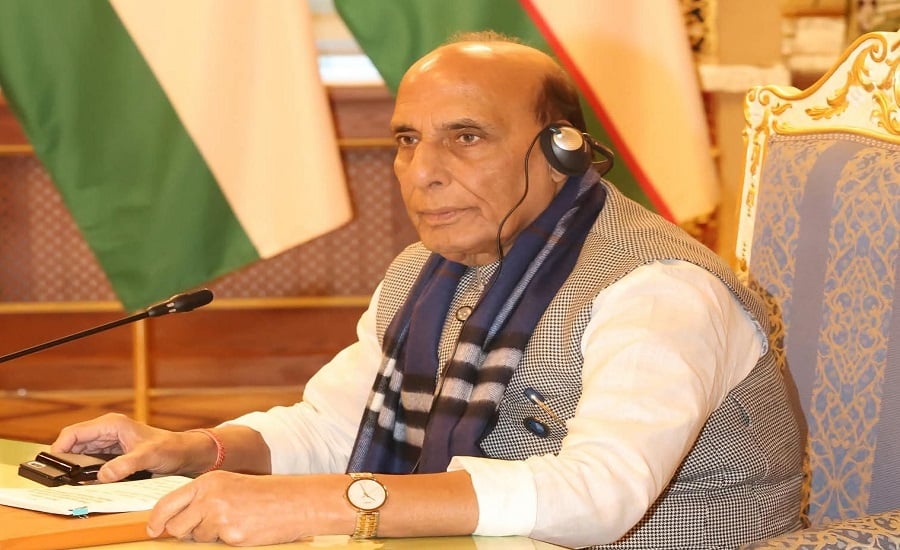
Dushanbe: India’s Defence Minister Rajnath Singh has called on Shanghai Cooperation Organisation member countries to take strong and united action against terrorism. Speaking at the 25th SCO Council of Heads of Government meeting in Dushanbe, Tajikistan, on October 20, 2026, he said there should be no place for those who finance, support or provide safe havens to terrorists.
He also highlighted how terrorism harms innocent people, disrupts business and affects economic development. Singh urged member countries to turn their shared commitments into practical action.
SCO 2026: Rajnath Singh Calls For United Action Against Terrorism
Rajnath Singh described terrorism as one of the biggest threats to peace and development. He said all SCO member countries must work together to dismantle the entire ecosystem that allows terrorism to continue.
Read also: Why the Latest India-Russia Counter Terrorism Meeting Matters for Global Security
He stressed that terrorism cannot be justified under any circumstances. He also called for equal standards in the fight against terrorism, without making exceptions for any country or group.
According to Singh, terrorism does more than take innocent lives. It also creates fear in society, damages economic activity and reduces opportunities for young people. He said countries must act against those who provide money, support or safe places to terrorists. His message focused on the need for collective action rather than isolated efforts.
Terrorism Threatens Investment, Trade And Youth Opportunities
The Indian Defence Minister highlighted the connection between security and economic growth. He explained that terrorism can damage investment, interrupt commerce and create uncertainty for businesses.
When violence and insecurity increase, companies may become less willing to invest. Trade can also face disruptions, affecting economic opportunities and development.
Singh further said that terrorism can radicalise societies and prevent young people from accessing opportunities. He called for stronger cooperation to protect peace and support long-term development. His remarks placed security at the centre of the SCO’s wider goals of regional cooperation and economic progress.
India Pushes For Practical Results From The SCO 2026
Singh said the Shanghai Cooperation Organisation must build agreement among its members and turn that agreement into concrete results.
He referred to Prime Minister Narendra Modi’s remarks at the SCO Summit in Bishkek in August and September 2026. Modi had highlighted the need for practical steps on security, connectivity and opportunities.
Singh said these areas are closely connected. Better security can support investment, while improved connectivity can help countries trade more easily and develop stronger economic relationships. He also said that economic cooperation should benefit all member countries rather than only a few.
Global Economic Challenges Remain A Concern
Singh highlighted several challenges affecting the global economy. These include geopolitical tensions, conflicts, disruptions to trade and supply chains, and concerns about food and energy security.
He also pointed to the growing technological divide between countries. While new technologies can support economic growth, unequal access may create additional challenges.
To address these problems, Singh called for stronger supply chains, greater trade and investment, and wider use of technology for development. He said the SCO should focus on practical solutions that can improve cooperation among its members.
India Supports SCO Economic Cooperation Plan For 2026–2030
India expressed support for the Action Plan for the Multilateral Trade and Economic Cooperation Programme for 2026–2030.
The programme aims to strengthen economic cooperation among SCO member countries. Its areas of focus include trade, investment, transport, finance, digital development and social progress.
Singh stressed that economic cooperation should be inclusive and mutually beneficial. This means its benefits should reach different sections of society, including young people, farmers, entrepreneurs and small businesses. He also said that new institutions and mechanisms should address clear needs, avoid unnecessary duplication and deliver practical benefits.
Rajnath Singh Highlights Regional Connectivity in SCO 2026
Singh said better regional connectivity can help countries reach new markets, increase trade and create development opportunities.
He highlighted the International North-South Transport Corridor and Iran’s Chabahar Port as initiatives that could help connect Central Asia with wider markets. However, he stressed that connectivity projects must respect the sovereignty and territorial integrity of all countries.
He said projects that do not follow these principles may not be sustainable. His remarks underlined India’s position that regional development should be based on consultation and mutual respect.
Singh also called for improvements beyond physical infrastructure. These include simpler customs procedures, digital documentation, better logistics and compatible digital systems to reduce business costs.
SCO Strengthens Its Institutional Cooperation
The meeting also discussed the SCO’s institutional and economic cooperation. Singh welcomed decisions to establish the Universal Centre in Tashkent and the Anti-Drug Centre in Dushanbe as permanent bodies of the organisation.
He said their success would depend on effective coordination and the timely completion of their responsibilities. The meeting reviewed cooperation in areas such as transport, finance, the digital economy and social development.
The heads of delegation adopted a joint communiqué, the SCO budget for 2027, relevant financial and administrative decisions, and the action plan for multilateral trade and economic cooperation for 2026–2030. India has been a full member of the SCO since 2017.
India Highlights Technology And Inclusive Development
Singh also discussed India’s experience in using technology and innovation to support economic growth.
He highlighted India’s Digital Public Infrastructure, which has helped improve public service delivery and financial inclusion. He also pointed to India’s startup ecosystem and its focus on women-led development.
Singh said the success of the SCO should be measured by the opportunities it creates for young people, the markets it opens for entrepreneurs and the technologies it makes available to farmers and small business owners.
He also highlighted international initiatives related to clean energy, disaster-resilient infrastructure, sustainable living and biofuels. Singh invited SCO member countries to participate in the first SCO Civilisational Dialogue Forum, which India plans to host later in 2026.
Read also: Why China Reduced Troops Near India’s Border While Keeping Its Military Power Intact
FAQs
The 25th SCO Council of Heads of Government meeting was held in Dushanbe, Tajikistan, on October 20, 2026. India’s Defence Minister Rajnath Singh represented India at the meeting.
Rajnath Singh said terrorism cannot be justified and there should be no double standards in fighting it. He called for united action against those who finance, support or provide safe havens to terrorists.
Rajnath Singh discussed trade, investment, regional connectivity, supply chains, food and energy security, and the use of technology for development. He also supported the SCO’s Multilateral Trade and Economic Cooperation Programme for 2026–2030.