There was a time when continuing school was a challenge for Mavis Tak and her elder sister. Their family was going through financial difficulties, and there came a point when their father could not afford their tuition fees. Both sisters had to stay away from school for a year. For a family that was struggling to meet its basic needs, even the cost of education was a burden.
Yet, their father refused to give up on his daughters’ future. He took up different kinds of work to support the family and kept moving forward, even when circumstances offered little certainty. Years later, one of his daughters would become an Indian Police Service (IPS) officer, serving in a state where policing often demands courage, patience and a deep understanding of people.
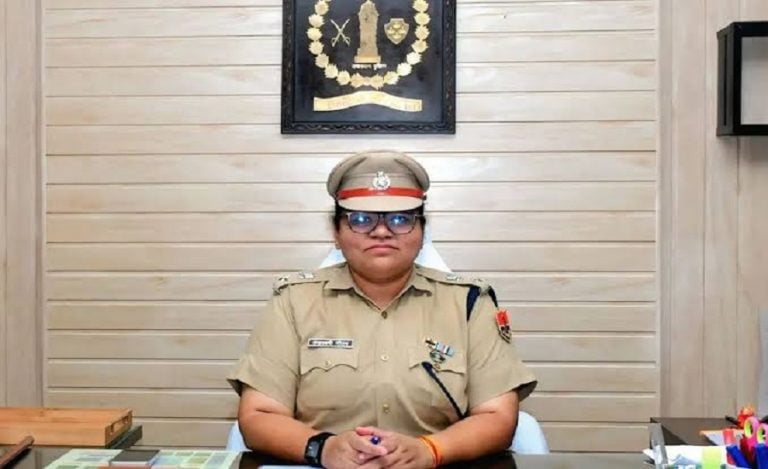
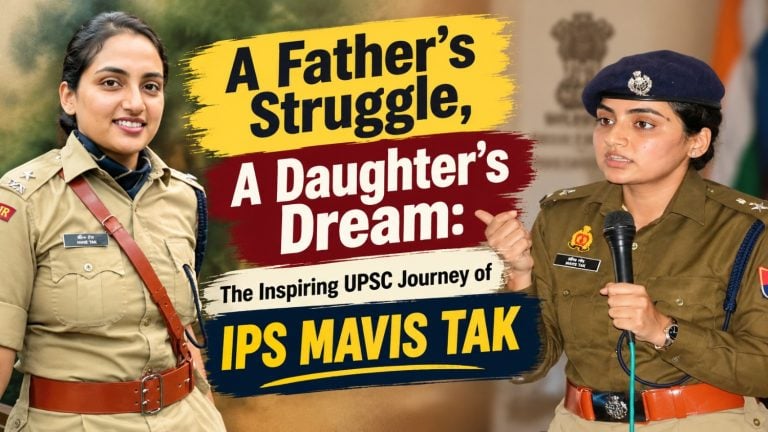
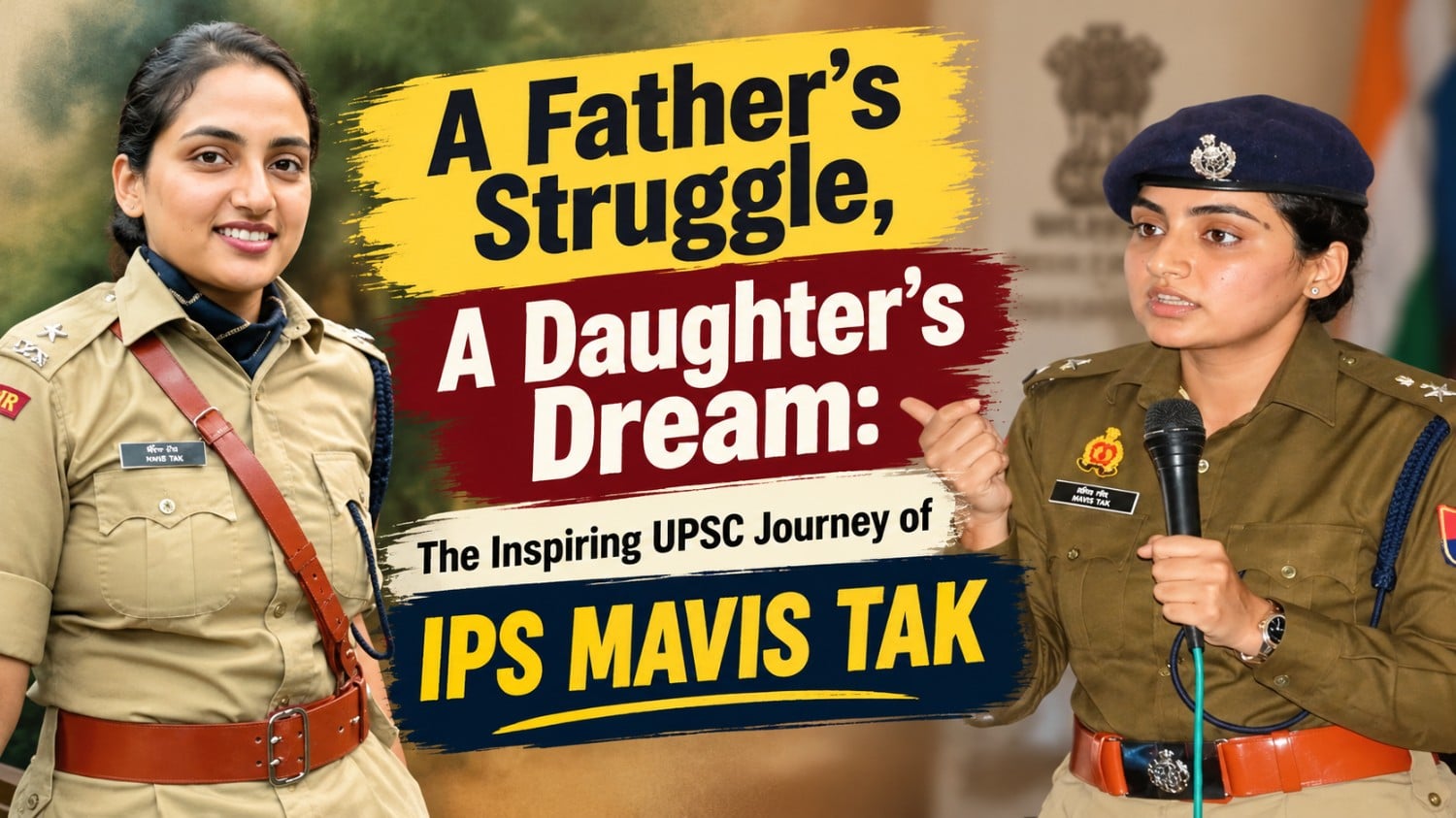
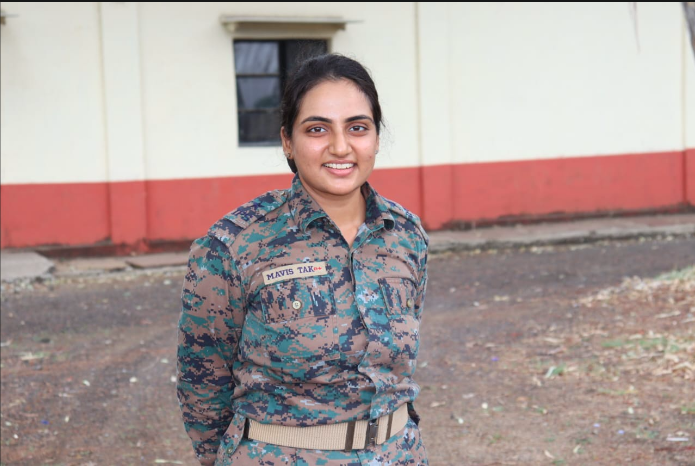
For Mavis Tak, a 2022-batch IPS officer of the Uttar Pradesh cadre, currently posted as Assistant Superintendent of Police (ASP) in Sonbhadra, the journey to the civil services was not simply about clearing one of India’s toughest examinations. It was also about the sacrifices made by her family, the dreams her father passed on to her, and the determination to keep going when success seemed uncertain.
Looking back, she feels that the civil services examination might have seemed like a far-fetched dream given her family’s financial condition. But her father’s unwavering support gave her the strength to pursue it.
Also Read – He missed MBBS by 1 mark in 2016; Maharashtra’s Bhikan Rojekar secures UPSC AIR 812
A CHILDHOOD SHAPED BY FINANCIAL STRUGGLES
Mavis was born in Palma, a small town in Rajasthan’s Alwar district. She studied there until Class 2. In search of better economic opportunities, her father moved the family to Mumbai in 2003. The move, however, did not immediately bring financial stability.
Her father ran an independent business for some time. As circumstances changed, he took up different forms of work in Mumbai, including typing and translation assignments. He worked as a freelancer, accepting whatever opportunities came his way to keep the household running.
The family’s financial struggles affected even the children’s education. There was a period when her father could not afford their tuition fees, forcing Mavis and her elder sister to drop out of school for a year. For a child, such an interruption could easily have become a lasting setback. For the family, it was a difficult phase that tested their ability to keep going.
However, her father continued to work towards securing a better future for his daughters. Despite the uncertainty of freelance work and the challenges of managing a household, he did not abandon their education.
His determination left a lasting impression on Mavis. She grew up watching a man who continued to find ways forward even when the circumstances were difficult. That experience would later shape her own response to failure.
A DREAM THAT CAME FROM HER FATHER
Mavis did not begin her journey with a clear and independent ambition to join the IPS. The idea of appearing for the civil services examination came to her through her father, who wanted her to explore the possibilities that education could open up.
Over time, his dream became hers.
His encouragement helped her imagine a future that was very different from the circumstances in which she had grown up. Yet, pursuing that dream was not easy. The civil services examination requires years of preparation, considerable emotional strength and the ability to withstand repeated setbacks. For candidates from financially secure families, the journey can already be demanding. For someone whose family has struggled to afford school tuition, the risks can feel even greater.
Mavis was conscious of these realities. A long preparation period without a regular income could place an additional burden on her family. Unlike candidates who could depend on financial support for several attempts, she knew that her circumstances required careful thought.
Her father’s faith in her, however, gave her the confidence to take the first step. His own struggles had shown her that difficult circumstances did not have to determine the limits of one’s ambition.
TWO FAILED ATTEMPTS AND THE COURAGE TO CONTINUE
Mavis appeared for the UPSC Civil Services Examination for the first time in 2019. The experience taught her important lessons, but she was unable to clear the preliminary examination in her first two attempts.
The disappointment was difficult to deal with. The UPSC examination cycle is long, and each unsuccessful attempt means months of preparation, time and emotional investment without the desired result. For aspirants who have limited financial resources, the uncertainty can be particularly stressful.
Mavis recalled how disheartening her first two attempts had been. She had invested considerable time and energy in preparation, yet success remained out of reach. The experience also made her question her own abilities.
“At one point, I wondered whether I was even capable of doing this,” she recalled.
Such doubts are familiar to many civil services aspirants. The challenge is not merely to prepare for the next examination but also to recover from the disappointment of the previous one. For Mavis, continuing meant learning from her mistakes and finding the courage to begin again.
She also benefited from the guidance of seniors she met during her preparation. Their advice helped her develop a broader understanding of current affairs and different issues. Their encouragement gave her the motivation to continue when self-doubt threatened to take over.
Gradually, she learnt to look beyond her unsuccessful attempts. Instead of allowing the results to define her abilities, she chose to hold on to the possibility that she could still succeed.
Her third attempt eventually brought the breakthrough she had been working towards. The journey that had begun with uncertainty finally led her to the IPS.
WHEN THE CIVIL SERVICES SEEMED LIKE A DISTANT DREAM
For Mavis, clearing the UPSC examination was significant not only because of the competition involved but also because of what it meant for her family. She knew that the civil services had never been an easy or obvious career option for someone from her background.
Her family’s financial condition had once made even school education difficult to afford. Preparing for a demanding examination that could require several years of effort and offer no immediate income was a much bigger risk.
In hindsight, she recognises that the dream may have seemed impractical given their circumstances. The uncertainty surrounding the examination, combined with the financial pressure on the family, could easily have discouraged her from attempting it.
But her parents, particularly her father, stood firmly behind her ambition. His support was not just about encouraging her to study. It was about allowing her to believe that she could aspire to something beyond the limitations imposed by her circumstances.
For Mavis, that support became a source of strength during moments of doubt. Her journey reflects how a family’s belief can help a young person continue pursuing a goal even when the outcome remains uncertain.
Her story also carries a message for aspirants who feel that financial limitations place the civil services beyond their reach. The challenges are real, and determination alone cannot erase every disadvantage. But the right support, thoughtful preparation and the willingness to learn from setbacks can help keep a difficult dream alive.
FROM PREPARATION TO POLICE SERVICE
After clearing the examination, Mavis entered the IPS and began preparing for the responsibilities of policing. The transition from a life centred on books, examination schedules and preparation to the realities of field service brought a different kind of learning.
She describes her experience after training as wonderful. She has had the opportunity to work under supportive senior officers and gain exposure to the challenges faced by people in remote areas.
Her posting in Sonbhadra has brought her closer to communities whose relationship with the police can be shaped by social and economic difficulties. The district’s remote areas and tribal populations require officers to understand local realities rather than rely only on formal procedures.
For Mavis, this has meant learning to listen carefully and understand why people sometimes hesitate to approach the police.
During her interactions with people, she encountered concerns related to access to public amenities and the reluctance of some families to speak openly about violence against their daughters. Instead of judging their hesitation, she tried to understand the reasons behind it.
She recognised that people’s decisions are often shaped by their circumstances, fears and experiences. Building trust, therefore, requires patience and empathy alongside the authority of the uniform.
This understanding has become an important part of her experience in the field. Her own journey has taught her that circumstances can limit people’s choices in ways that are not always visible to others. Listening without judgment can be the first step towards understanding those limitations.
BREAKING BARRIERS AS A WOMAN OFFICER
Mavis is also navigating a profession that has traditionally been male-dominated. Although the presence of women in policing is increasing, female officers continue to work in environments where physical demands, field responsibilities and established perceptions can pose challenges.
Her experience so far has been encouraging. She says she has received opportunities to work and has not felt that she was treated differently on the basis of gender.
She believes the growing presence of women in the police force is a positive development. More women entering the service can help change perceptions about who can perform demanding field roles and take on leadership responsibilities.
Being among the first women officers in a particular posting also carries its own significance. It creates an opportunity to demonstrate that women can handle the responsibilities of the position and contribute meaningfully to policing.
For Mavis, the experience is both a source of pride and an opportunity to do her work well. She hopes to continue learning from her assignments and make the most of the responsibilities entrusted to her.
A JOURNEY THAT BEGAN WITH HER FATHER’S FAITH
Mavis’s journey from a childhood marked by financial uncertainty to becoming an IPS officer is a story of persistence, but it is equally a story of family support. The year away from school, her father’s uncertain working life and the disappointment of two unsuccessful UPSC attempts could each have become reasons to abandon a difficult ambition.
Instead, they became part of the journey that shaped her.
Her father’s refusal to give up on his daughters’ education helped create the foundation on which Mavis built her own future. The encouragement she received from her parents allowed her to pursue a dream that, in hindsight, seemed far removed from the family’s financial circumstances.
Today, as a 2022-batch IPS officer serving in Sonbhadra, she has moved from preparing for an examination to taking responsibility for the safety and concerns of people in the field.
Her story is a reminder that success does not always begin with privilege or certainty. Sometimes, it begins in a family that struggles to pay school fees but refuses to stop believing in its children. And sometimes, the strength to keep going comes from a father who, despite his own hardships, teaches his daughters that their circumstances need not decide their future.
Also Read – Returning to Work After Childbirth: Why One Mother’s Choice Cannot Become Every Woman’s Standard