When a mother returns to work soon after childbirth, society applauds her resilience. But when exceptional determination becomes the benchmark for every working mother, does empowerment begin to look suspiciously like pressure?
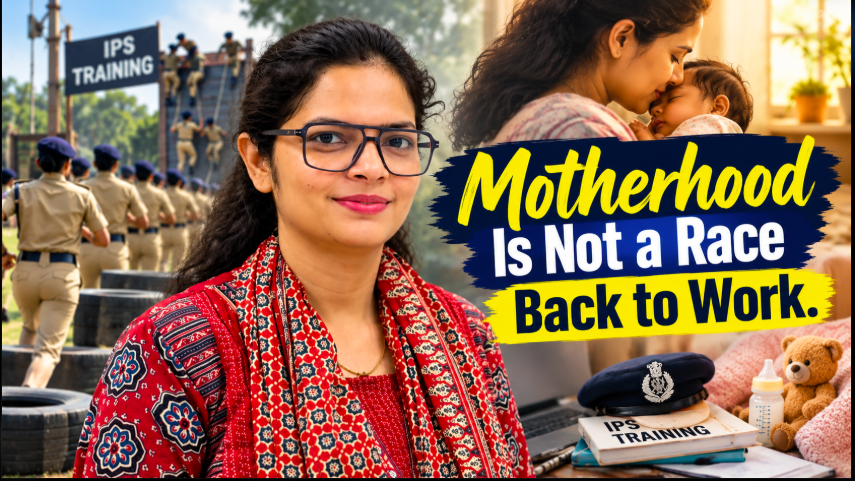
The Supreme Court’s proceedings in the case of IPS officer Urvashi Sengar bring this dilemma into focus. A 2023-batch IPS officer allotted to the Madhya Pradesh cadre, Sengar challenged a 1993 Ministry of Home Affairs rule that prevents women IPS probationers from resuming training for one year after childbirth. Arguing that she had recovered and was medically fit, she sought permission to resume training.
Her case raises a compelling question: should a blanket rule prevent a medically fit woman from returning to professional training? Equally important is the wider concern that celebrating an early return could inadvertently establish a new benchmark against which other mothers are judged.
WHEN PROTECTION BECOMES A BARRIER
Introduced to safeguard women during the physical recovery and adjustment that follow childbirth, the 1993 rule reflects a protective intent. Yet protection can become restrictive when it ignores individual circumstances. Recovery varies from woman to woman; a uniform waiting period may neither reflect every woman’s needs nor accommodate those ready to return earlier.
EVERY MOTHER’S JOURNEY IS DIFFERENT
There is no single experience of motherhood. For some women, childbirth may be followed by a relatively smooth recovery. Others may face medical complications, exhaustion, emotional distress or difficulties in adjusting to the demands of caring for a newborn.
Even when a woman is medically fit to resume work, that does not necessarily mean she has recovered fully in every sense. Nor does it mean that managing professional responsibilities and caring for an infant will be easy.
Raising a child is not a one-day responsibility. It requires time, energy and sustained attention. The early months can be particularly demanding, as mothers adjust to disrupted sleep, feeding schedules, physical changes and the emotional demands of caring for a newborn.
Also Read – Brighu Srinivasan: The IPS Officer Leading India’s Elite NSG Force
EXPERIENCES DIFFER
These experiences differ from one household to another. Some mothers have supportive partners, grandparents, paid caregivers or other forms of help. Others have to manage childcare alongside household responsibilities and employment with little assistance.
A woman’s ability to return to work early may therefore depend not only on her health or determination but also on the support available to her.
This is why the experience of one woman cannot become the standard against which all mothers are judged. Being ready to return is a personal decision. Needing more time should not be treated as a lack of ambition, commitment or professional ability.
SC QUESTIONS EXISTING PROVISION
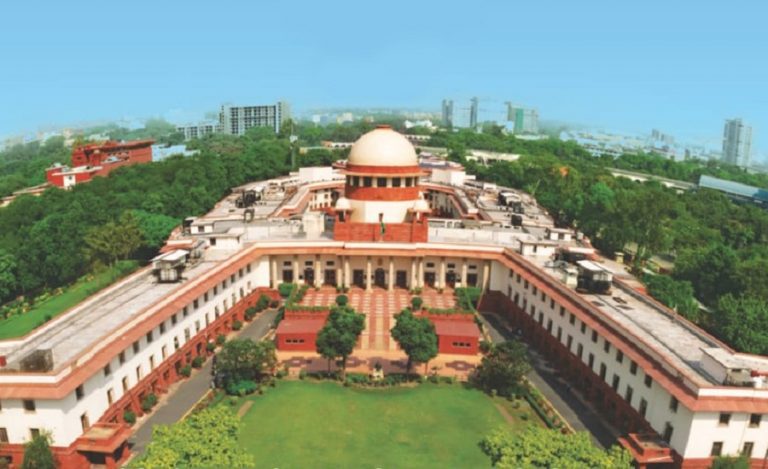
The Supreme Court had questioned whether a welfare provision could deny an opportunity to a woman medically fit to resume work. In subsequent proceedings, however, it disposed of Sengar’s petition and directed the Central Administrative Tribunal to decide her original application independently, without being influenced by the Delhi High Court’s observations. The Court also recorded the Centre’s statement that it would withdraw its challenge to the tribunal’s interim order. The proceedings should not, therefore, be read as a final ruling that the 1993 rule is unconstitutional.
The policy question remains: can administrative rules accommodate individual medical fitness while ensuring that essential training requirements are met?
THE PERIL OF A NEW IDEAL
A woman’s determination to return early deserves admiration. But an individual achievement becomes problematic when it evolves into a social yardstick. The ideal working mother is often portrayed as someone who recovers quickly, resumes professional duties and manages family responsibilities without missing a beat. Little attention is paid to those who cannot—or do not wish to—do the same.
A mother may need the full maternity leave available to her. Another may be medically fit but lack reliable childcare. A third may require more time to recover yet worry that a longer absence will damage her professional standing. Professional commitment cannot be measured by how quickly a woman returns after childbirth. Nor should motherhood become an endurance test in which women are expected to prove their capabilities by managing competing responsibilities with minimal support.
The concern is not with Sengar’s decision, but with the possibility that her circumstances could become an implicit standard for others.
THE UNEQUAL REALITY BEHIND THE RETURN
Access to childcare, family assistance, flexible working arrangements and understanding supervisors can make an early return manageable. Without these advantages, balancing employment and an infant’s needs can become an exhausting struggle.
What appears to be individual determination may, in reality, reflect unequal circumstances. Gender equality cannot mean replacing a rigid rule with a subtler pressure to demonstrate exceptional resilience. It must address the practical barriers that make returning to work more difficult for some women than for others.
Maternity leave is neither a favour nor a professional handicap. Under India’s Maternity Benefit Act, eligible women are entitled to up to 26 weeks of paid leave for the first two children, subject to statutory conditions. Exercising this entitlement should never invite doubts about a woman’s ambition or competence.
FLEXIBILITY, NOT FAVOURITISM
The challenge is particularly significant in the civil services, where IPS training includes physical exercises, field activities and prescribed professional requirements. Institutions must ensure that every officer meets the necessary standards, and missed training components may not always be easy to accommodate.
But legitimate administrative requirements need not automatically justify a blanket restriction. A more responsive policy could consider individual medical fitness, the nature of the training, attendance requirements and reasonable opportunities to complete missed modules. Such flexibility would protect professional standards without unnecessarily curtailing an officer’s career.
The principle is straightforward: administrative rules should neither hold back a woman who is ready to resume training nor expose one who needs more time to undue pressure.
REFORM THE RULE, PROTECT THE RIGHT
The debate over Sengar’s case should not pit motherhood against professional ambition. A progressive system must recognise that women can be equally capable and committed while having different recovery needs and family circumstances.
That requires fair service rules, appropriate institutional support and a workplace culture that does not penalise women for exercising their maternity entitlements. Above all, it demands a shift in how society defines professional commitment.
The true measure of an empowering workplace is not how quickly a mother returns, but whether her professional future remains secure regardless of when she does. Celebrating a woman’s determination is worthwhile. Turning her personal decision into a universal expectation is not empowerment; it is simply pressure in a different guise.
Also Read – DigiVan: How Rajasthan Is Using India’s First Digital Forest Stack to Transform Forest Management