By: Shubhechhu Sinha
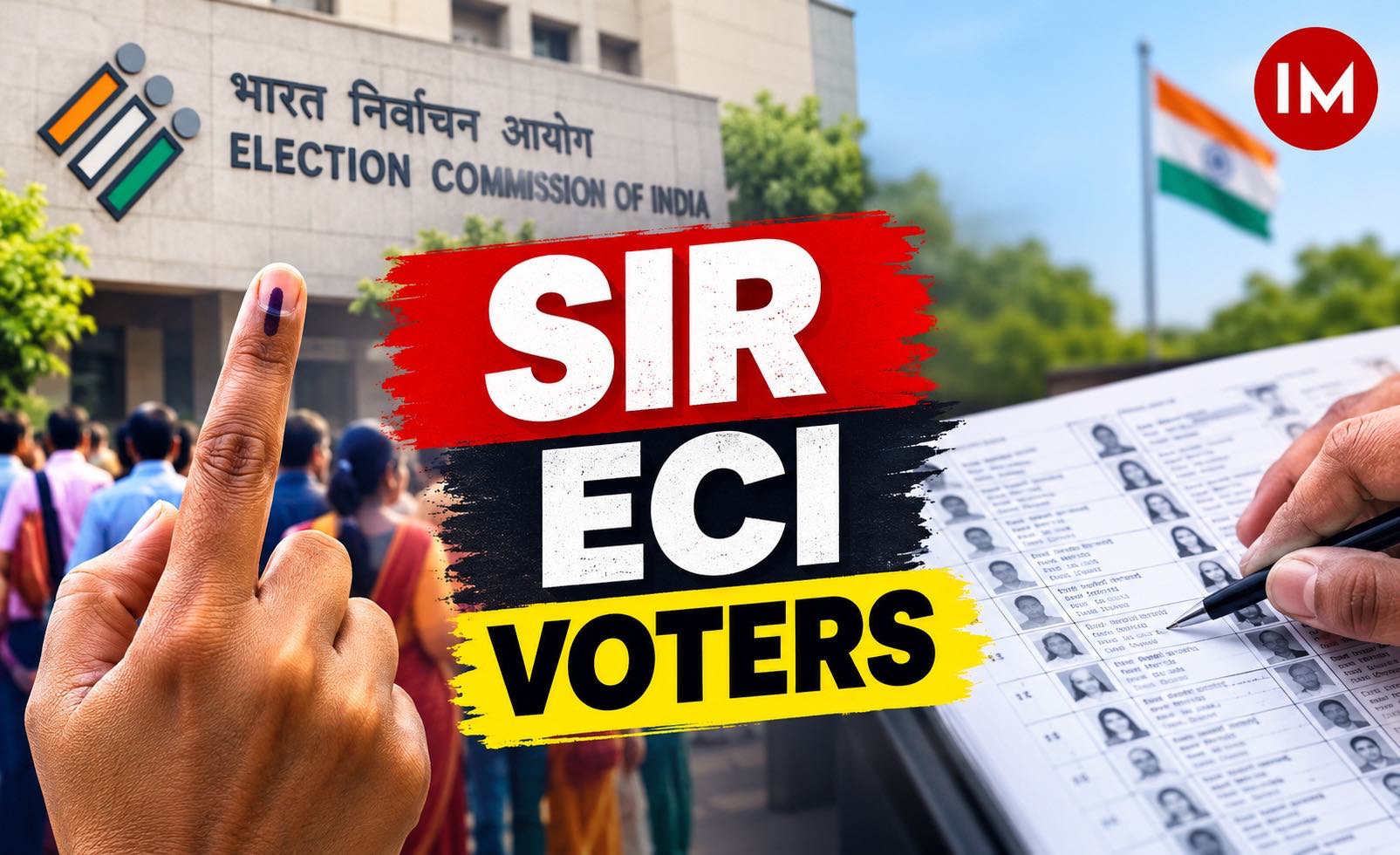
A voter’s name can disappear from a list in a bureaucratic exercise. Restoring it, however, can become a battle to reclaim a fundamental democratic right. That is the troubling question at the heart of India’s Special Intensive Revision (SIR) of electoral rolls. How does the Election Commission of India clean up voter lists without allowing the process itself to disenfranchise genuine voters?
There is little dispute that electoral rolls must be accurate. Duplicate entries, deceased voters and ineligible registrations cannot be allowed to undermine the credibility of elections. But the drive to eliminate wrongful entries must be matched by an equally determined effort to ensure that no eligible citizen is wrongly excluded.
The controversy surrounding SIR, including concerns over objections to voter entries and difficulties in correcting addresses, has brought this delicate balance into sharp focus. The issue is no longer merely about revising electoral rolls; it is about the transparency of the process, the accountability of election officials and the ability of ordinary citizens to defend their right to vote.
Quality Over Quantity
The real test of SIR is not how many names the system removes, but how effectively it distinguishes an ineligible voter from a genuine citizen caught in an administrative error.
Recent developments underline the challenge. On October 9, 2026, the Election Commission issued instructions limiting the number of Form 7 applications an individual elector may submit, seeking to curb unsupported bulk objections against voter entries. Meanwhile, concerns raised by the Bombay High Court over Form 8 rejections during the revision exercise have drawn attention to the difficulties voters may face while correcting their addresses after shifting residence.
Together, these developments highlight a larger problem: electoral integrity depends not merely on the accuracy of the final list, but also on the fairness of the process through which it is prepared.
Implementation is The Challenge
The law is there. The challenge is implementation. The Representation of the People Act, 1950, provides the legal framework for preparing and revising electoral rolls. Sections 22 and 23 deal with correcting, deleting and including entries, subject to the applicable legal requirements. The Registration of Electors Rules, 1960, prescribe procedures for claims, objections and changes to electoral records, including safeguards that provide an opportunity to contest certain proposed deletions. The challenge is to ensure that these safeguards work consistently on the ground.
A duplicate entry, an incorrect address, a mismatch in official records and a disputed claim about eligibility are different problems. They require different forms of verification. Treating every discrepancy as evidence of ineligibility would be as inappropriate as retaining entries that are demonstrably incorrect.
The difficulties can be particularly acute for migrant workers, elderly citizens, people with disabilities and those who struggle to navigate digital services or obtain documents within prescribed deadlines. A notice that arrives late, an unclear rejection or an application that remains pending can turn an otherwise routine administrative exercise into a serious obstacle.
The solution lies in making electoral administration more transparent, accessible and accountable.
Five reforms that can make a difference
1. Make every disputed decision traceable
Every proposed deletion or contested registration should leave a clear administrative trail. Electoral Registration Officers should record the grounds for action, verification undertaken, notices issued and reasons for the final decision. Standardised reason codes and supervisory audits can help identify procedural lapses, incomplete cases and unusual patterns without compromising personal data.
2. Make notices simpler and communication more effective
A voter should never have to guess why a notice has been issued or what action is required. Notices must clearly explain the discrepancy, documents or information needed, deadlines and available remedies. Wherever feasible, communication should combine physical notices with SMS and digital updates. A failed delivery should not automatically be treated as proof that a voter has abandoned a claim.
3. Strengthen correction, appeal and grievance redressal
The system must provide a clear route from application to decision and, where applicable, appeal. Form 6 is used for inclusion in electoral rolls, Form 7 for objections to inclusion or requests for deletion, and Form 8 for corrections, shifting of residence and other specified purposes. Rejected applications should carry written reasons and information about the next available remedy. Pending cases must be tracked against prescribed timelines, while recurring rejection patterns should be reviewed to identify systemic bottlenecks.
4. Combine digital efficiency with local assistance
Platforms such as ECINET can make registration, corrections and access to election-related information easier. But digital services cannot be the only gateway to democratic participation. Local help desks, assisted application facilities, accessible information in regional languages and effective support from Booth Level Officers can help citizens who lack internet access or find online procedures difficult. Technology should reduce the burden on voters, not transfer the burden of administration to them.
5. Measure success by accuracy and inclusion, not deletions alone
The number of records examined or names removed is an inadequate measure of success. The Election Commission and state election authorities should publish periodic, anonymised data on applications received, accepted and rejected; notices issued; cases pending; appeals decided; and entries restored or corrected after review. Processing times and complaints about inaccessible services should also be monitored. Such information would help identify administrative failures and allow the public to assess whether reforms are working.
A wider electoral reform agenda
The debate also presents an opportunity to strengthen the larger electoral system. Political funding needs greater transparency, campaign expenditure—including digital advertising—requires effective scrutiny, and criminal cases involving candidates should be subject to time-bound judicial proceedings with safeguards against politically motivated litigation. Political parties, too, should move towards more transparent internal elections and candidate-selection procedures.
The Election Commission operates across an enormous administrative network, from national and state offices to district authorities and Booth Level Officers. No revision exercise of this scale can be free of errors. What matters is whether errors can be identified, challenged and corrected promptly, without leaving citizens to navigate an opaque bureaucracy.
The Opportunity
SIR offers the Election Commission an opportunity to demonstrate that administrative efficiency and democratic inclusion are not competing objectives. Transparent verification, reasoned decisions, accessible appeals and timely correction of errors can strengthen both. The same commitment must extend to wider reforms in political funding, campaign expenditure and the accountability of political parties.
In a democracy as vast and diverse as India, errors may be inevitable; leaving them uncorrected should not be. Every disputed deletion must be open to scrutiny, every genuine grievance must have a meaningful remedy, and every eligible citizen must have a fair opportunity to vote.
A clean voter list is essential to a credible election. But a truly democratic electoral system must do two things equally well: keep ineligible entries out and ensure that no eligible voter is left out.