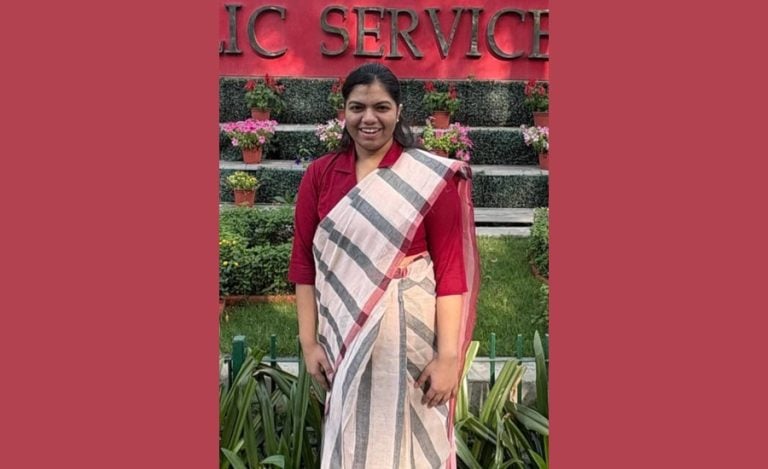
In 2016, Bhikan Rojekar had a different dream. He wanted to become a doctor. After appearing for the Maharashtra Common Entrance Test (MHT-CET), he missed the MBBS cutoff by just one mark. What seemed like a devastating setback at the time eventually led him towards a different career and a new purpose.
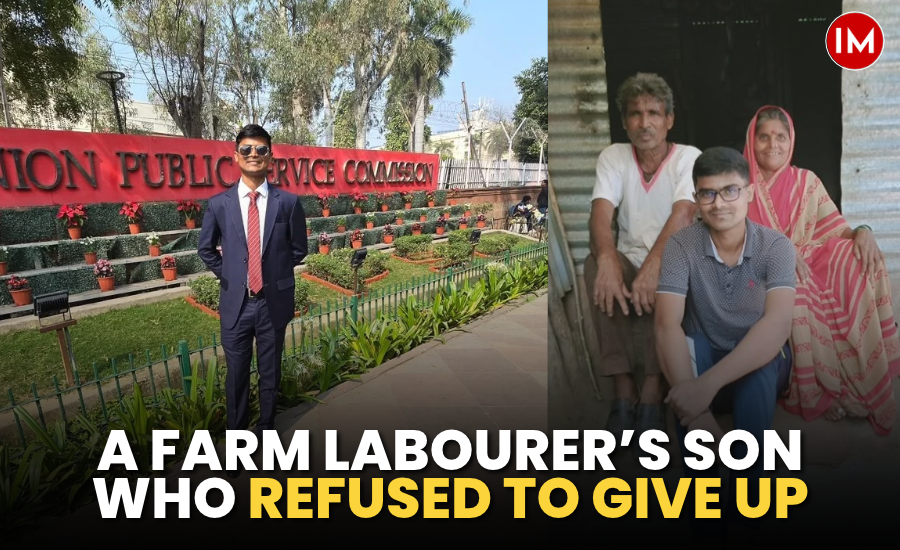
Today, Rojekar has secured AIR 812 in the UPSC Civil Services Examination (CSE) 2025, clearing the examination in his third attempt. His journey from Jalgaon Sapkal village in Bhokardan taluka of Jalna district, Maharashtra, to the final UPSC merit list is closely connected to his family’s sacrifices and the opportunities he received along the way.
For Rojekar, the achievement is not merely about securing a rank. It is also about fulfilling a dream that his parents worked hard to make possible.
“My father has spent his life working as a farm labourer, and my mother, despite being differently abled, has worked hard to support our family. Both my parents made sacrifices so that I could pursue an education and a dream that once seemed distant,” he tells Indian Masterminds.
From a Village in Maharashtra to a Dream Beyond Medicine
Rojekar completed his schooling in his village before pursuing a Bachelor of Science in Agriculture from CSMSS College, Chhatrapati Sambhajinagar.
Growing up in a family dependent on agricultural labour, he understood the limitations that financial difficulties could place on a person’s ambitions. However, his parents continued to support his education, giving him the opportunity to explore a future beyond the circumstances in which he grew up.
His initial ambition was to enter the medical profession. When he missed the MBBS cutoff by one mark in 2016, he had to reconsider his plans.
Around the same time, he came across the story of Ansar Shaikh, who rose from a financially disadvantaged background to become an IAS officer. Shaikh’s journey made Rojekar look at the civil services as a possibility for someone from a family like his.
He began questioning the assumptions that often accompany economic hardship.
“I remember asking myself, ‘अगर एक रिक्शा चालक का बेटा कलेक्टर बन सकता है, तो एक खेत मज़दूर का बेटा क्यों नहीं?’”
That question changed the direction of his aspirations. The possibility of entering the civil services gradually became more than an idea. It offered him a chance to improve his family’s circumstances while contributing to society through public service.
“What began as an inspiration slowly became a dream, and that dream eventually became my life’s mission,” he says.
UPSC CSE 2025: Three Attempts and Lessons from Failure
Rojekar’s UPSC journey began with a setback in 2023. He could not clear the Preliminary Examination because he fell short in the Civil Services Aptitude Test (CSAT).
In his second attempt, in 2024, he cleared Prelims and reached the Mains stage but could not qualify for the next stage.
His third attempt in 2025 brought the result he had worked towards. He cleared all three stages of the examination and secured AIR 812 in the UPSC CSE final result.
Each attempt exposed a different area that required improvement. Rather than repeating the same preparation strategy, he worked on identifying his weaknesses and addressing them.
“My first attempt taught me the importance of CSAT, the second helped me understand the demands of Mains, and the third taught me the importance of correcting my mistakes and remaining consistent,” he explains.
The setbacks also tested his ability to continue preparing without knowing whether the next attempt would bring success. He experienced uncertainty, self-doubt and the pressure associated with preparing for one of India’s most competitive examinations.
During these periods, he often returned to the reason he had started preparing in the first place: his parents and their sacrifices.
“I believe failure doesn’t necessarily mean that you are incapable; sometimes, it simply means that your strategy needs to change,” he says.
For Rojekar, the experience reinforced an important lesson: a failed attempt can provide useful feedback if aspirants are willing to examine what went wrong and make the necessary changes.
Moving to Delhi and Building a Preparation Strategy
In November 2021, Rojekar moved to Delhi to pursue his UPSC dream seriously. The transition brought its own challenges, particularly the financial pressure of sustaining preparation while coming from a family with limited resources.
He received scholarships and financial assistance through BARTI, while RCA Hamdard Study Circle provided guidance and opportunities. Mentors, institutions, NGOs, friends and well-wishers also contributed to his journey.
Their support helped him continue preparing without allowing financial constraints to become an insurmountable barrier.
Academically, Rojekar focused on understanding the UPSC syllabus, analysing previous years’ question papers, strengthening his basic concepts, revising regularly and practising answer writing. He also prepared anthropology as his optional subject.
His approach evolved with each attempt. Instead of trying to study every available resource, he concentrated on understanding the examination’s requirements and improving his performance in areas where he had struggled.
“One of my biggest learnings was that UPSC preparation is not about studying everything under the sun. It is about understanding what the examination demands, revising effectively, practising consistently, and learning from your mistakes,” he says.
This shift towards a more focused strategy helped him approach each stage of the examination with a clearer understanding of what was required.
How Scholarships and Institutional Support Helped Him Continue
Rojekar prepared full-time rather than alongside a regular job. However, remaining focused on studies over several years required more than academic commitment. He also needed financial and emotional support.
For aspirants from economically weaker backgrounds, the cost of preparation, accommodation and other essential expenses can add pressure to an already demanding process.
“I consider myself fortunate that I received assistance when I needed it. Their support helped me focus on my studies instead of allowing financial difficulties to become a barrier to my aspirations,” he says.
His experience has also shaped his understanding of the importance of educational support systems. Scholarships, government assistance, libraries and institutions offering preparation guidance can help students access opportunities that might otherwise remain beyond their reach.
“The Real Credit Belongs to My Parents”
When Rojekar speaks about securing AIR 812, his thoughts return to his parents.
His father spent his life working as a farm labourer, while his mother contributed to the family despite her physical challenges. Their financial circumstances may have limited the comforts they could provide, but they continued to support his education and ambitions.
For Rojekar, the final result represents years of effort that extended far beyond his own preparation.
“They may not have had the resources to provide me with every comfort, but they gave me something far more valuable: the freedom to dream and the opportunity to pursue that dream,” he says.
Seeing his name in the final result PDF brought back memories of his medical entrance examination setback, his unsuccessful UPSC attempts and the people who supported him when the outcome remained uncertain.
It was a moment of personal happiness but also one of gratitude.
“I may have secured the rank, but the real credit belongs to the parents who made countless sacrifices so that I could reach this stage,” he says.
For him, success also means being able to provide his parents with a more secure and dignified life.
Bhikan Rojekar’s Message to UPSC Aspirants
Rojekar believes that aspirants must learn to assess their progress without measuring their journeys against those of others. While some candidates clear the examination on their first attempt, others need additional attempts to understand the demands of the examination and improve their performance.
He encourages candidates to focus on their preparation strategy, regular revision, answer-writing practice and the ability to identify mistakes.
“Never allow your circumstances to become the final definition of your potential,” he says.
He also advises aspirants to acknowledge disappointment after a setback without allowing it to determine their next step. Analysing mistakes, changing an ineffective strategy and returning to preparation with a clearer plan are, in his view, essential parts of the process.
For students facing financial difficulties, he recommends exploring genuine scholarships, government assistance programmes, libraries and other educational support systems.
His own journey from a village in Maharashtra to AIR 812 has shown him the difference that timely support can make.
“Circumstances may decide where we begin, but they do not have to decide where we finish,” he says.
From missing the MBBS cutoff by one mark in 2016 to clearing UPSC CSE 2025 in his third attempt, Bhikan Rojekar’s journey has taken an unexpected course. What began with a setback eventually led him towards a career in public service.
“If my journey can give even one aspirant the courage to continue believing in their dream, I will consider that a meaningful achievement beyond my rank,” he says.