New Delhi: The Supreme Court has clarified that its ruling on the determination of the OBC creamy layer will apply to the service allocation of candidates selected through the UPSC Civil Services Examination (CSE) 2025, clearing a major hurdle in the allocation process for the 958 recommended candidates.
The clarification was issued on November 6, 2026, while hearing applications filed by the Centre seeking clarity on the implementation of the Court’s March 11 judgment. The earlier ruling held that the salary income of parents cannot, by itself, be used to classify their children as belonging to the OBC creamy layer.
The development is significant for the 2025 Civil Services Examination batch, whose service allocation had remained pending. The delay had also affected the commencement of their Foundation Course at the Lal Bahadur Shastri National Academy of Administration (LBSNAA), Mussoorie.
Supreme Court Says March Ruling Will Apply to CSE 2025 Allocation
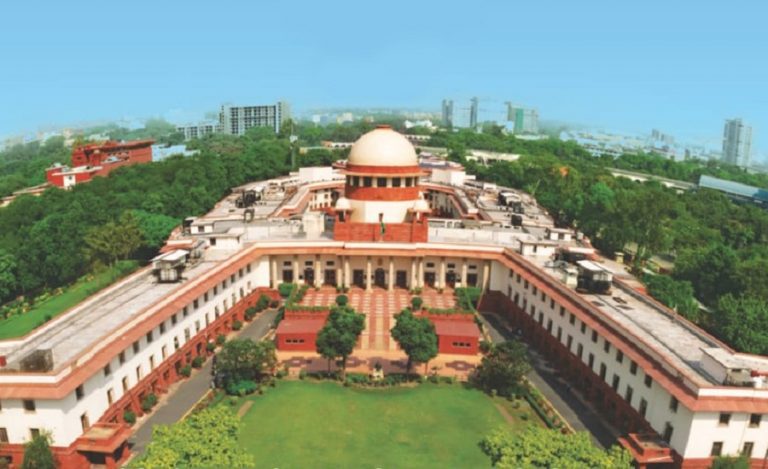
A Bench comprising Justices Pamidighantam Sri Narasimha and R. Mahadevan observed that the Civil Services Examination 2025 result had been declared on March 6, 2026, but the allocation of services had not yet been finalised.
The Court found no convincing reason to defer the implementation of its March 11 judgment in the pending allocation process. It, therefore, directed that the principles laid down in that judgment would govern service allocation for OBC candidates selected through CSE 2025.
The March ruling had held that candidates whose parents work in Public Sector Undertakings (PSUs), banks, private companies and other organisations cannot be classified as belonging to the creamy layer solely on the basis of their parents’ salary.
The nature, status and category of the posts held by their parents must also be considered while determining their eligibility for OBC non-creamy layer benefits.
Nearly 100 OBC Candidates Could Benefit From the Ruling
The development also concerns nearly 100 OBC candidates whose caste certificates had reportedly been rejected since 2016 on the ground that they belonged to the creamy layer. Their selections in the Civil Services Examination had consequently been affected.
The Supreme Court’s March 11 judgment had held that the candidates involved in the original proceedings belonged to the OBC non-creamy layer category and were entitled to reservation benefits, along with the corresponding placement and service allocation in the examinations they had appeared for.
However, the November 6 clarification does not automatically grant relief to every candidate whose OBC certificate was rejected in the past. The Court said that similarly placed candidates whose cases are pending before courts, tribunals or other competent authorities may have their claims examined on their individual merits.
Completed Appointments and Selections Will Not Be Reopened
The Supreme Court also clarified the extent to which its March judgment would apply to earlier recruitment processes.
It stated that the ruling would not, by itself, affect the seniority of other candidates or provide grounds for reopening selections and appointments that had already been concluded before March 11, 2026.
The Court further said that the interpretation of the 1993 Office Memorandum, as explained in its March judgment, would govern subsequent selections, appointments and roster allotments concerning OBC reservation and creamy-layer exclusion.
It also clarified that the government remains free to formulate its policy on reservation and creamy-layer criteria in accordance with the Constitution and the principles laid down by the Court.
The Bench declined to prescribe a deadline for establishing equivalence between posts in government services and those in PSUs, banks and other organisations, observing that the matter falls within the domain of the executive and legislature.
The Court also extended the time available to the Centre for compliance with its earlier judgment by two months from November 6.
What Was the March 11 Supreme Court Ruling?
The dispute concerns the interpretation of the government’s Office Memorandum dated September 8, 1993, and a subsequent clarification issued by the Department of Personnel and Training (DoPT) on October 14, 2004.
The 1993 memorandum laid down the criteria for identifying the creamy layer among OBCs. Under the applicable income and wealth test, salary and agricultural income were excluded from the calculation.
However, the 2004 clarification provided for the consideration of parents’ salary income in certain cases where equivalence between posts in government services and those in PSUs, banks and other organisations had not been established.
This led to disputes over the classification of children of employees working in public and private sector organisations. In some cases, candidates were declared ineligible for OBC reservation benefits based on their parents’ income without adequately considering the status and category of the posts they held.
The Supreme Court’s March 11, 2026 judgment held that salary alone could not be the determining factor in such cases. It emphasised that the status and category of the parents’ posts must also be taken into account, in accordance with the 1993 memorandum.
How Is the OBC Creamy Layer Determined?
The creamy layer concept was introduced following the Supreme Court’s landmark Indra Sawhney judgment. It seeks to ensure that the benefits of OBC reservation reach the relatively disadvantaged sections within the community.
The income limit for identifying the creamy layer among certain categories was initially fixed at ₹1 lakh per annum in 1993. It was subsequently revised in 2004, 2008 and 2013. In 2017, the limit was raised to ₹8 lakh per annum and has remained unchanged since then.
The criteria also consider the status and category of parents’ employment. Certain constitutional office-holders, All India Services officers and government employees holding specified senior positions fall within the creamy-layer criteria, subject to the applicable conditions.
The rules also cover specified ranks in the armed forces, professionals, businesspersons and individuals meeting prescribed income or property-related criteria.
The question of determining equivalence between government posts and positions in PSUs, private companies, universities and other institutions has remained a subject of dispute.
The November 6 clarification settles the immediate question of applying the March judgment to the pending CSE 2025 service allocation, while leaving the broader task of formulating and implementing a comprehensive creamy-layer policy with the government.