In Gadchiroli, an election was never merely an exercise in democracy. It was a test of whether the state could reach villages where Maoist influence had made even the act of casting a vote dangerous.
For 2006 batch IPS officer Sandip Patil, who served as Superintendent of Police in Gadchiroli, the challenge was especially grave. The district had witnessed the loss of 17 security personnel during the 2009 Assembly elections. As the 2014 elections approached, the Election Commission wanted assurances that the same tragedy would not be repeated.
The responsibility demanded more than deploying additional personnel. It required anticipating how Maoists might strike, protecting polling parties and preparing policemen for threats that could emerge without warning.
Patil’s response was to combine operational planning with specialised training. His team anticipated ambushes and attacks on polling booths and developed a counter-strategy to neutralise improvised explosive devices (IEDs), which had become a favoured weapon of Maoist groups.
Also read: The Science Behind Mangrove Restoration in Gujarat’s Kutch
Fifty Squads to Counter the IED Threat
One of the key measures was the creation of 50 squads trained to detect and deal with IED threats. Personnel underwent training and sensitisation so they could recognise warning signs, respond appropriately and help protect polling teams moving through vulnerable areas.
The threat was real. Attacks were anticipated on election day, and some did take place. Yet, according to Patil, the strategy enabled the forces to respond effectively, allowing polling to proceed without disruption from the anticipated attacks.
The experience reinforced a crucial lesson: in a conflict zone, preparation must begin long before the first shot is fired.
Speaking about the operational challenge, Patil explained that Maoists had increasingly turned to explosives rather than direct confrontations. As he had noted publicly during his tenure, “They had made blasts their prime tactics to fight us” he told Indian Masterminds.
The police had to adapt accordingly, strengthening their ability to detect explosives while continuing to maintain pressure on armed groups.
Strengthening the Police Station, Not Just the Special Force
Gadchiroli’s security challenge extended beyond election management. The C-60 commandos formed the core of Maharashtra Police’s specialised anti-Maoist force, but the armed Maoist cadre in the region was estimated at more than 300. The available specialised force could not independently cover every vulnerable area.
Patil therefore focused on improving the capabilities of ordinary police station personnel.
Police station parties received training and began participating more effectively in anti-Maoist operations. While specialised teams operated deeper inside the forests, local police units were expected to strengthen security within a radius of roughly four to five kilometres around their stations.
The shift was significant. Rather than leaving the responsibility of counter-insurgency entirely to specialised commandos, it expanded the number of police personnel capable of responding to threats in their immediate areas.
Patil recalled that in 2015, police station parties recorded around 42 exchanges of fire. The experience helped improve confidence among personnel who had earlier depended heavily on specialised units for operations.
A stronger local force also meant that the Maoists could no longer assume that areas near police stations offered them an easy advantage.
Taking the State into Previously Uncovered Areas
The next step was to establish a more permanent presence in places where Maoist groups had exercised considerable influence.
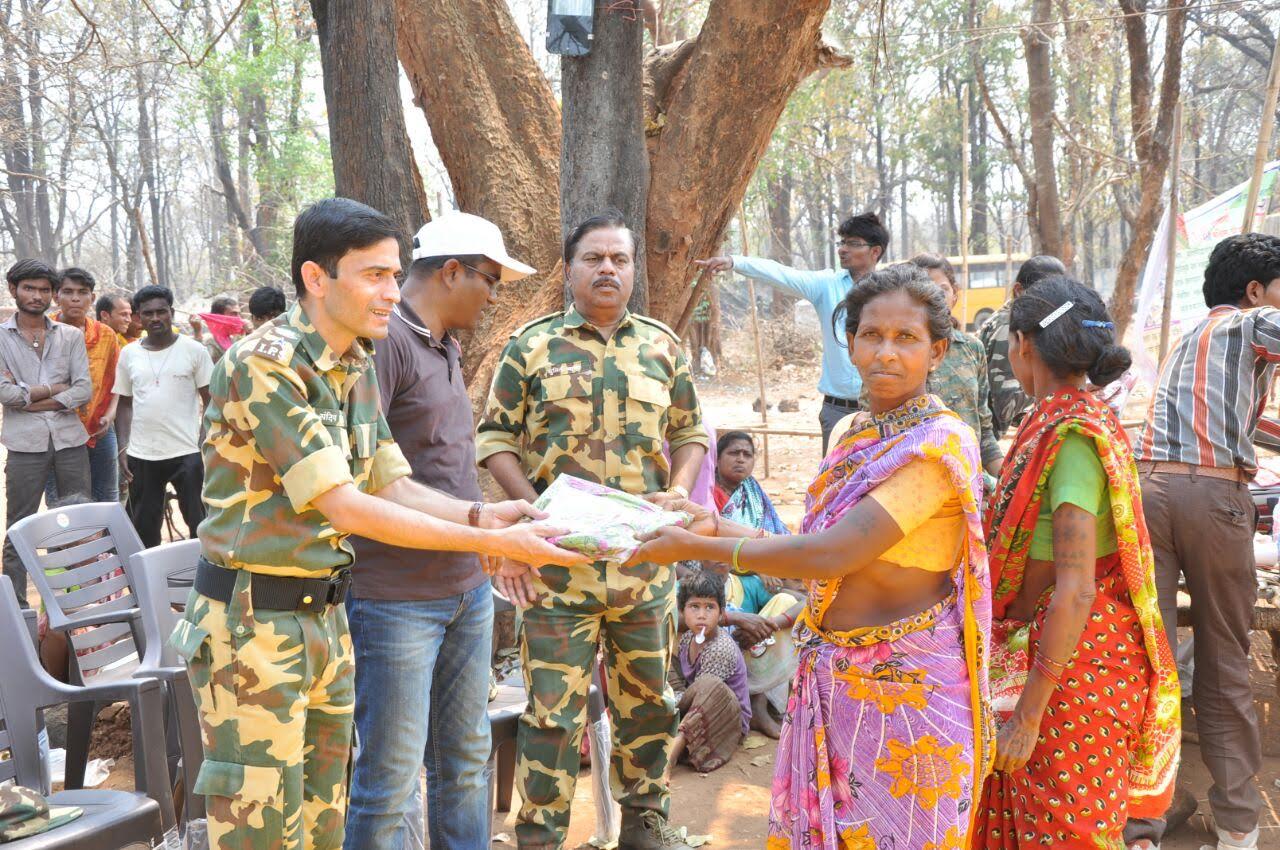
Six new police stations were opened in previously uncovered areas. These were not simply additional buildings on an administrative map. Their purpose was to extend the state’s reach, improve response times and make it harder for armed groups to dominate remote settlements without challenge.
Security, however, could not be measured only by the number of operations conducted. Patil also recognised the importance of restoring public confidence in government institutions.
That approach included development initiatives such as Police Dadalora Khidki, a programme designed to help people in remote and Maoist-affected areas access government welfare schemes and services through a single-window system. Assistance with documentation, access to welfare benefits and the opening of bank accounts were among the ways the administration sought to bring public services closer to communities that had long struggled to access them.
The underlying idea was straightforward: people needed to experience the presence of the state through services as well as security.
From the Forests to Navjeevan Nagar
Perhaps the most difficult part of the conflict was persuading those who had joined the Maoist movement to leave it behind.
For surrendered cadres, the decision to return to civilian life did not automatically solve their problems. Employment, social acceptance and the challenge of rebuilding ordinary routines could all become obstacles.
Patil spoke about the rehabilitation effort associated with Navjeevan Nagar, a settlement for surrendered Maoists. The objective was to help former cadres reintegrate into society rather than leave them stranded between their former lives and an uncertain future.
Patil’s rehabilitation strategy recognised that surrender was only the beginning. Families could play an important role in encouraging former Maoists to return to civilian life and supporting their reintegration. Through the rehabilitation effort associated with Navjeevan Nagar, the focus was on helping surrendered cadres rebuild their lives through employment, agriculture and social acceptance.
In his experience, many lower- and middle-level cadres wanted something that the Maoist organisation did not permit them to pursue freely: a peaceful life, work and the opportunity to live with their families. Agriculture and other employment opportunities could provide a route back into society.
He also described continued dialogue with senior former Maoist leaders, to explore how they could be meaningfully integrated into mainstream life.
The challenge was not identical for everyone. Former foot soldiers often prioritised employment, while senior figures faced their own difficulties in making the transition.
Beyond the Gunfight
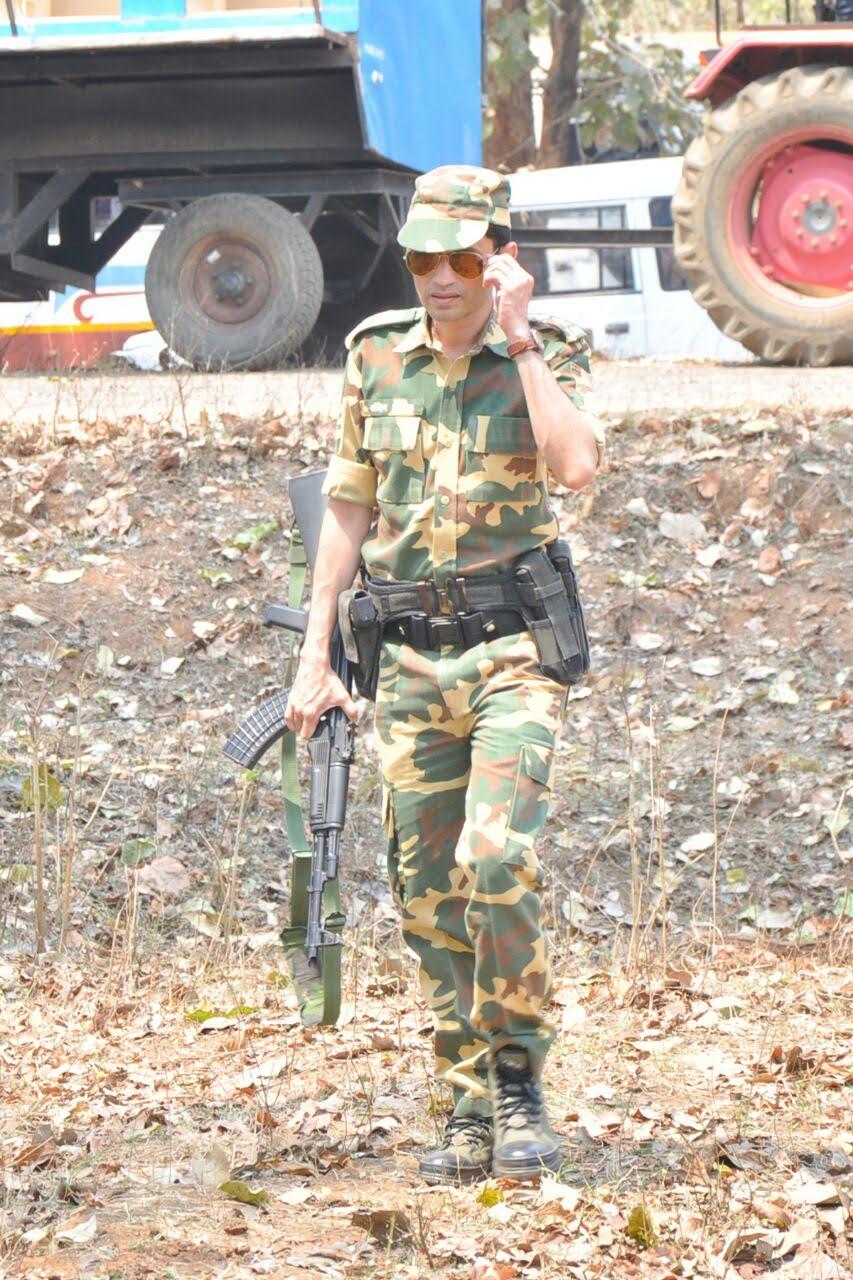
Patil’s Gadchiroli experience illustrates how counter-insurgency can involve several tasks at once: preventing attacks, strengthening local police, establishing a presence in remote territory, connecting people to public services and creating pathways for surrendered cadres to return to civilian life.
No single measure could accomplish all of this. The strategy depended on making security operations more effective while reducing the space in which Maoist influence could flourish.
For an officer working in one of Maharashtra’s most difficult policing environments, the objective was ultimately larger than winning an encounter. It was to make the state visible, accessible and credible in places where its presence had long been contested.
Also read: How IAS Vijaya Krishnan Is Turning Schools and Hostels Into Net-Zero Campuses in Andhra Pradesh