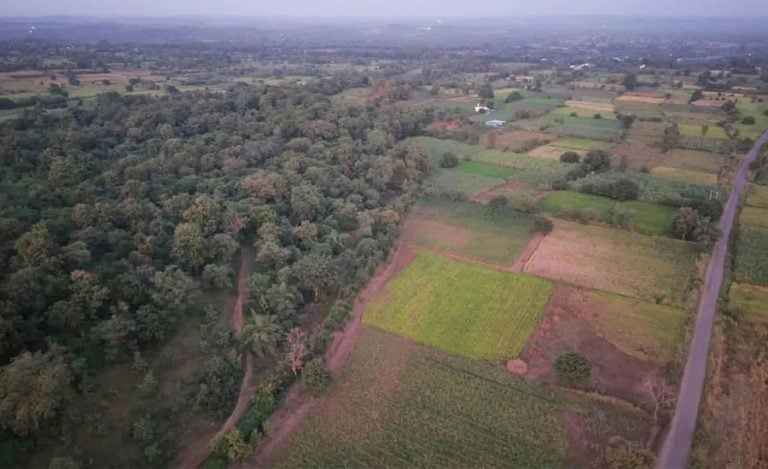
Kutch is a landscape of contrasts. Its vast salt flats, arid terrain, tidal creeks and fragile grasslands support ecosystems that survive under demanding environmental conditions. Along its coast, mangroves contend with high salinity and limited freshwater. Inland, open grasslands provide habitat for the Great Indian Bustard, one of India’s most threatened birds.
Managing such a landscape requires more than planting trees or protecting individual species. It calls for understanding how ecosystems function and adapting conservation practices to local conditions.
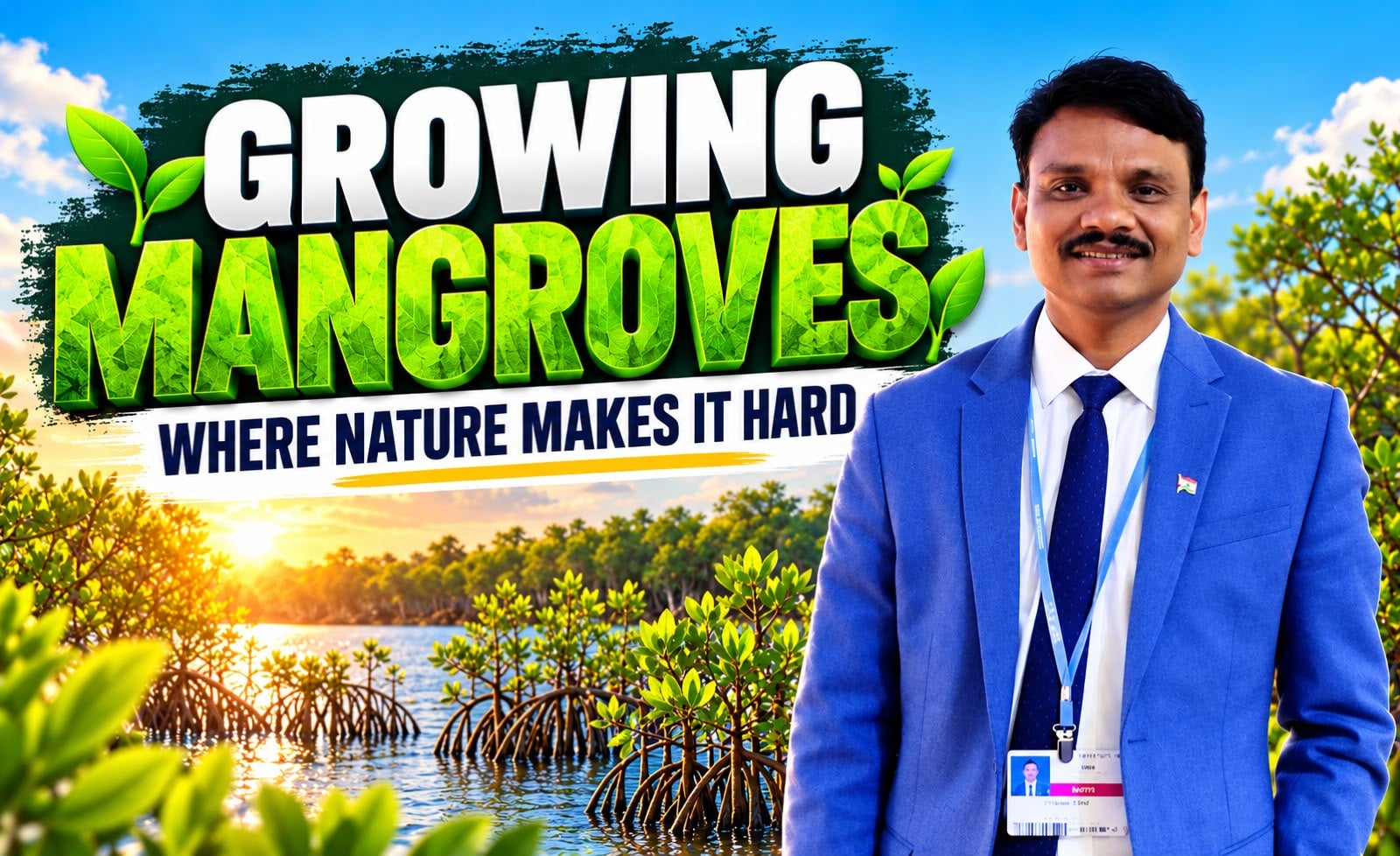
Dheeraj Mittal, a 2012-batch Indian Forest Service officer of the Gujarat cadre, is serving as Conservator of Forests, Kachchh Circle. His work includes a significant contribution to mangrove restoration guidance, alongside the wider responsibilities of forest and wildlife management in the region.
Also read: Brighu Srinivasan: The IPS Officer Leading India’s Elite NSG Force
Giving Mangrove Restoration a Scientific Foundation
In July 2026, the Kachchh Forests Circle of the Gujarat Forest Department and the Gujarat Institute of Desert Ecology (GUIDE), Bhuj, published the Mangrove Plantation Manual for Kachchh. Mittal is the lead-listed author, alongside five co-authors.
The publication addresses a specific gap: the need for a practical, region-specific guide to mangrove plantation and management in Kutch’s arid coastal environment.
Mangroves are important well beyond the trees themselves. They help stabilise coastal sediments, buffer shorelines against waves and storm surges, store carbon and support biodiversity. Yet successful restoration depends on choosing appropriate sites and species rather than simply increasing plantation numbers.
Kutch presents particular challenges, including hypersaline water, limited freshwater inflow, drought, changing tidal conditions and coastal erosion. The manual therefore brings together ecological knowledge, field experience and practical plantation protocols suited to these conditions.
It covers site selection, soil and water characteristics, seed collection, species selection, nursery practices and plantation methods. It also discusses four mangrove species found in the region: Avicennia marina, Rhizophora mucronata, Ceriops tagal and Aegiceras corniculatum.
The guide emphasises that species must be matched to suitable sites and tidal conditions. For example, Avicennia marinais adapted to saline intertidal mudflats, while other species require appropriate conditions within tidal creeks and adjoining zones.
The significance of the manual lies in its practical purpose: helping forest managers and restoration practitioners make better-informed decisions, monitor plantations and adapt techniques to local ecological realities.
Protecting the Great Indian Bustard
Kutch’s conservation challenges extend from its coastline to its open grasslands.
The Great Indian Bustard, a critically endangered grassland bird, depends on open natural habitats that are increasingly threatened by degradation and other pressures.
In September 2026, the Union Environment Ministry reported substantial progress in the wider GIB conservation programme in Kutch. Around 11 square kilometres of grassland infested with the invasive Prosopis juliflora had been restored, while 30 kilometres of predator-proof fencing had been installed around an enclosure covering 15 square kilometres.
Another intervention involved replacing infertile eggs laid by wild females with viable eggs from the conservation-breeding programme. A chick from the second such attempt survived beyond its first three months in the wild, according to the ministry’s update. A soft-release centre was also inaugurated near Naliya to support the future acclimatisation of captive-bred birds.
The initiatives illustrate the scale and complexity of conservation work in the landscape under Mittal’s circle’s jurisdiction.
Conservation Beyond Plantation Numbers
Mangrove restoration and bustard recovery may appear to be separate missions, but both depend on the same principle: ecological interventions must respect the conditions of the habitat.
In coastal Kutch, that means understanding salinity, tides, sediments and species suitability. In its grasslands, it means protecting open habitats and addressing invasive vegetation and threats to breeding birds.
For Mittal, the mangrove manual offers a clearly documented contribution to this approach. Its value will ultimately depend on how effectively its recommendations inform field practice and long-term restoration.
In a region where environmental pressures differ sharply from one ecosystem to another, the challenge is not simply to plant more or protect more. It is to ensure that conservation measures work where they are needed, and endure long after the initial intervention.
Also read: How IAS Vijaya Krishnan Is Turning Schools and Hostels Into Net-Zero Campuses in Andhra Pradesh