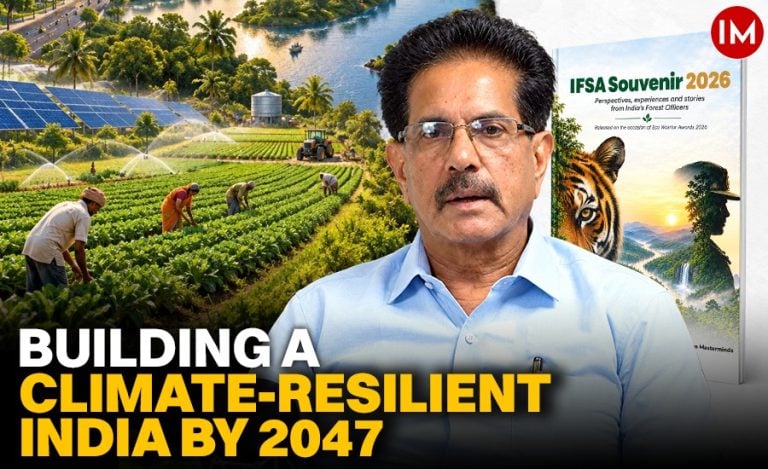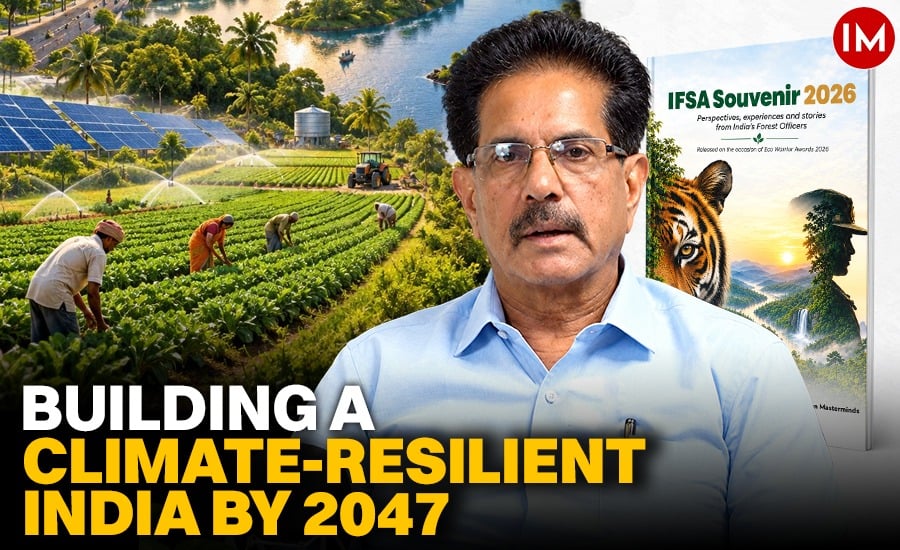
The dynamics of climate change have brought about a paradigm shift in the way forests are perceived in the twenty-first century. From being mere biodiversity sinks or providers of ecosystem goods and services, forests have assumed an important role as strategic green infrastructure for climate change mitigation, disaster risk reduction, conservation of water resources and community resilience. This paper highlights that foresters can play a leading role in strengthening India’s Climate and Disaster Resilience (CDR) through Nature-based Solutions in forestry. There is a critical need to evolve new educational, research and institutional paradigms for the Indian Forest Service and State Forest Departments to gain expertise in areas of climate science, disaster risk reduction, geospatial technology and ecosystem restoration. It is proposed that a “Centre of Excellence on Forestry for Climate and Disaster Resilience (CEF-CDR)” be established at Indira Gandhi National Forest Academy (IGNFA), Dehradun. The author makes a strong case for future-ready foresters for building resilience landscapes and communities. It is believed that investment in such foresters is crucial for realizing the vision of Suviksit Bharat 2047 wherein ecological security becomes the bedrock of sustainable development.
The Changing Role of Foresters in an Era of Climate Risks
The twenty-first century is seeing a unique blend of climate change, environmental degradation, and increasing disaster risks. Around the world, instances of heatwaves, floods, droughts, forest fires, cyclones, and glacial lakes are becoming more common and severe. India is one of the countries facing such risks and is seeing the effects of disasters triggered by climate change in almost all regions of the country.
This calls for a change from being reactive to proactive approaches in the form of prevention, preparedness, and resilience building. Though creating resilient infrastructure becomes necessary for ensuring a safer future, it alone is not enough. The need of the hour also is making the natural infrastructure of the country stronger through its forests.
Also Read – Why Forest Rights Alone Are Not Enough for Sustainable Forest Management
Forests do much more than store biodiversity and provide wood. They control water cycles, stabilize precarious slopes, decrease soil erosion, modulate climates, replenish groundwaters, help in storing carbon and also serve the livelihood needs of many people. Mangrove forests safeguard the coastlines from cyclones and tidal waves, forests of Himalayas reduce the chances of landslides and floods, shelter belts reverse the process of desertification, whereas urban forests ease heat stress and increase environmental sustainability. As opposed to human-made infrastructure which serves one purpose at a time, forests do all that and much more.
All of the above multi-purpose functionality makes forestry-related Nature-based Solutions (NbS) one of the most realistic, cost-effective and sustainable ways to create Climate and Disaster Resilience (CDR). Functional forests decrease disaster risks and also boost ecological security, increase water availability, conserve biodiversity and meet India’s responsibilities towards the Paris Agreement and Nationally Determined Contributions (NDCs).
Forests do not turn into resilience assets simply on their own. It all depends on how well they are managed by the agencies responsible for their proper care and management. This means that the profession of the forester needs to undergo a radical transformation. Nowadays, foresters cannot limit themselves to managing forests alone. They need to become climate resilience planners, ecosystem restoration experts, disaster risk management specialists, and community leaders. With their presence all across the country, expertise in ecology and long experience of natural resources management, foresters can become India’s leading professionals in Climate and Disaster Resilience. However, the new role requires additional knowledge, skills and capabilities which cannot be gained during the classical forestry education.
While moving forward to the dreamland of Suviksit Bharat 2047, India should not just strengthen its forests but also strengthen foresters. In order to protect ecosystems, save communities from various disasters and achieve sustainable development goals, we need a new generation of forestry professionals ready to solve all sorts of climate and disaster-related problems.
Capacity Building for India’s Green Warriors: Climate & Disaster Resilience
Climate change has radically altered the responsibilities of the foresters. Although their traditional mandate of managing the forest in order to produce wood, conserve biodiversity and provide ecosystem services remains crucial, it is not enough to address the demands of the 21st century. The modern forester needs to be equally ready to deal with climatic uncertainties, disaster risks, landscape restoration, community vulnerability and resilience building. There should be a change in forestry education and research as well.
The Indian Forest Service (IFS) along with the state forest departments form one of the best forestry services in the world. They have already developed an admirable track record in terms of forest management, wildlife conservation, watershed management, planting trees and working with communities. With their pan-national presence, scientific acumen and vast experience in field operations, they are ideally suited to play the role of CDR of the nation. The Forest Service is the only organization that possesses scientific knowledge, legal power, landscape-level management ability, and a well-established relationship with communities; thus, it is perfectly positioned to drive climate and disaster resilience efforts.
But the changing risk scenario requires new competencies, which are not typically included in any conventional forestry education program. The disciplines of climate science, disaster risk assessment, ecosystem-based adaptation, landscape resilience, geospatial technology, artificial intelligence, climate modelling and community resilience have become absolutely essential skills for modern foresters.
Thus, the modern forester needs to become an inter-disciplinary professional who can work at the crossroads of forestry, climate science, disaster management, water resource management, agriculture, biodiversity conservation, and rural development. They need to be able to undertake multi-hazard risk assessments of landscapes, identify ecosystems at risk, develop forestry-based Nature-based Solutions, improve ecosystem services and participate in climate resilience planning at the district and state level. Modern scientific forestry would have to include hazard mapping, vulnerability assessment, climate projections, and ecosystem restoration in addition to silviculture.
Technology innovations make it all the more necessary. Remote sensing using satellite, Geographic Information Systems (GIS), drones, Artificial Intelligence, sensors using IoT, and digital decision-making tools are changing the ways forests are monitored and managed. Forest fire forecasting, real time drought evaluation, landslides potentiality mapping, glaciers monitoring, watershed assessment and carbon accounting have become essential parts of modern forestry. The utilization of these technological advances needs specialized training and continuous professional development.
In addition to that, enhancing the human element of resilience is equally crucial. Without the involvement of the communities living off the forests, climate change adaptation will remain incomplete. Hence, future forestry practitioners will need to acquire the abilities to mobilize communities, participatory planning, dispute settlement, livelihood improvement, indigenous knowledge incorporation and risk communication. Local communities do not stand as mere beneficiaries of forestry management but indispensable partners of ecosystem protection and disaster mitigation.
Forestry-backed Nature-based Solutions (NbS) have demonstrated their effectiveness in India on numerous occasions. Restoration of mangroves has led to significant mitigation of cyclones’ effects on the exposed coastal areas. Watershed treatment and catchment management have increased the rate of groundwater recharge and helped mitigate floods and droughts. Afforestation and assisted natural regeneration have helped reduce erosion and stabilize slopes. Urban forestry measures help mitigate heat islands in rapidly developing urban areas. All these cases clearly indicate that the investment in healthy ecosystems yields multiple returns by helping adapt to climate change, mitigate risks, conserve biodiversity and sustain livelihoods.
In spite of all these achievements, the preventative function of forestry does not receive enough recognition in the institutional framework of disaster risk reduction. The specialists in forest science are usually absent from the planning of Disaster Management Authorities, climate change adaptation programs and infrastructure projects. The involvement of forestry specialists is usually expected when damage to ecosystems has already occurred. It should be changed to a proactive involvement of foresters into national resilience planning.
A key move in making this possible would be the creation of a Centre of Excellence on Forestry for Climate and Disaster Resilience (CEF-CDR) at the Indira Gandhi National Forest Academy (IGNFA), Dehradun. This Centre would symbolise an investment in India’s future resilience rather than yet another academy. The Centre would work as the apex centre of India in capacity building, research, policy formulation, innovations and international collaboration for climate and disaster resilience through forestry.
The Centre would help design unique training programs for IFS probationers and in-service officers, develop best practices for each region, conduct research on climate threats, create digital repository of information, conduct simulation-based training and collaborate with NDMA, NIDM, LBSNAA, FAO, ICIMOD, CIFOR, and other International Centres of Excellence. It can lead in incorporating artificial intelligence, geospatial technologies, and decision-making systems in forestry plans, while acting as the nation’s think tank for forestry-based Nature-based Solutions.
Not only will the formation of such a centre help in making professional skills more proficient, but it will also ensure that India takes the lead in adapting the process of incorporating forestry with climate change adaptation and disaster risk reduction measures. However, most significantly, it will groom a whole new generation of forestry professionals who are well prepared to face the growing environmental problems in the years to come.
Creating resilient forests requires creating resilient foresters in the first place. Investment in their learning, innovation, skills and leadership, thus, becomes one of the most important long-term investments that India can make to safeguard its future ecology. India’s green resources can safeguard the nation only when its green leaders are made aware of all that they need to know to lead the change.
Roadmap for Climate and Disaster Resilience Through Forestry: Towards Suviksit Bharat 2047
India has now embarked on a defining decade in its process of development. India’s national aspirations of Viksit Bharat and Suviksit Bharat by 2047 can only be achieved when development is resilient to climate and sustainable in terms of environment. Rising occurrences of floods, droughts, cyclones, forest fires, landslides, and heat waves clearly show that development in a manner which does not incorporate ecology is neither sustainable nor feasible. Resilience, therefore, needs to form an inherent part of the development planning process of the country.
Forestry enjoys a special place in the current transformation agenda. Healthy forests act as climate change mitigation, risk reduction, conservation, water resource security and rural livelihoods solutions in equal measure. Very few other public investments offer such a large array of environmental, social, and economic returns. Forests should, therefore, be seen as infrastructure rather than just a natural resource.
To fulfill this vision, what is needed is a shift from forest management alone to landscape management for building resilience. The forestry-led Nature-based Solutions need to be mainstreamed into river basin management, mountain ecosystems conservation, coastal zone management and city development and climate change adaptation plans. All afforestation and reforestation programs, watershed development projects, mangrove restoration schemes and urban green belts should be planned not only with ecological recovery objectives but also for minimizing the risks from disasters and building community resilience.
What is needed for this is sound institutional arrangements and appropriate policies. There should be an important role for forests in the climate change actions and disaster management policies and sustainable development programs of the country. The forest professionals should proactively participate in planning activities of the State and District Disaster Management Authorities and bring the ecological perspective into risk assessment, land-use planning and building of community resilience. Likewise, any development activity in ecologically fragile zones should have Disaster Impact Assessment along with Environmental Impact Assessment.
Partnerships will have to be more robust in the future too. There can be no climate and disaster resilience through efforts of one sector alone. Partnership across sectors such as forestry, disaster management, agriculture, water resources, rural development, urban planning, science and local communities needs to be the new normal. The unique participatory tradition of India in managing forests offers an ideal basis for combining traditional knowledge and scientific innovation.
Some of the priorities which the forestry sector could follow to give effect to this vision would include:
- Realize forests as the nation’s strategic green infrastructure for climate and disaster resilience.
- Mainstream CDR into forestry education, research and practice.
- Develop Centre of Excellence on Forestry for Climate and Disaster Resilience (CEF-CDR) at IGNFA as the apex organization of the country for capacity building, research and innovation.
- Conduct interdisciplinary research on Nature-based Solutions in forestry, ecosystem restoration and climate adaptation.
- Utilize new technologies like GIS, remote sensing, AI, drones and decision support system in forest management.
- Increase community involvement through the promotion of climate-resilient livelihoods and participatory ecosystem restoration.
- Foster collaboration with national and international organizations focused on climate change adaptation and disaster risk reduction.
- Facilitate landscape-level planning by considering forests, water, biodiversity, and local development together.
- Establish a national digital knowledge platform for sharing best practices, innovation, and learning from experience from across the country.
- Invest in the lifelong development of foresters to make them champions of climate resilience and sustainable development.
All of the above actions are entirely aligned with India’s obligations under the Paris Agreement, the Sendai Framework for Disaster Risk Reduction, the Kunming-Montreal Global Biodiversity Framework, the Nationally Determined Contributions (NDCs), and the Sustainable Development Goals (SDGs). But most importantly, they embody India’s age-old civilizational belief in the philosophy of coexistence with nature in pursuit of economic progress.
The Indian Forest Service has always evolved with changing national priorities – from scientific forest management to wildlife conservation, from biodiversity conservation to participatory forestry. Climate change is the next big challenge. It provides an opportunity for the forestry service to take its relevance to a whole new level by spearheading the shift to climate resilience and sustainability.
Thus, the forester of tomorrow will be far more than the simple manager of forests. Instead, he or she will be the leader of climate resilience, the expert in ecosystem restoration, the risk manager, the technologically empowered planner, and the trusted partner of the local communities. The training of such professionals will need vision, innovation and sustained efforts at capacity building.
India is progressing on the path to achieving Suviksit Bharat 2047 and one thing which needs to be emphasized to all in the forestry community is that while forests are the green armour of India, foresters are the true green warriors of the country. Through the empowerment of the foresters with the knowledge and skills needed in the twenty-first century, India can create landscapes which are not only green but also resilient and prosperous. The road to making India a climate resilient country will eventually be determined not just by the forests but the foresters themselves.
Also Read – DigiVan: How Rajasthan Is Using India’s First Digital Forest Stack to Transform Forest Management