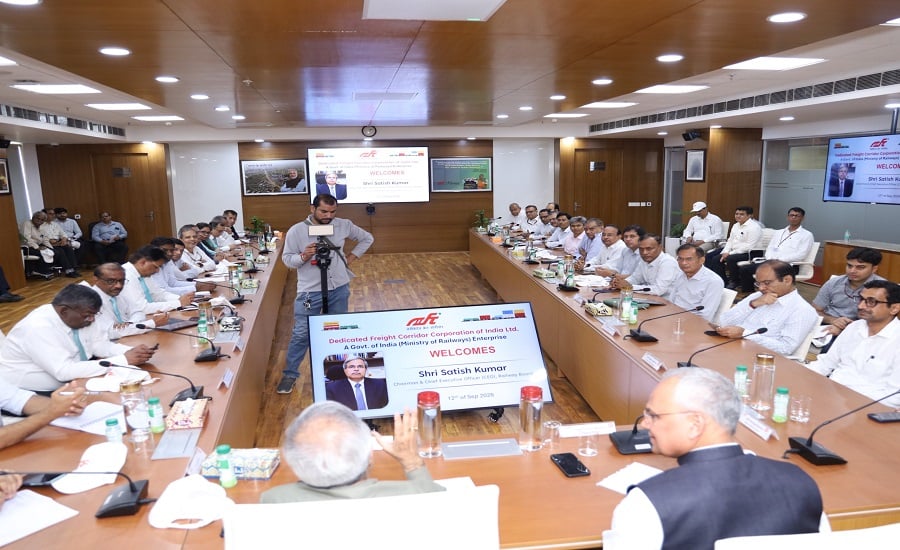
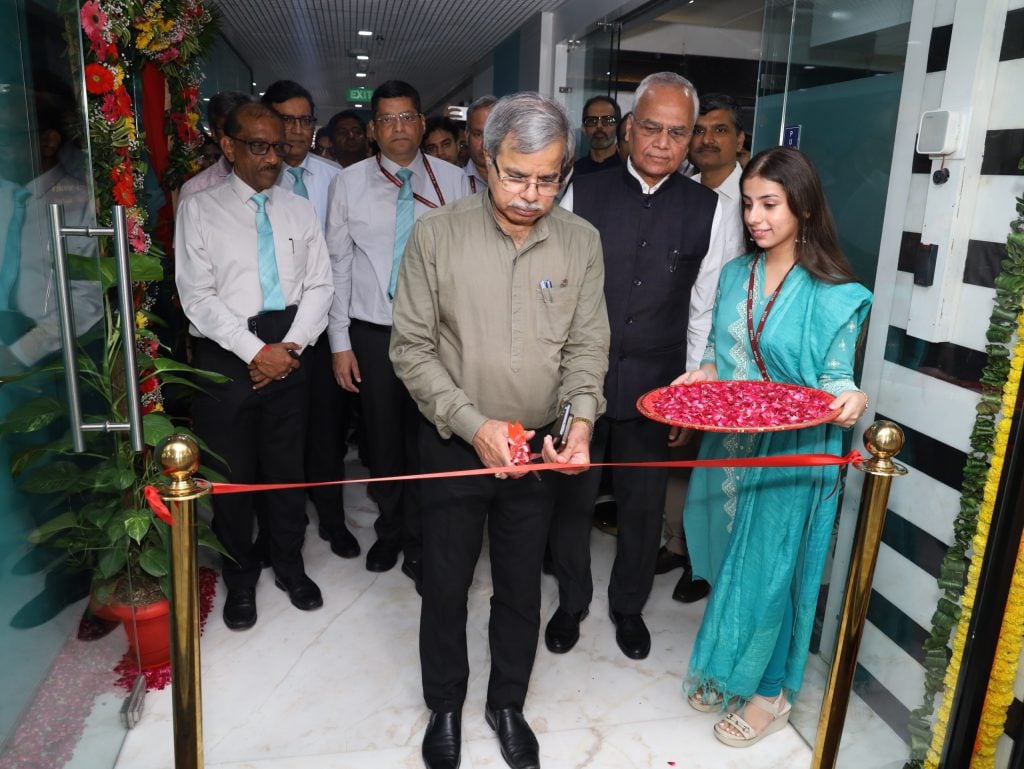
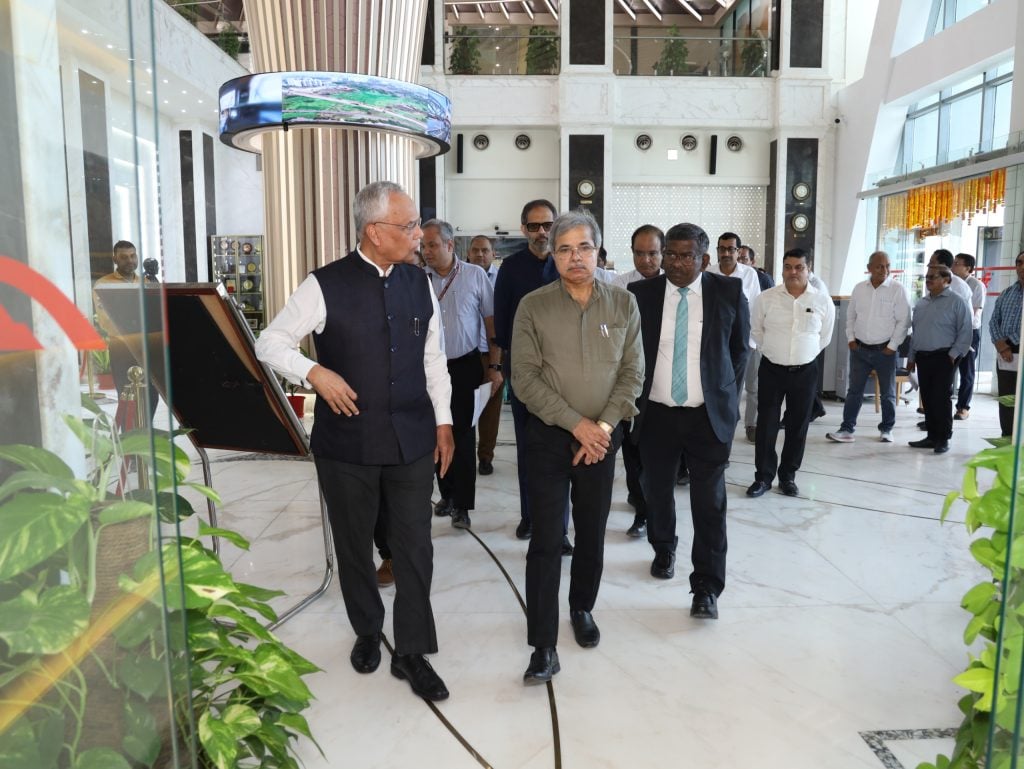
NOIDA: Chairman and CEO of the Railway Board, Mr.Satish Kumar, visited the Corporate Office of Dedicated Freight Corridor Corporation of India Limited (DFCCIL) at Sector-145, New Delhi, and reviewed various aspects of freight corridor operations, railway safety, technology and infrastructure development. During the visit, he inaugurated a dedicated War Room and an Electronic Interlocking Training Setup at the Heavy Haul Institute (HHI).
The Railway Board Chairman was apprised of DFCCIL’s Central Control System, railway tracks, operational arrangements and the computerised monitoring system used to monitor every freight train operating on DFCCIL tracks. Emphasising the need to prevent railway accidents, he directed officials to identify deficiencies at an early stage and ensure their immediate rectification.
Satish Kumar Reviews DFCCIL Operations and Safety Measures
During his visit, Mr.Satish Kumar reviewed the technical and safety arrangements at DFCCIL and stressed the importance of continuous monitoring of freight train operations.
He directed officials to ensure that:
- Technical and operational deficiencies are identified at an early stage.
- Identified issues are rectified immediately.
- Freight trains are continuously monitored through digital systems.
- New technologies are effectively implemented to improve operational safety.
- Railway accident prevention remains a key priority.
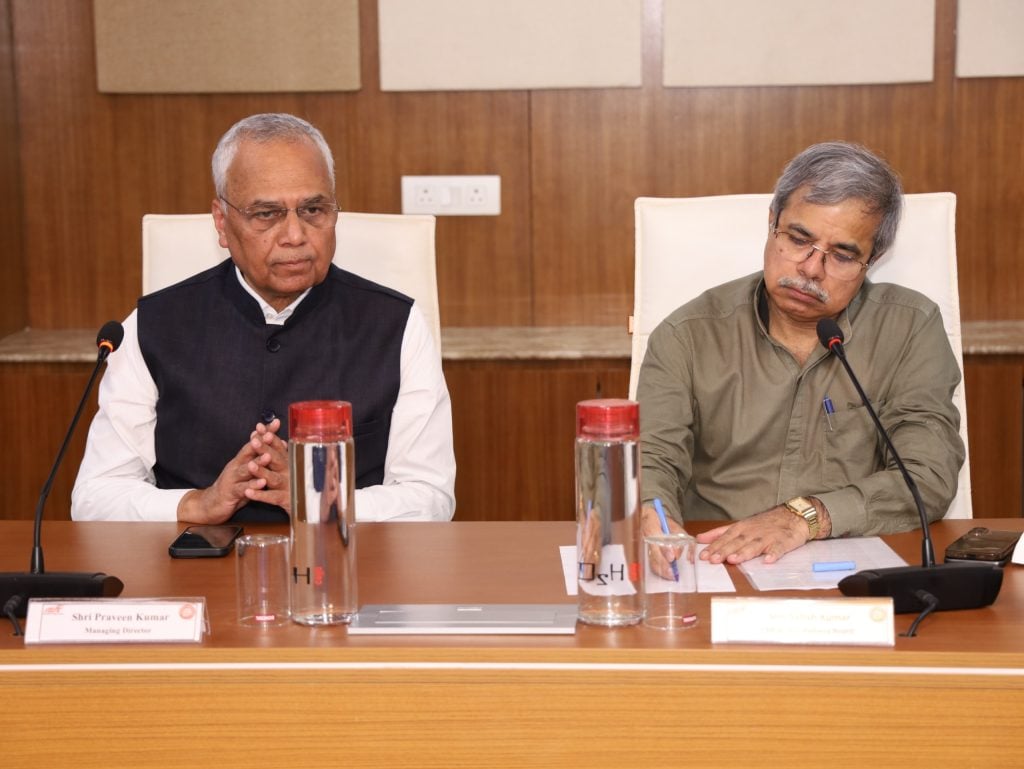
Mr.Praveen Kumar, Managing Director, DFCCIL, along with Mr.Shobhit Bhatnagar, Director (OP&BD); Mr.Anurag Sharma, Director (Infra); Mr.Pawan Kumar Rai, Director (PP); and Mr.Pramod Kumar, CVO, were present during the visit.
Senior Railway Board officials, including Mr.S.M. Sharma, ED/CC; Mr.Dinesh Kumar Vashishtha, ED/E&R; and Mr.Krishna Kant Rora, Director/CC, also attended the programme along with senior DFCCIL officials.
Read also: DFCCIL Strengthens India’s Freight Backbone with EDFC and WDFC Dedicated Freight Corridors
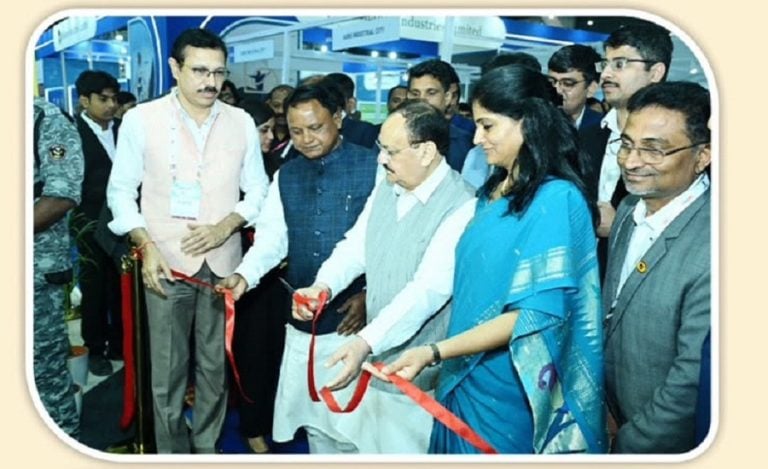
Railway Board Chairman Inaugurates DFCCIL War Room
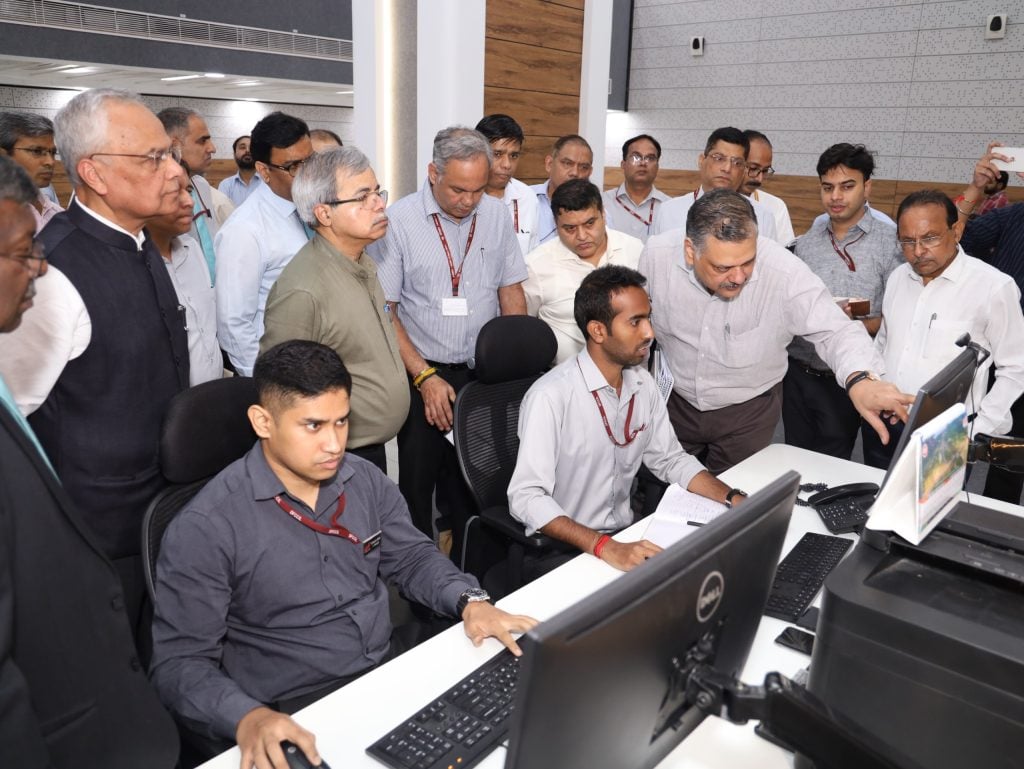
Mr.Satish Kumar inaugurated the War Room at the DFCCIL Corporate Office and directed officials to develop a dedicated dashboard for identifying track deficiencies and enabling 24-hour monitoring of freight trains.
He stressed that any technical or operational deficiencies detected through the monitoring system should be addressed immediately.
The Chairman also called for a review of the effectiveness of the Vigilance Control Device (VCD), which is designed to ensure the alertness and safety of freight train crews. He directed officials to undertake necessary technical improvements wherever required.
He further emphasised the use of modern technologies, including:
- Cameras at railway stations
- Continuous monitoring of the Signal Exchange System
- Machine Vision Inspection System (MVIS)
- Hot Axle Box Detector (HABD)
- Other technology-based safety monitoring systems
These initiatives, he said, should be implemented through a focused campaign to strengthen railway safety.
Three-Level Approach Emphasised for Resolving Technical Issues
During the discussions, Mr.Satish Kumar emphasised a three-level approach for addressing technical issues arising during train operations.
The approach includes:
- Identifying the root cause and assessing the existing situation
- Conducting a detailed analysis of the issue
- Implementing an improved and permanent system
He also stressed the need for detailed investigations into train derailments and regular reviews of the causes and findings of fire incidents involving trains.
The reduction in Cattle Run Over (CRO) incidents was noted as a positive development.
Discussions also covered ways to generate new freight traffic through Multi-Modal Logistics Hubs (MMLHs) and improve the balance of container movement at Jawaharlal Nehru Port Trust (JNPT).
Focus on Research, AI and Technological Innovation
Mr.Satish Kumar stated that the DFCCIL War Room would play an important role in monitoring projects and coordinating operational activities.
He directed DFCCIL to work closely with the Research Designs and Standards Organisation (RDSO) for technological development and testing and to explore opportunities for developing new technologies.
The Chairman also stressed the need for employee skill development through modern technology-based training. He directed officials to introduce AI-related courses and provide practical training in technologies such as Image Recognition.
DFCCIL was also asked to identify new business opportunities based on its existing technological capabilities and expertise.
Greater Collaboration with IIT Delhi and Research Institutions
The Railway Board Chairman emphasised the effective utilisation of financial assistance and funds available under the new policy for research and technological development.
He also called for stronger research and technical collaboration with IIT Delhi and suggested connecting specialised institutions with DFCCIL research projects to accelerate the development of new technologies.
Another area of focus was the promotion and development of open-source software. According to the directions, greater use of open-source solutions could help reduce costs, encourage innovation and strengthen technological self-reliance.
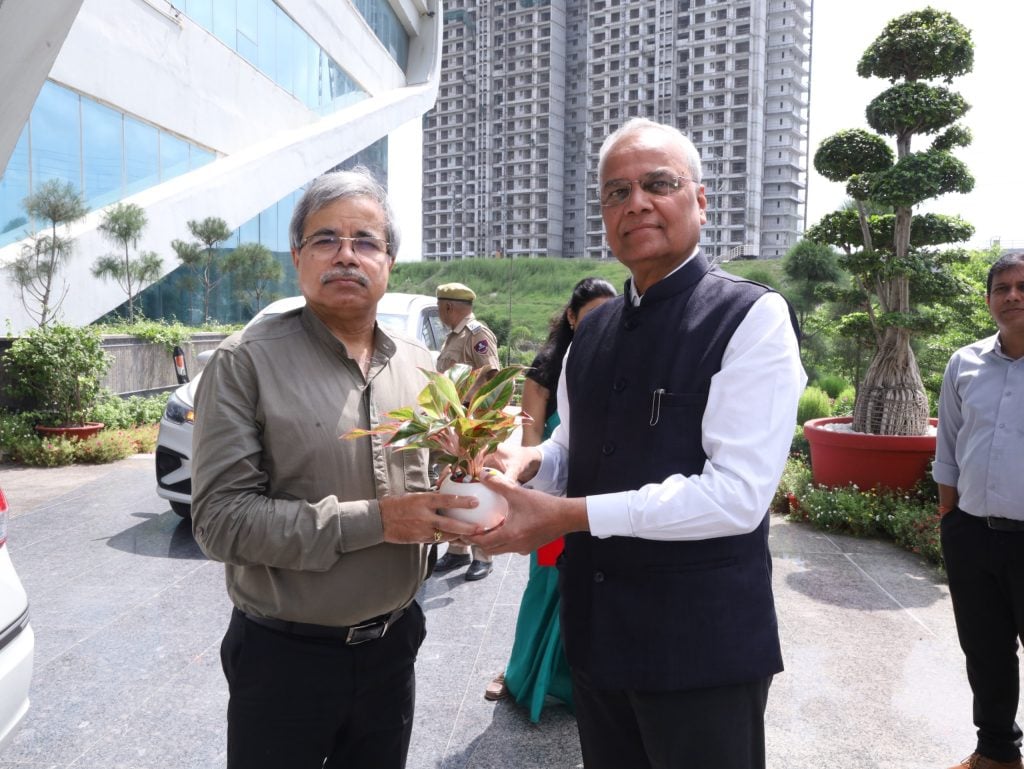
During the visit, Mr.Satish Kumar also participated in a tree plantation programme organised on the DFCCIL campus. He subsequently visited the Experience Centre and was briefed about various activities and achievements of the organisation.
Electronic Interlocking Training Facility Inaugurated at HHI
The Railway Board Chairman and CEO later visited the Heavy Haul Institute (HHI), where he inaugurated the Electronic Interlocking Training Setup.
The facility will provide DFCCIL employees with technical knowledge and practical training in Electronic Interlocking Systems. The initiative is aimed at strengthening employee capabilities while improving operational safety and efficiency.
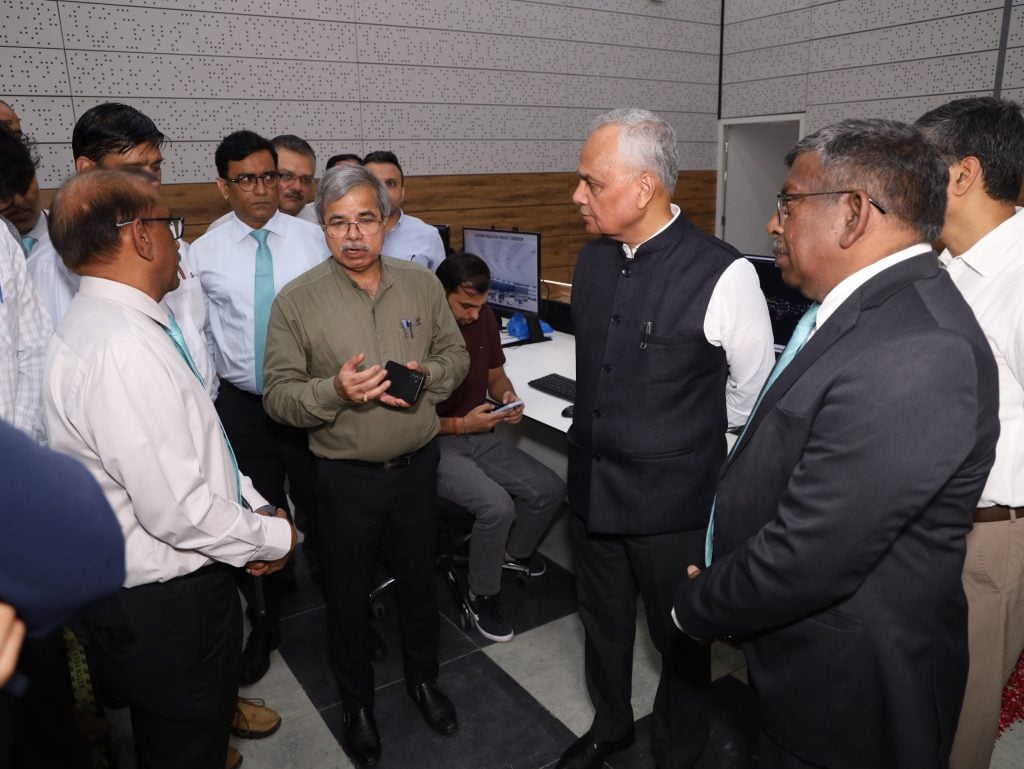
Following the inauguration, Mr.Satish Kumar held a meeting with senior DFCCIL officials in the HHI Conference Room. The discussions covered the organisation’s functioning, operational safety, technological development, training arrangements and future plans.
Satish Kumar Congratulates DFCCIL on WDFC Completion
During the interaction, Mr.Satish Kumar congratulated DFCCIL on the completion and commissioning of the Western Dedicated Freight Corridor (WDFC).
He appreciated the milestone marked by the flagging off of double-stack long-haul freight trains with electric traction from New Sanand (N), New Makarpura, New Umbergaon and New JNPT by Prime Minister Narendra Modi.
He expressed pride in DFCCIL’s progress in strengthening India’s freight transportation infrastructure and described the completion of the WDFC as a significant achievement.
Focus on Punctuality and Freight Train Speed
The Railway Board Chairman also appreciated the improvement in punctuality on parallel Indian Railways sections and in the concerned Railway Zones.
He emphasised the need to sustain and further improve this performance so that the operational benefits of the Dedicated Freight Corridor network can be fully realised.
He also stressed the importance of continuously improving the average speed of freight trains and enhancing overall operational efficiency.
The visit provided further direction to DFCCIL on safe operations, technological innovation, employee training, improved punctuality and future organisational priorities.
Mr.Satish Kumar also appreciated the work being carried out by DFCCIL and its dedicated team. He highlighted the organisation’s contribution to logistics movement and its role in strengthening the Indian Railways network.
He noted that the final dedication of the WDFC by Prime Minister Narendra Modi on September 8, 2026, marked another significant milestone for DFCCIL and expressed confidence that the organisation would continue achieving new targets and contribute to India’s vision of Viksit Bharat 2047.
About DFCCIL
Dedicated Freight Corridor Corporation of India Limited (DFCCIL) is a public sector undertaking under the Ministry of Railways, Government of India, responsible for planning, developing, constructing, maintaining and operating dedicated freight corridors in the country. The organisation is playing a key role in improving freight transportation capacity, reducing transit time, enhancing logistics efficiency and supporting the modernisation of India’s railway freight network.
Read also: SECL CVO Himanshu Jain Addresses Public Procurement and Vigilance Session at DFCCIL Kolkata