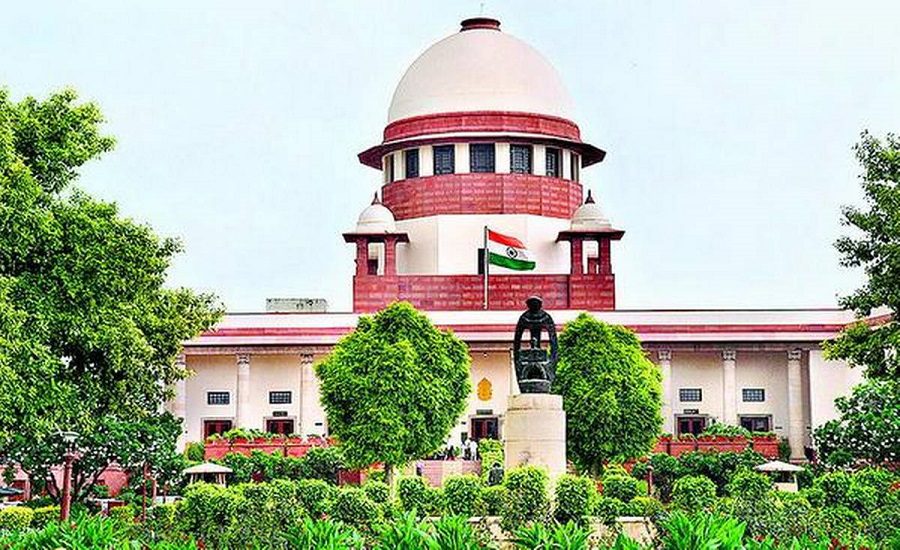
New Delhi: The Supreme Court of India has taken a decisive step towards safeguarding the dignity, bodily autonomy, and privacy of women and girls in matters of menstruation. In a significant hearing on November 29, 2025, the Court announced that it will frame nationwide guidelines to curb “menstrual shaming” — prompted by a disturbing incident at Maharshi Dayanand University (MDU), Haryana, where women sanitation workers were forced to prove they were menstruating by submitting photographic evidence of sanitary pads.
The SC’s intervention underscores the urgency of the issue: menstruation is a biological reality, yet stigma, intrusive checks and humiliating practices persist in workplaces and institutions across India. By deciding to frame rules, the apex court has signaled that such invasive and demeaning practices must end — “period.”
In doing so, the Court has opened a broader debate around menstrual dignity, privacy, and institutional accountability — pressing concerns for women’s rights in India.
Background of The Menstrual Shaming Case
The triggering incident: The catalyst for the SC’s decision was a reported episode at MDU where three women sanitation workers were compelled to photograph their sanitary pads as proof they were menstruating.
Allegations of widespread abuse: According to the petition filed by the Supreme Court Bar Association (SCBA), this was not an isolated incident.
The petitioners argued that such humiliating “menstruation checks” — in workplaces and educational institutions — are prevalent across India.
Violation of fundamental rights: The SCBA contended that forcing women to “prove” menstruation violates their fundamental rights under Article 21 of the Constitution — rights to life, dignity, bodily integrity, privacy, and health.
Need for uniform guidelines: Given the nature of the alleged violations, SCBA urged the Court to intervene and mandate enforceable guidelines nationwide so that workplaces and institutions cannot resort to demeaning checks.
The Supreme Court’s decision to examine framing new guidelines is thus rooted in a broader concern about systemic menstrual discrimination, not just one isolated event.
What the Supreme Court Has Decided — And What It Proposes
During the hearing, a bench comprising Justices B.V. Nagarathna and R. Mahadevan acknowledged the seriousness of the issue. They observed that “period-shaming” reflects a disturbing mindset, and such incidents cannot be allowed to continue under the guise of institutional policy.
Key outcomes/action points emerging from the hearing:
- Notice to the Centre and concerned ministries: The Court has issued a notice to the Central government and relevant ministries to respond to the SCBA’s petition.
- Commitment to frame nationwide guidelines: The Court expressed its intention to frame rules that protect the right to health, dignity, privacy, and bodily autonomy for women and girls going through menstruation — regardless of whether they are working or studying in formal or informal settings.
- Recognition of broader implications: The Court recognised that when menstruation is used as a basis for humiliating checks or differential treatment, it not only violates individual dignity but impinges on fairness in workplaces, especially for women workers in unorganised sectors.
- Alternative to invasive checks: The Court — echoing SCBA’s submission — suggested that if a woman is unable to perform physically demanding tasks due to menstruation-related discomfort, institutions should be allowed to assign alternative duties, rather than forcing humiliating proof.
In effect, the SC is positioning itself not merely as a judicial observer, but as a potential architect of policy that could formalise menstrual dignity across India’s institutions.
Historical & Legal Context: Past Stances of the Court
The SC’s fresh intervention comes against the backdrop of earlier judicial scrutiny of menstrual rights and workplace policies:
- In July 2024, the Court declined to make menstrual leave mandatory for women workers, noting that while menstrual leave might have good intentions, forced leave policies could backfire by discouraging employers from hiring women.
- Instead, the Court had asked the Centre to consider a “model policy” after consulting states and stakeholders.
- That hearing, like the present one, reflected the Court’s sensitivity to possible unintended consequences of well-intended protections — economic exclusion, biased hiring practices, etc.
However, the current case differs significantly; it is not about leave or time off, but about forced proof of menstruation — a deeply invasive and dehumanizing practice that touches on privacy, bodily autonomy, and dignity.
Thus, if the Court proceeds to frame guidelines, it would mark a strong shift from policy-level suggestions toward binding protections for menstrual dignity and privacy.
Importance of SC Decision on Menstrual Shaming Case & Institutional Implications
1. Dignity & bodily autonomy: Menstruation is a natural biological process. Forcing women to “prove” it reduces their bodies to objects of institutional scrutiny. Guidelines would affirm that menstruation is not shameful — and demand dignity and respect in institutions.
2. Institutional accountability: By framing uniform rules, the Court can ensure institutions (schools, colleges, offices, hospitals, sanitation services) provide humane working/studying conditions — rather than resorting to degrading practices under the guise of policy or suspicion.
3. Protection of vulnerable women workers: Women in unorganised or manual labour sectors (sanitation workers, contract labourers, cleaners) often lack union protection. Legal guidelines will offer them formal safeguards against abuse and humiliation.
4. Changing societal mindset: Legal intervention often triggers social discourse. A directive from SC can help reduce stigma around menstruation — a change crucial for gender equality, menstrual hygiene awareness, and mental well-being.
5. Precedent for further reforms: This move may pave the way for broader policies around menstrual hygiene, menstrual leave, safe sanitation facilities, access to hygiene products, and overall menstrual health management in India.
Key Challenges and What Lies Ahead
While the SC’s intent is praiseworthy, framing and implementing effective guidelines will face real-world challenges:
- Diverse institutional settings – Implementation would need adaptation across varied settings — urban offices, rural schools, informal labour sectors, government and private institutions.
- Monitoring and enforcement – Rules without enforcement can remain symbolic. For meaningful change, there must be accountability mechanisms — inspections, redressal systems, privacy safeguards.
- Balancing sensitivity and practicality – While dignity must be prioritized, institutions may seek clarity on how to handle absences, hygiene management, accommodations for women during menstruation. Guidelines must balance rights and operational realities.
- Overcoming entrenched stigma – Legal rules alone cannot change deep-rooted societal taboos or attitudes. There must be parallel awareness campaigns, education, and cultural change — inside families, communities, workplaces.
- Ensuring inclusivity – The rules must account for all menstruating persons — across caste, class, socio-economic status, rural–urban divide — and consider varied vulnerabilities.
How effectively these guidelines are shaped and rolled out will determine whether this is a symbolic gesture or a true turning point for menstrual dignity in India.
What Happens Next: The Process & Expectations
- The Court has issued notices to the Centre and relevant ministries. The government is expected to respond to the petition filed by SCBA.
- Based on the responses, the SC may proceed to draft comprehensive guidelines — likely after consulting stakeholders including labour bodies, women’s rights organisations, educational institutions, and representatives of vulnerable labour sectors.
- Post promulgation, institutions across the country will be expected to follow the guidelines. Regulatory oversight — perhaps via labour inspections, human rights commissions, or internal institutional grievance/oversight bodies — will be essential.
- Civil society, NGOs, and advocacy groups might play a crucial role in monitoring compliance, spreading awareness, and supporting victims of menstrual shaming.
- The move may open further judicial or policy debates; on menstrual leave, sanitation infrastructure, menstrual hygiene management, education, and more.
Read more: Big Relief for Retirees: Supreme Court Flags Finance Act 2025 in Landmark Pension Parity Case