Delhi: Steel slag road technology can reduce road construction costs by around 40% while delivering up to four times the strength of conventional roads, Union Minister of State (Independent Charge) for Science & Technology and Earth Sciences, Dr Jitendra Singh, said.
The Minister said the technology could also significantly extend the maintenance cycle, with major maintenance potentially required only after nearly 15 years in suitable applications. He called for the indigenous technology to be expanded from one project to multiple projects and from one State to many States.
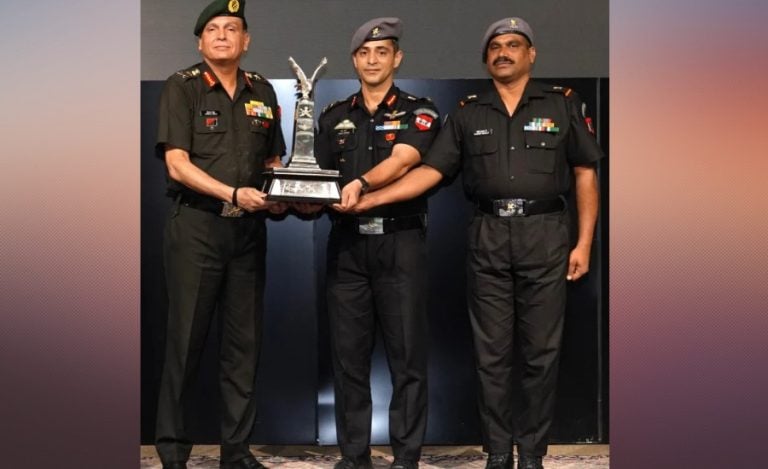
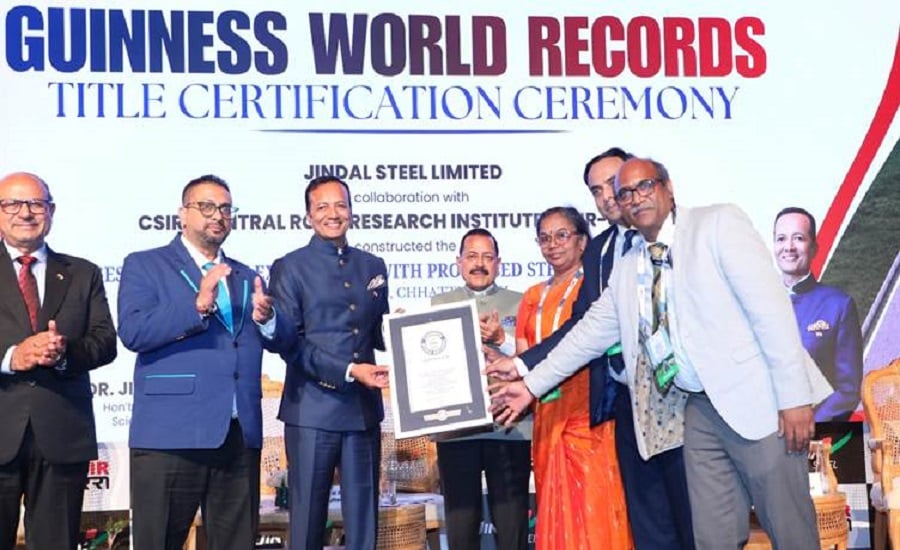
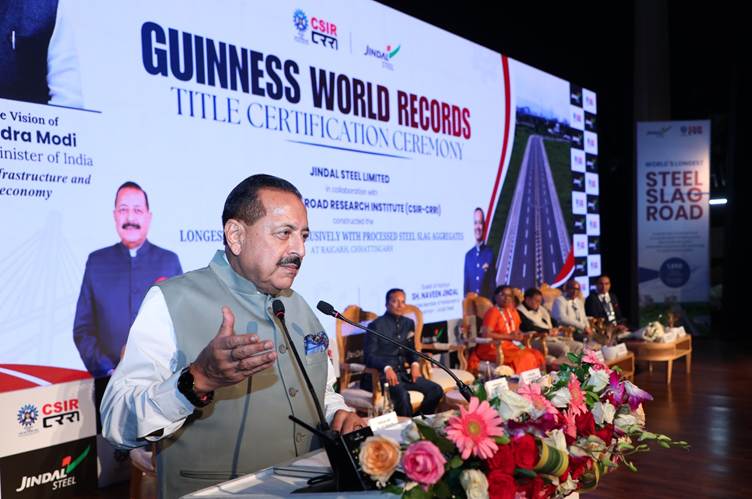
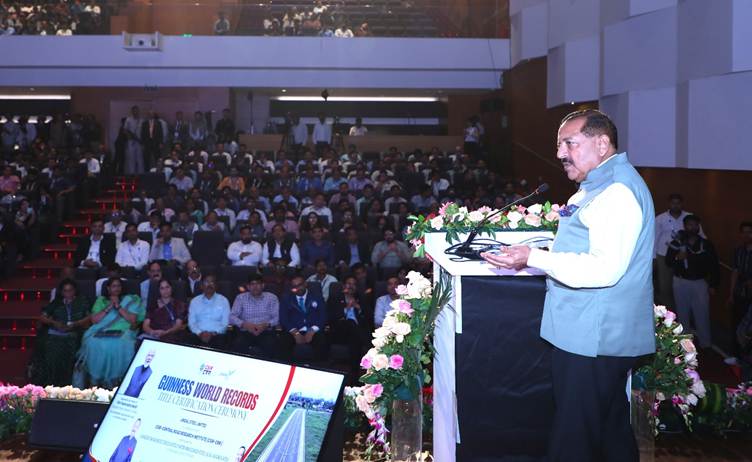
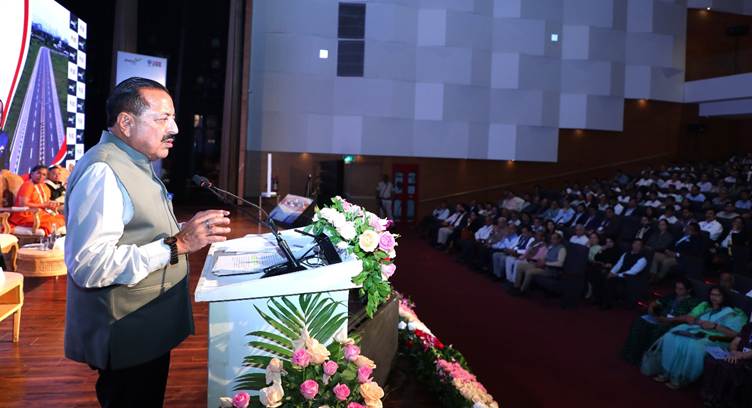
Dr Jitendra Singh was speaking at the conferment of the Guinness World Record for the “World’s Longest Road Built with Processed Steel Slag Aggregates” in Raigarh, Chhattisgarh. The 1.85-km road has been jointly developed through the efforts of CSIR-Central Road Research Institute (CSIR-CRRI) and Jindal Steel Limited.
Steel Slag Technology Promotes Waste-to-Wealth Approach
Dr Jitendra Singh said the initiative supports several flagship priorities of the government, including Prime Minister Narendra Modi’s emphasis on “Waste to Wealth” and recycling.
The technology converts processed steel slag, a by-product of steel production, into aggregates that can be used in road construction.
According to the Minister, the initiative demonstrates how industrial waste can be transformed into infrastructure wealth while reducing dependence on natural aggregates obtained through mining and quarrying.
India’s growing network of highways, expressways, industrial corridors, ports and urban infrastructure has increased the demand for construction materials. Steel slag technology provides a way to address this demand while also promoting resource conservation.
Read also: India Pushes Lab-to-Market Shift as Jitendra Singh Calls for Industry Partners From Day One
Guinness World Record for 1.85-km Steel Slag Road
The 1.85-km road at Raigarh, Chhattisgarh, has received the Guinness World Record for the “World’s Longest Road Built with Processed Steel Slag Aggregates.”
The programme also included:
- Virtual inauguration of the road
- Release of a scientific documentary
- Signing of a Technology Transfer Agreement between CSIR-CRRI and Jindal Steel
- Launch of the “Steel Grit” brand
- Recognition of the project team
The achievement marks an important scale-up of indigenous technology developed to convert processed steel slag into road construction aggregates.
Dr Jitendra Singh Calls for Wider Adoption
Dr Jitendra Singh said the Guinness World Record should not be considered the final destination but the beginning of a wider adoption phase.
He called for the technology to move:
- From one project to many projects
- From one State to many States
- From individual demonstrations to mainstream infrastructure applications
The Minister said adoption should not be limited to the Ministry of Road Transport and Highways (MoRTH). Railways, other Central government departments, State governments and private infrastructure companies can also explore the technology wherever it is technically and economically suitable.
He also called for awareness programmes to help engineers, contractors and implementing agencies understand the technology and assess its suitability for different projects.
Steel Slag Roads Can Offer Higher Durability
The Minister highlighted the potential importance of steel slag roads in areas where conventional road infrastructure faces durability challenges.
He noted that geographically difficult regions and areas with heavy rainfall can experience shorter construction windows and damage to roads.
Recalling his association with the Northeast, Dr Jitendra Singh said road construction in some areas is restricted to only four or five months because of heavy rainfall. Roads constructed during one season can also face damage before the next construction cycle.
Stronger and more durable road technologies could therefore be particularly useful in such challenging regions.
Technology Can Support Changing Traffic Requirements
Dr Jitendra Singh also highlighted the changing traffic profile of rural roads.
Roads initially built to connect villages and handle light vehicles may later experience heavy commercial traffic as nearby areas develop into industrial zones.
He said such changes demonstrate the need for road technologies capable of supporting higher loads and providing longer durability.
Steel slag-based road construction could help address such requirements where the technology is found suitable through technical assessment and proper pavement design.
Technology Transfer Agreement Signed
The event also saw the signing of a Technology Transfer Agreement between CSIR-CRRI and Jindal Steel.
CSIR-CRRI’s scientific guidelines, processing protocols and quality-control framework are expected to provide the technical basis for the wider adoption of processed steel slag aggregates.
Dr Jitendra Singh described the initiative as an example of “whole-of-government plus whole-of-nation” collaboration involving government institutions, scientific organisations, industry and engineers.
He said the next phase should focus on creating stronger pathways for indigenous technologies to move from laboratories and demonstration projects to large-scale field implementation.
Steel Slag Technology Already Used in Several Projects
The technology has already been deployed in several infrastructure projects across India.
At Hazira in Gujarat, processed steel slag aggregates were used for a six-lane road connecting an industrial area with Hazira Port.
The technology was later used on the NH-66 Mumbai-Goa Highway, where around 80,000 tonnes of steel slag were processed into aggregates for a one-kilometre, four-lane road section.
Steel slag technology has also been deployed for heavy-duty road infrastructure in Arunachal Pradesh, including areas in the strategic border region.
In addition, a 1.1-km steel slag road has been developed inside Hazira Port, connecting the multi-purpose berth with the coal yard.
These applications demonstrate the potential of processed steel slag aggregates for highways, industrial roads and logistics infrastructure when supported by appropriate processing, pavement design and quality control.
40-Km Odisha Road to Become Next Major Milestone
The 1.85-km Guinness World Record is already paving the way for a much larger project in Odisha.
Dr N. Kalaiselvi, Secretary, Department of Scientific and Industrial Research (DSIR) and Director General, CSIR, said CSIR-CRRI has received a work order from Jindal Steel for a 40-km road in Odisha from the company’s Angul plant.
The project will take the technology from the current 1.85-km record towards a significantly larger 40-km implementation.
Dr Kalaiselvi said CSIR-CRRI and Jindal Steel are now positioned to potentially break their own record with the upcoming Odisha project.
She described the achievement as a significant milestone for CSIR as the organisation prepares to enter its 85th year.
Focus on Waste to Wealth and Circular Economy
Dr Jitendra Singh placed the steel slag road initiative within the government’s broader Waste to Wealth and circular economy vision.
He said India needs to move away from viewing materials simply as waste because science and technology can unlock new economic value from them.
The Minister also referred to other CSIR initiatives involving biofuels made from used cooking oil and recovery of value from electronic scrap.
According to him, recycling and resource recovery are likely to become increasingly important elements of India’s next phase of industrial development.
Dr Jitendra Singh Praises CSIR-CRRI and Jindal Steel
Dr Jitendra Singh congratulated Dr Satish Pandey and the CSIR-CRRI team for their sustained efforts in taking steel slag road technology from research to real-world applications.
He said scientific talent needs opportunities to demonstrate its potential and credited Jindal Steel for providing the scale and platform needed to demonstrate the technology in actual infrastructure.
The Minister also expressed hope that more steel companies would collaborate with scientific institutions to develop and implement similar technology-led solutions.
Key Leaders Attend the Programme
Several prominent officials and industry representatives attended the programme, including:
- Naveen Jindal, Member of Parliament, Chairman of Jindal Steel and President of the Indian Steel Association
- Dr N. Kalaiselvi, Secretary, DSIR and Director General, CSIR
- Dr V.K. Saraswat, former Member, NITI Aayog and former Director General, DRDO
- Dr Ch. Ravi Sekhar, Director, CSIR-CRRI
- Representatives of Guinness World Records
- Scientists and engineers
- Industry leaders and media representatives
From One Project to Many States
Dr Jitendra Singh said the real success of the steel slag road initiative would be measured by its replication across India wherever it is technically and economically appropriate.
He called for greater cooperation among Central government departments, State governments, scientific institutions, industry and private infrastructure developers.
The Minister said the initiative brings together science and industry, waste and wealth, innovation and infrastructure, and research with societal needs.
With the 40-km Odisha project already in the pipeline, the technology is moving beyond a Guinness World Record towards wider national adoption. The initiative aims to demonstrate how an industrial by-product can be converted into a valuable infrastructure resource while supporting cost efficiency, durability and conservation of natural resources.