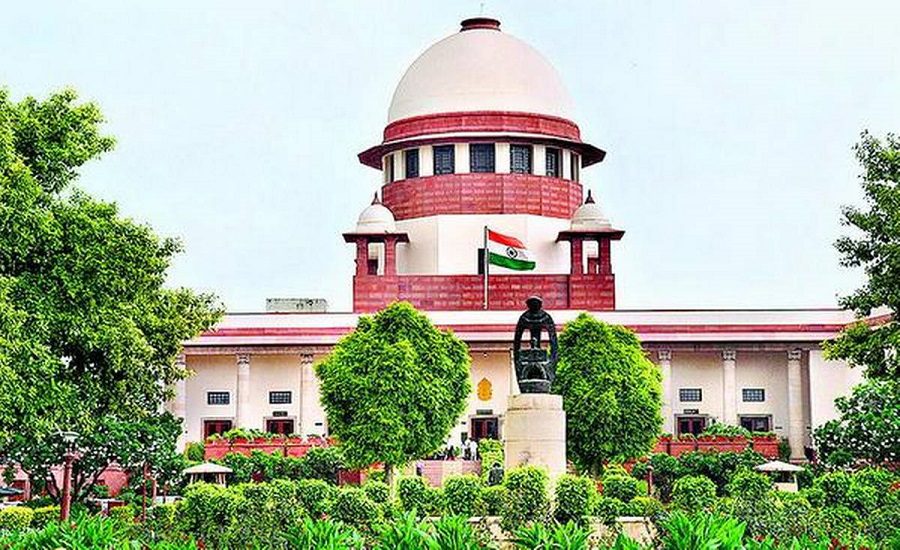
New Delhi: In a significant directive, the Supreme Court of India has called upon the Central Government and the Employees’ Provident Fund Organisation (EPFO) to take a definitive decision within the next four months on revising the wage ceiling under the Employees’ Provident Fund Scheme (EPFS), which has remained unchanged for over a decade.
A bench consisting of Justices J.K. Maheshwari and Atul S. Chandurkar ruled on a public interest litigation (PIL) that brought attention to the outdated wage ceiling, urging the authorities to ensure that the statutory social security framework meets contemporary economic realities.
What is Employee’s Provident Fund Organisation
The Employees’ Provident Fund Organisation (EPFO) operates under the Ministry of Labour and Employment and administers retirement, pension, and disability schemes for formal sector employees in India.
The EPF system mandates that both the employee and employer contribute 12% of the basic wage, with a portion allocated to the Employees’ Pension Scheme (EPS). The wage ceiling plays a pivotal role in determining contribution levels and coverage.
However, because the current wage ceiling has stayed unchanged for over 11 years, many workers — especially from industries where minimum wages have risen significantly — find themselves outside the mandatory EPF net, reducing their access to long-term savings and retirement benefits.
Background of EPF Wage Ceiling Hike
Under the current provisions of the Employees’ Provident Fund Scheme, 1952, workers earning up to ₹15,000 per month are mandatorily enrolled under EPF, enabling them to contribute towards and benefit from retirement savings and other social security schemes administered by the EPFO. However, this wage ceiling has not been revised since 2014 and remains static at ₹15,000, despite rising minimum wages and inflation across India.
The PIL, filed by social activist Dr. Naveen Prakash Nautiyal, contends that this stagnant wage ceiling excludes a large portion of the workforce who earn marginally above ₹15,000 per month but remain ineligible for compulsory EPF coverage, contrary to the scheme’s social security objectives.
Bench’s Directive: Key Points and Timeline of EPF Wage Ceiling Hike
During Monday’s hearing, the Supreme Court:
- Directed both the Central Government and the EPFO to decide on the revision of the wage ceiling within four months from the date of its order.
- Allowed the petitioner, through his legal counsel, to submit a fresh representation along with a copy of the court’s judgment within two weeks.
- Emphasized that the existing ceiling has no linkage with economic indicators such as inflation, minimum wage notifications, or per capita income growth, making it arbitrary and irrational.
- The court’s directive is not a mandate to fix a particular figure, but it imposes a strict timeframe for the government and the EPFO to consider and communicate their decision on rationalizing the wage ceiling.
Arguments by the Petitioner: Social Security and Constitutional Rights
Numerous employees who earn above ₹15,000 per month are denied access to EPF benefits due to the outdated cap, despite the scheme being designed as a social welfare measure for all organized-sector workers.
The wage ceiling has been historically revised inconsistently, often after delays of 13–14 years, and is not linked to measurable economic indices — which undermines the scheme’s coverage objectives.
The 16th Lok Sabha’s Public Accounts Committee and the EPFO’s Sub-Committee on Enhancing Coverage have previously recommended periodic revision and lowering of the threshold, but government action has been slow, despite approvals by EPFO’s central board in July 2022.
The PIL also invokes Articles 14 (Equality before law) and 21 (Right to life and personal liberty) of the Indian Constitution, arguing that arbitrary exclusion of a substantial workforce segment conflicts with the statute’s social justice objectives.
What are the Implications of EPF Wage Ceiling Hike
- Expand EPF coverage to a larger segment of India’s workforce, including middle-income earners.
- Increase retirement savings, enhancing financial security for employees.
- Impact employers’ cost structures, potentially prompting wider stakeholder consultations before any decision.
Labour Ministry officials have previously stated that any revision would require extensive consultations with stakeholders, including industry associations and trade unions, to balance coverage expansion with fiscal and administrative considerations.
Read also: Explained: Why the Supreme Court Is Ending Endless Hearings and What Changes From 2026