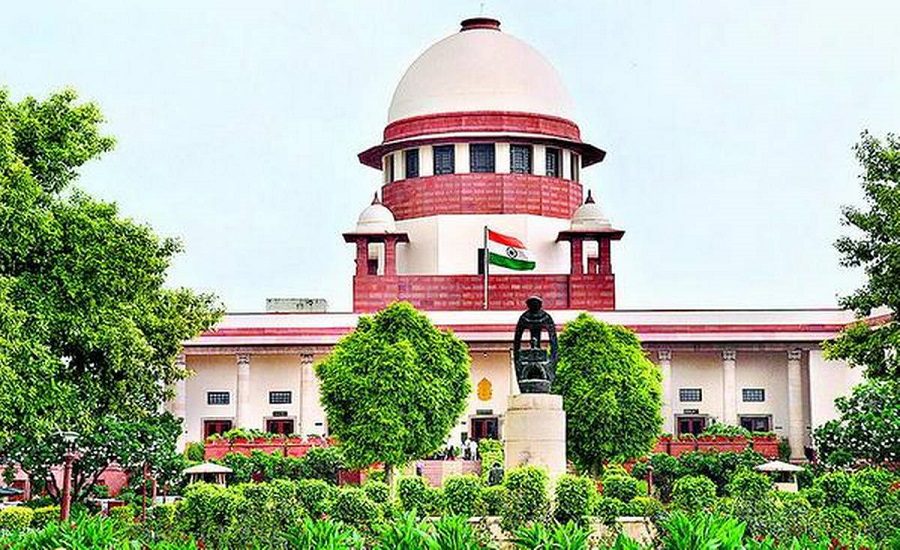
New Delhi: The Supreme Court of India has observed that insubordination and poor judicial temperament do not automatically mean that a judicial officer lacks integrity.
During a recent hearing, the Court questioned the use of a ‘doubtful integrity’ remark against a woman judicial officer, stating that integrity is related to dishonesty, while insubordination is a matter of temperament.
The observations came while hearing a challenge filed by the Allahabad High Court administration against a decision that removed an adverse integrity remark from a judicial officer’s Annual Confidential Report (ACR).
Supreme Court Questions The ‘Doubtful Integrity’ Remark in Judge Manju Kumari Case
A three-judge bench comprising Chief Justice of India Surya Kant, Justice Joymalya Bagchi and Justice V. Mohana heard the matter.
Read also: Why Did The Supreme Court Order An Inquiry Against A Judicial Officer? Full Story Here
The case concerned Judge Manju Kumari, whose integrity was questioned in her ACR for the period 2019-2020, when she was posted as an Additional Civil Judge in Ghaziabad, Uttar Pradesh.
Justice Joymalya Bagchi questioned whether complaints about rude behaviour, poor court management or refusal to follow instructions could justify describing a judicial officer’s integrity as doubtful.
During the hearing, Justice Bagchi observed that insubordination was not an integrity issue but a matter of judicial temperament.
He also questioned whether an officer could be considered dishonest for just one year despite having a good service record in other years.
Background Of The Judge Manju Kumari Case
The dispute started with an adverse entry in Manju Kumari’s Annual Confidential Report for 2019-2020.
Her District Judge had described her integrity as doubtful, mainly based on oral complaints from advocates about her behaviour and alleged rudeness.
The officer challenged these remarks before the Allahabad High Court and requested that the adverse entry be removed from her service record.
The High Court administration argued that she had received several complaints about her conduct and behaviour. It also stated that she had refused to perform certain duties assigned by the Chief Judicial Magistrate and had made complaints against her senior officers.
According to the administration, these actions showed a lack of cooperation and amounted to insubordination.
Allahabad High Court Had Already Removed The Adverse Remark
On July 10, 2026, a division bench of the Allahabad High Court, comprising Justice Arindam Sinha and Justice Satya Veer Singh, removed the adverse integrity remark.
The High Court observed that the administration had failed to provide sufficient material to establish that the judicial officer was dishonest or lacked integrity.
It also noted that the complaints were mainly related to her behaviour, working style and judicial decisions.
The High Court explained that disagreements over judicial orders or complaints about workplace behaviour should not automatically be treated as evidence of doubtful integrity.
The court further observed that the officer’s service record did not contain similar adverse remarks for the years before and after the disputed period.
Supreme Court Highlights The Difference Between Integrity And Temperament
During the Supreme Court hearing, Justice Bagchi explained that integrity is generally connected with honesty and freedom from dishonest practices.
He said that poor behaviour, rudeness or insubordination could indicate problems with an officer’s temperament, but these issues should not automatically be described as dishonesty.
The bench also observed that an Annual Confidential Report contains separate areas for assessing an officer’s behaviour towards advocates and overall work performance. Therefore, concerns about professional behaviour could be recorded under the appropriate categories instead of using a serious expression such as ‘doubtful integrity’ without sufficient supporting material.
Judge Manju Kumari Case: Supreme Court Appreciates Improvement In The Officer’s Performance
The bench also examined the judicial officer’s service record. It noted that her performance records were good for the years 2013-2019 and from 2020-2021 onwards, while the disputed adverse remarks related to 2019-2020.
When the High Court administration informed the bench that her performance had improved after the adverse remarks, Justice Bagchi suggested that the administration should recognise the improvement.
He also emphasised that a model employer should not continue pursuing the matter when the warning had already helped improve the officer’s performance.
The bench declined to grant the administration’s request to keep further action against the officer open.
Supreme Court Leaves Allahabad High Court Decision Undisturbed
The Allahabad High Court administration had approached the Supreme Court to challenge the decision that removed the adverse integrity remark. However, during the hearing, its counsel informed the bench that the administration would not press the petition further.
The Supreme Court declined to entertain the challenge, leaving the Allahabad High Court’s decision undisturbed. The case is titled High Court Of Judicature At Allahabad Versus Manju Kumari And Another, registered as SLP(C) No. 037568 of 2026.
The proceedings highlight the importance of using appropriate language while assessing the professional conduct and integrity of judicial officers. They also underline the need for sufficient material before making serious allegations that could affect an officer’s professional reputation and career.
Read also: Allahabad High Court Transfers 35 Judicial Officers: Satyendra Kumar Named Unnao District Judge
FAQs
Manju Kumari is a judicial officer from Uttar Pradesh whose Annual Confidential Report for 2019-2020 contained an adverse remark describing her integrity as doubtful. The Allahabad High Court removed that remark.
The Supreme Court observed that insubordination is a matter of judicial temperament and does not automatically prove dishonesty or doubtful integrity.
The Supreme Court declined to entertain the challenge after the High Court administration’s counsel stated that the petition would not be pressed further. As a result, the Allahabad High Court’s decision removing the adverse remark remained undisturbed.