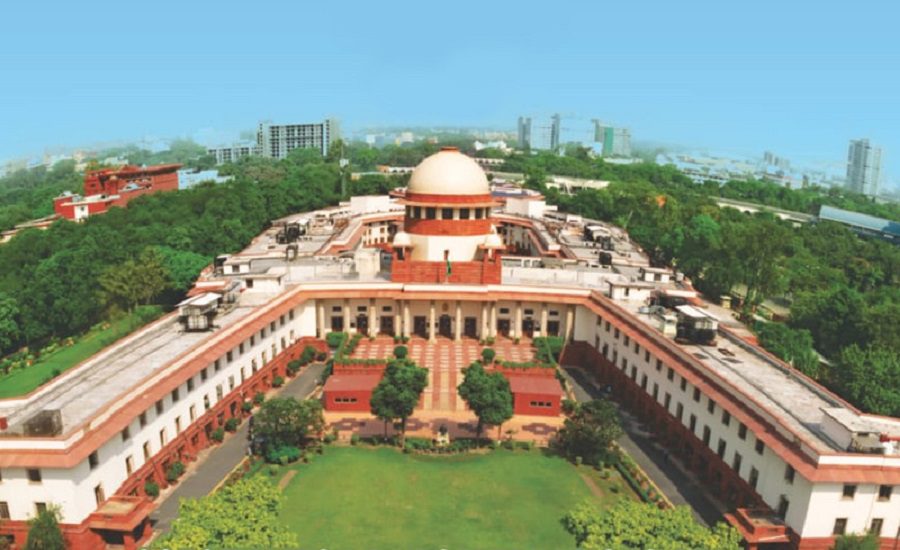
New Delhi: The Supreme Court of India on December 16, 2025 agreed to hear a public interest litigation (PIL) seeking judicial directions to include intersex births and deaths in the civil registration system and the upcoming national Census.
A Bench led by Chief Justice of India (CJI) Surya Kant described the petition as a “very good petition” and ordered that the matter be listed before a three-judge Bench for fuller consideration.
The case raises fundamental questions about identity documentation, legal recognition, and equality for intersex persons — a historically marginalised community — and could prompt reforms in India’s legal and statistical frameworks.
Background of Intersex Rights
The PIL titled Gopi Shankar M v. Union of India and Ors. was filed by Gopi Shankar M, a widely known intersex rights activist and former South Regional Representative of the National Council for Transgender Persons (NCTP).
At its core, the petition seeks recognition and legal provisions for:
- Recording births and deaths of intersex persons under the Registration of Births and Deaths Act, 1969,
- Inclusion of intersex persons in the Census of India,
- Issuance of identity documents that distinguish sex and gender separately, and
- Legal safeguards in civil and social policies that affect fundamental rights and access to services.
Until now, India’s civil registration and Census systems have lacked explicit recognition of intersex persons — typically structured around binary classifications such as male and female, and in some instances expanded to include transgender.
This omission, the petition argues, has significant legal and social consequences for intersex individuals who do not fit within traditional binary categories.
Importance of Inclusion of Intersex Rights in Census and Civil Registration
Census data and birth–death registration systems serve as the backbone of India’s demographic and policy planning.
These records determine everything from resource allocation and healthcare access to education, employment, identity proofs, and legal entitlements.
Justice-seekers and human-rights activists, including the petitioner, argue that lack of official recognition:
- Creates barriers to access essential services such as healthcare and education,
- Impedes accurate demographic data on intersex populations,
- Leads to exclusion from mainstream welfare schemes, and
- Forces intersex persons to fit within categories that do not reflect their lived realities.
The plea highlights how many administrative forms continue to use narrow or confusing definitions of “sex” and “gender”, often using the terms interchangeably, thereby compounding difficulties for intersex persons in official procedures.
The Petition’s Core Arguments
Filed through Advocate-on-Record Astha Deep and Advocate Sujeet Ranjan, the PIL contends that:
- The Registration of Births and Deaths Act, 1969 fails to recognise or provide procedures for registering intersex births and deaths.
- Government forms and policies list only Male, Female, and Transgender options, none of which adequately accommodate intersex identities or characteristics.
- Without specific provisions, intersex persons face discrimination, especially in education enrolment forms, job applications, and identity documentation.
- The interchangeable use of sex and gender in law and policy deepens confusion, leading to inadequate recognition and protection of intersex individuals’ rights.
The plea further urges the apex court to direct the government to consider enacting legislation regulating medical interventions on intersex infants and children — a matter closely linked to bodily autonomy and informed consent.
Supreme Court Hearing and Bench Referral
During the hearing, Solicitor General Tushar Mehta, representing the Union of India, did not oppose the petition and requested that it be placed before a larger Bench due to the significant constitutional and policy implications.
Agreeing with the submission, CJI Surya Kant — along with Justice Joymalya Bagchi — said the matter raised a good issue requiring detailed examination and directed that it be listed before a three-judge Bench for further hearings.
The specific constitution of the Bench and future hearing dates are expected to be notified by the Supreme Court registry.
Read also: Delhi High Court Rejects PIL for Dedicated Cybercrime Courts, Cites Lack of Statutory Mandate