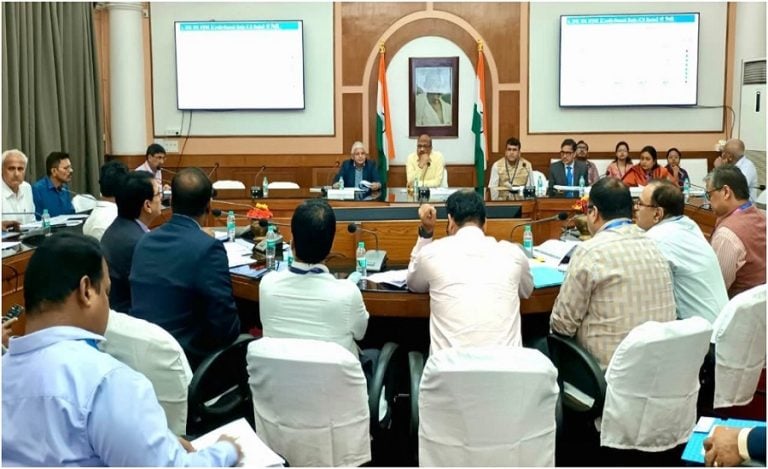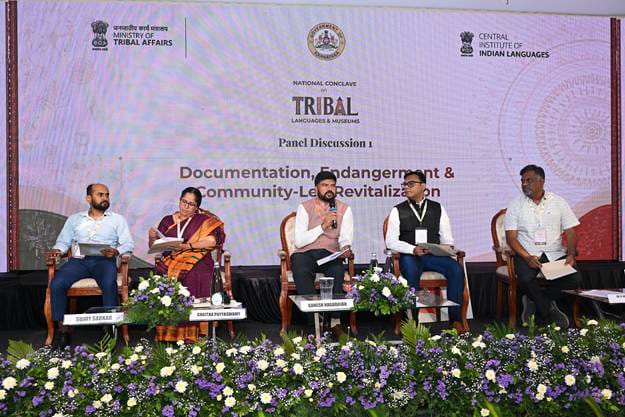
Mysuru: The Ministry of Tribal Affairs (MoTA) on August 24 began a three-day National Conclave on Tribal Languages & Museums in Mysuru, Karnataka, bringing together policymakers, linguists, researchers, technologists and tribal community representatives.
The conclave is being organised in collaboration with the Karnataka State Tribal Research Institute (KSTRI) and the Central Institute of Indian Languages (CIIL), with more than 150 participants from across states.
The discussions are focused on documenting and revitalising tribal languages, strengthening multilingual education and using technology to preserve linguistic and cultural heritage.
Adi Vaani Platform Upgraded With Five New Languages
One of the key highlights of the inaugural day was the launch of the upgraded Adi Vaani platform, along with its new iOS application and logo.
Read Also: ITDC and Ministry of Tribal Affairs Launch Capacity Building Programme for Tribal Homestay Owners
The platform also added five new languages, expanding its coverage of tribal languages.
Key additions announced at the conclave include:
- An upgraded Adi Vaani platform.
- A new iOS application.
- Five additional tribal languages.
- A new Adi Vaani logo.
- Technology-enabled tools for tribal-language access and preservation.
The conclave also examined the use of technologies such as automatic speech recognition, text-to-speech, machine translation, corpus development, keyboards and fonts for tribal languages.
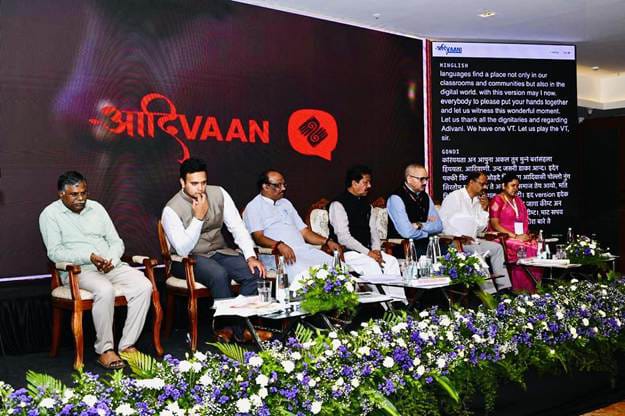
MoTA Launches AI Assistant ‘Jago’
The Ministry of Tribal Affairs also launched ‘Jago’, its official AI conversational assistant, along with its mascot.
According to the Ministry, Jago is designed to make information on tribal welfare schemes, programmes, initiatives and repositories easier to find and understand through a single interface.
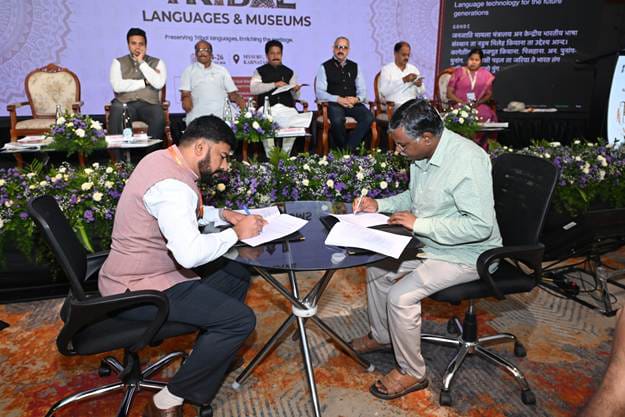
MoTA, CIIL Sign MoU for Tribal Language Documentation
The Ministry of Tribal Affairs and the Central Institute of Indian Languages (CIIL) signed a Memorandum of Understanding (MoU) on language documentation and corpus development.
Under the agreement, CIIL will support the Ministry and share relevant data on tribal languages.
The collaboration is aimed at strengthening the documentation and development of linguistic resources for tribal languages.
Karnataka Releases Tribal-Language Primers
The Tribal Welfare Department of Karnataka, along with KSTRI, released educational material in tribal languages during the conclave.
The materials included:
- Class 1 Jenukuruba Primer covering Kannada, Mathematics and Environmental Studies.
- Sannivesha
- Pragiti Nota
- Thattegalu flashcards
The release highlighted efforts to develop learning resources for tribal-language education.
Technology and Community Participation at Centre
The technical sessions examined several aspects of tribal-language preservation and education.
Three key discussions
1. Documentation, Endangerment & Community-Led Revitalisation
The panel examined the current status of tribal-language documentation and approaches for community-led language revitalisation.
2. Technology Meets Tribal Languages
The discussion covered:
- Automatic speech recognition
- Text-to-speech
- Machine translation
- Corpus building
- Tribal-language keyboards and fonts
- Data protection and safeguards
- Risks associated with misuse or commercialisation of linguistic data
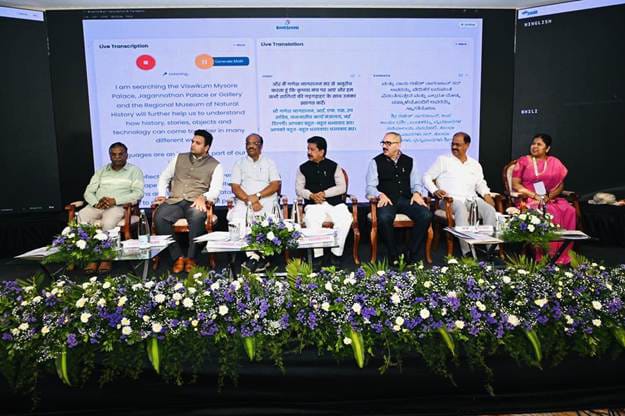
A live translation demonstration using audio recorded at the registration booth was also conducted.
3. Multilingual Education for Tribal Students
The panel discussed tribal-language pedagogy, curriculum development and the availability of primers, dictionaries and teacher handbooks for tribal schools.
Tribal Research Institutes Share Best Practices
Four Tribal Research Institutes from Kerala, Odisha, Sikkim and Jharkhand presented their work and best practices related to language preservation and ongoing projects.
The discussions also emphasised the role of tribal communities and youth in documenting and preserving languages and associated cultural knowledge.
Conclave to Continue on August 25
The National Conclave will continue on August 25, with discussions on community perspectives on tribal languages and the adoption and signing of the Mysuru Declaration.
The second day will also feature sessions on Tribal Freedom Fighter Museums (TFFM), continuing the broader focus on preserving tribal heritage and historical legacy.