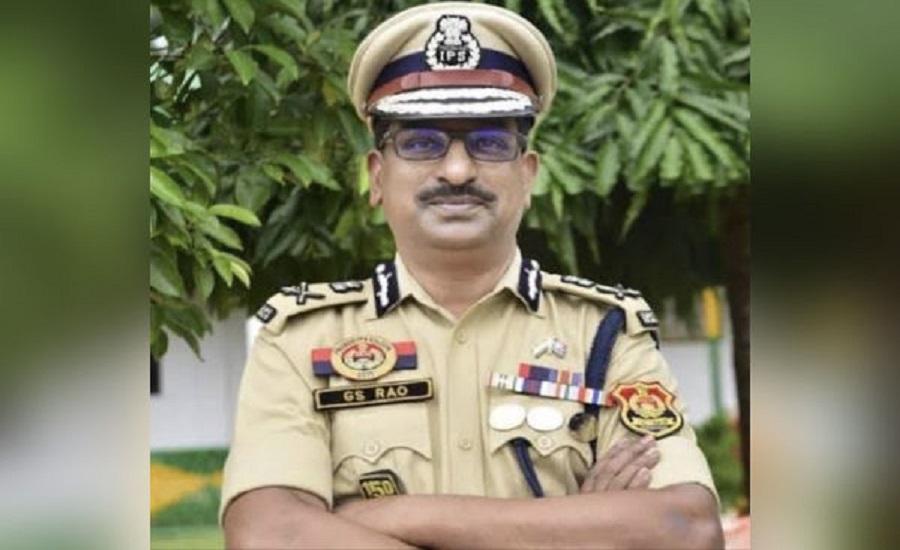
Tripura: The appointment of GS Rao, IPS (1999 batch), as Acting Director General of Police (DGP) of Tripura has drawn attention to the seniority structure of the state cadre, with several IPS officers senior to him currently serving on central deputation.
The government order described Rao as the “next senior-most” IPS officer serving in the state at the time he was entrusted with the additional charge of DGP.
However, when the broader Tripura-cadre seniority is considered, there are several officers from earlier batches who are senior to Rao. The distinction is that these officers are presently serving outside the state on deputation to the Centre.
The situation therefore brings into focus the difference between an officer’s cadre seniority and the seniority of officers actually serving in the state when an interim or emergency administrative arrangement has to be made.
GS Rao Is 1999-Batch Tripura-Cadre IPS Officer
GS Rao belongs to the 1999 batch of the Indian Police Service and is a member of the Tripura cadre.
He has now been given the additional responsibility of Acting DGP of Tripura. The government order specifically identified him as the next senior-most IPS officer serving in the state at the time of the arrangement.
The appointment came in what has been described as an emergency situation, necessitating an immediate arrangement for the leadership of the state police.
While Rao is not the senior-most IPS officer of the Tripura cadre when officers on central deputation are also counted, he was the next senior-most officer available and serving in the state at that particular point.
Several Senior Tripura-Cadre IPS Officers Are on Central Deputation
The Tripura cadre has a number of IPS officers who belong to batches senior to Rao.
According to the seniority and posting information available, Rajiv Singh of the 1993 batch is senior to Rao and is serving as Secretary (Security) in the Cabinet Secretariat.
Puneet Rastogi, a 1995-batch IPS officer, is serving as Special Director General in the Border Security Force (BSF).
M. Raja Murugan, who belongs to the 1996 batch, is also on central deputation. He is followed in the cadre seniority sequence by Saurabh Tripathi, a 1997-batch officer, who is also serving on central deputation.
Two more senior officers from the 1998 batch — Arvinder Singh and RS Kamble — are likewise on central deputation.
As a result, although all these officers are senior to Rao in terms of batch seniority, they were not serving in Tripura when the interim DGP arrangement was made.
Seniority List Shows Rao Is Not the Senior-Most Officer Overall
The available seniority and posting information places six officers ahead of Rao in terms of batch seniority.
The sequence is:
- Rajiv Singh — 1993 batch: Secretary (Security), Cabinet Secretariat
- Puneet Rastogi — 1995 batch: Special Director General, BSF
- M. Raja Murugan — 1996 batch: Central deputation
- Saurabh Tripathi — 1997 batch: Central deputation
- Arvinder Singh — 1998 batch: Central deputation
- RS Kamble — 1998 batch: Central deputation
- GS Rao — 1999 batch: Acting DGP, Tripura
This makes Rao junior to all six officers in terms of batch seniority.
However, the government order did not describe him as the senior-most officer of the entire Tripura cadre. Instead, it described him as the next senior-most IPS officer serving in the state.
That distinction is central to understanding the latest arrangement.
Why GS Rao Was Given the DGP Charge
The circumstances surrounding the appointment were an important factor.
The arrangement was made in an emergency situation, requiring the government to identify a senior IPS officer who was available and serving within the state.
With several officers from earlier batches already on central deputation, Rao emerged as the next senior-most officer available in Tripura.
Thus, the appointment does not alter the underlying cadre seniority of the officers serving outside the state. Rather, it reflects the administrative requirement of appointing an available senior officer to handle the DGP’s responsibilities at that particular time.
Central Deputation Changes the Available Pool of Officers
Central deputation is a common feature of the career progression of senior All India Service officers. Officers may serve in various ministries, departments and central organisations while retaining their cadre affiliation with their parent state.
In Tripura’s case, the presence of several senior IPS officers on central deputation means that the state’s available pool of senior officers is smaller than the full cadre strength.
This explains why a 1999-batch officer could be described as the next senior-most officer serving in Tripura despite the existence of multiple senior officers belonging to the same cadre.
Rajiv Singh: 1993-Batch Senior Officer
Rajiv Singh belongs to the 1993 batch of the Tripura cadre and is the senior-most officer among those identified in the available information.
He is currently serving as Secretary (Security) in the Cabinet Secretariat.
His central assignment places him outside the immediate administrative structure of the Tripura government, even though he continues to belong to the Tripura cadre.
Puneet Rastogi: 1995-Batch IPS Officer
Puneet Rastogi, a 1995-batch IPS officer of the Tripura cadre, is another officer senior to Rao.
He is serving as Special Director General in the Border Security Force.
His present central posting similarly means that he was not part of the pool of IPS officers physically serving in Tripura when the additional DGP charge was assigned.
Officers From the 1996 to 1998 Batches
The seniority sequence continues with M. Raja Murugan, a 1996-batch officer, and Saurabh Tripathi, a 1997-batch officer. Both are on central deputation.
They are followed by Arvinder Singh and RS Kamble, both 1998-batch officers, who are also serving on central deputation.
All four are therefore senior to GS Rao by batch, but none was serving in Tripura when the emergency arrangement was made.
Seniority Versus Availability
The latest arrangement highlights an important distinction in administrative postings.
Cadre seniority is determined by an officer’s service and batch position, whereas the government, when making an immediate administrative arrangement, may also have to consider which senior officers are actually available within the state.
In the present case, the government order’s description of Rao as the “next senior-most” officer serving in Tripura is consistent with the fact that several officers senior to him are presently on central deputation.
Therefore, the appointment of Rao as Acting DGP should be viewed in the context of the officers available in the state at the time, rather than as an indication that he is the senior-most IPS officer of the Tripura cadre overall.
The Current Picture
The Tripura cadre currently has several senior IPS officers serving in important central assignments, while GS Rao, a 1999-batch officer, is serving in the state and has been entrusted with the additional responsibility of DGP.
The arrangement reflects the immediate administrative circumstances under which the government had to ensure continuity in the leadership of the Tripura Police.
The seniority information also shows that the question is not simply one of batch seniority. The location and current assignment of senior officers — particularly whether they are serving in the state or on central deputation — is an important part of understanding why Rao was chosen for the interim responsibility.