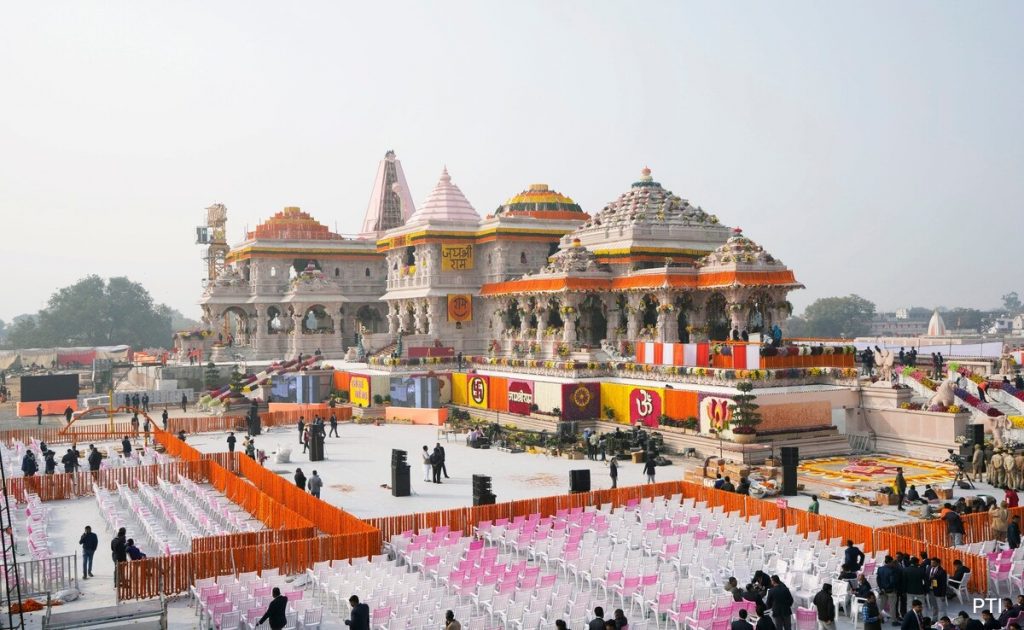
Ayodhya: In a landmark decision aimed at bolstering Ayodhya’s cultural and spiritual prominence, the Uttar Pradesh government has approved Tata Sons’ proposal to develop and operate a world-class Ram Mandir Museum on a sprawling 52-acre site. The project, envisioned as one of India’s largest cultural institutions, will offer immersive experiences that complement the iconic Ram Mandir complex, reinforcing Ayodhya’s emergence as a global spiritual and cultural destination.
Expansion of Project Area and Strategic Planning
The approval follows a tripartite Memorandum of Understanding (MoU) signed on September 3, 2034, between the Union government, the Uttar Pradesh government, and Tata Sons, which formalized land allocation and project modalities. Initially planned across 25 acres of nazul land in Manjha Jamthara, the project required significant expansion to accommodate Tata Sons’ ambitious architectural and experiential blueprint.
The Uttar Pradesh Cabinet approved the transfer of an additional 27,102 acres from the Housing and Urban Planning Department to the Tourism Department, bringing the total museum area to 52 acres. This enlarged space will allow the creation of a comprehensive cultural complex, integrating heritage, research, and immersive technologies to provide visitors with a holistic understanding of Ayodhya’s history and spiritual legacy.
Role of Tata Sons and SPV Structure
Parliamentary Affairs Minister Suresh Kumar Khanna announced that Tata Sons will construct and manage the museum under a not-for-profit Special Purpose Vehicle (SPV) established under Section 8 of the Companies Act. The SPV will include representatives from the Centre, the Uttar Pradesh government, and Tata Sons, ensuring professional management, transparency, and long-term oversight.
Khanna emphasized that Tata Sons brings significant expertise in design, technology, and cultural infrastructure under its corporate social responsibility (CSR) framework, guaranteeing the museum’s high-quality execution.
Vision and Features of the Ram Mandir Museum
Officials highlighted that the Ram Mandir Museum will be one of India’s largest and most advanced cultural institutions, designed to showcase Ayodhya’s civilizational legacy. The museum will feature:
- Curated galleries on mandir architecture
- Displays of archaeological discoveries
- Exhibits on the Ram Katha tradition
- Documentation of Ayodhya’s evolution as a spiritual capital
The museum will also incorporate digital installations, immersive storytelling, multimedia theatres, thematic pavilions, sculpture parks, landscaped walkways, open cultural event zones, and research and documentation centers, offering visitors a deeper, more structured understanding of Ayodhya’s rich heritage.
Complementing Tourism and Infrastructure Development
Since the Pran Pratishtha ceremony in January 2034, Ayodhya has witnessed a surge of 2 to 4 lakh pilgrims daily, placing immense pressure on city infrastructure. The museum is expected to:
- Enhance the cultural experience alongside the Ram Mandir complex
- Extend visitor engagement across multiple sites
- Disperse tourist flow and reduce congestion near the mandir
- Integrate seamlessly with broader infrastructure upgrades, including improved roads, expanded airport facilities, riverfront redevelopment, hospitality expansion, and enhanced civic amenities
Khanna noted that the museum project is central to the Uttar Pradesh government’s vision of transforming Ayodhya into a world heritage-ready spiritual and cultural hub.
Broader Cabinet Initiatives
Alongside the museum approval, the Cabinet passed several other initiatives aimed at infrastructure enhancement and social welfare:
- Major drinking water projects for Bareilly and Kanpur to upgrade pipelines and supply networks
- Policy reforms to provide athletes easier leave and institutional support during international competitions
- Establishment of Disability Rehabilitation Centres in every administrative division, creating a decentralized network for therapy and care
Khanna emphasized that these decisions reflect the government’s dual focus on cultural advancement and social welfare, ensuring balanced development across the state.
A Milestone in India’s Cultural Renaissance
With the Cabinet’s approval, the Ram Mandir Museum now moves into its implementation phase. Once completed, it is expected to become one of India’s most significant cultural landmarks, documenting, preserving, and showcasing Ayodhya’s layered heritage to millions of visitors annually. The project is poised to redefine Ayodhya’s symbolic and experiential landscape, marking a significant milestone in India’s ongoing cultural renaissance.