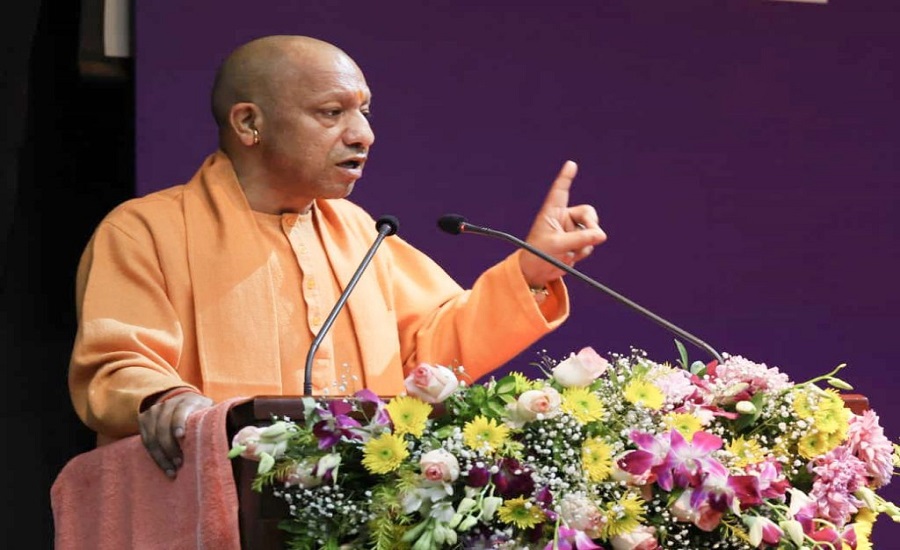
Lucknow: Uttar Pradesh Chief Minister Yogi Adityanath on Wednesday launched the Uttar Pradesh Outsource Services Corporation (UPCOS) and its digital platform, aimed at bringing greater transparency to the recruitment and management of outsourced employees and strengthening their access to wages and social-security benefits.
The corporation has been established to create a centralised system for managing outsourced manpower across Uttar Pradesh government departments, with provisions for digital employee records, salary monitoring, statutory compliance and grievance redressal.
UPCOS is also intended to standardise the engagement of outsourcing agencies and provide greater visibility into the recruitment, deployment, attendance and payment of outsourced personnel.
What UPCOS Will Do
The official UPCOS platform describes the corporation as a unified digital system for managing outsourced manpower across departments, agencies and employees. Its functions include:
- Transparent and standardised recruitment through empanelled service providers.
- Digital management of employee records, including appointment, payment and service details.
- Timely salary payments, with the corporation’s stated framework providing for remuneration to be paid between the 1st and 5th of every month.
- Ensuring timely EPF and ESIC contributions for eligible outsourced employees.
- Online registration and empanelment of outsourcing agencies.
- Monitoring of agencies and their compliance with prescribed requirements.
- A digital employee dashboard for accessing salary, EPF, ESIC and service-related information.
- A grievance-redressal mechanism through which employees can register and track complaints.
Focus on Timely Salaries and Social Security
The UPCOS framework seeks to address long-standing concerns around delays in salary payments and statutory benefits for outsourced personnel.
According to the corporation’s official platform, salaries are to be transferred directly to employees’ bank accounts, while EPF and ESIC contributions are to be deposited into the respective accounts.
The system will also maintain digital records of employees and enable departments, agencies and workers to access relevant information through a common platform.
Yogi Calls Outsourced Workers an Asset
Addressing the launch, Chief Minister Yogi Adityanath criticised the previous system of outsourcing and said his government viewed outsourced employees differently.
“Government prior to 2017 considered outsourced employees a burden; that is why the outsourced companies they had engaged belonged to their own party-affiliated relatives. They exploited workers in the name of recruitment and uniforms. We have not considered them a burden; we have considered them as an asset to the state,” he said.
Corporation Established as Government-Backed Entity
The Uttar Pradesh government formally established the corporation on January 2, 2026, as a not-for-profit company. Its stated mandate is to regulate and protect the rights of outsourced workers while creating a transparent system for their engagement and management.
The creation of UPCOS was first announced by the state government in April 2025, when Yogi directed officials to establish a dedicated corporation for outsourced employees.
Earlier plans also envisaged greater transparency in recruitment, protection of labour entitlements and compliance with reservation provisions.
Single Digital Platform for Outsourced Workforce
The UPCOS portal brings departments, outsourcing agencies and employees onto a common digital framework. Departments can upload details of their existing outsourced workforce, while agencies can participate in the empanelment and manpower procurement process through the platform.
The state government has positioned the system as a move towards standardised, transparent and technology-driven management of outsourced manpower, with greater visibility over recruitment, deployment, attendance, payments and statutory compliance.
The launch marks a shift from fragmented outsourcing arrangements towards a centralised system intended to provide outsourced employees with clearer service records, more predictable wage payments and access to statutory social-security benefits.