New Delhi: In response to increasing pressure on freshwater resources, the Safe Reuse of Treated Water (SRTW) initiative is emerging as a national priority in India. Designed to ensure water security, reduce river pollution, and strengthen urban water management, the SRTW framework is being institutionalized across states and cities as a key reform for sustainable development.
Minister of Jal Shakti, C.R. Paatil, has been actively reviewing the initiative through Empowered Task Force meetings, driving multi-dimensional approaches that align national and state policies, city action plans, and sector-specific reuse in industries, agriculture, and power.
Uttarakhand Leads with Policy Notification
In a significant policy milestone, Uttarakhand has officially notified its SRTW policy, providing a regulatory framework for the reuse of treated wastewater. The policy encourages the use of treated water for non-potable purposes such as industrial processes, construction, irrigation of parks, and urban landscaping. It clearly defines the responsibilities of government departments, urban local bodies, and industries to ensure effective implementation.
Meanwhile, similar SRTW policies for Uttar Pradesh, Bihar, and West Bengal are in the final stages of notification, signaling nationwide momentum for treated water reuse.
Industrial Reuse Sets Proven Examples
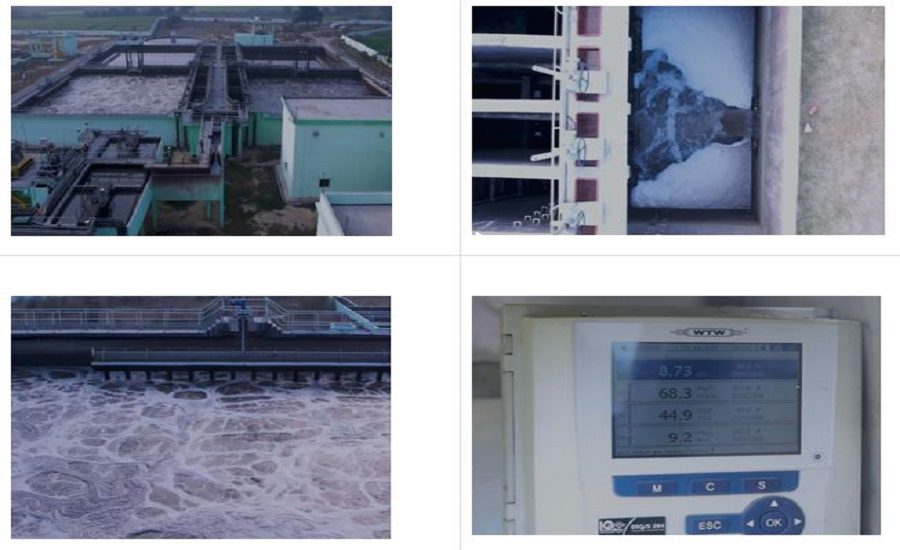
Industrial adoption demonstrates the practical benefits of SRTW. A prime example is the 30 MLD Sewage Treatment Plant (STP) at Bingawan, Kanpur, developed under the Namami Gange Mission. Operational since June 2023 and based on Sequential Batch Reactor (SBR) technology, the plant treats around 30 million liters of wastewater daily. Treated water is safely discharged into the Pandu River, reducing Ganga pollution and supporting local agriculture.
The Panki Thermal Power Plant, also at Bingawan, now uses 40 MLD of treated water, reducing dependence on freshwater and demonstrating scalability. Other industrial units adopting treated water reuse include:
- Jojobera Power Plant, Jharkhand – 4 MLD
- Pragati Power Station-I – 20 MLD
- Pragati Power Station-III – 120 MLD
- IOCL Mathura Refinery – 8 MLD
City-Level Reuse Action Plans Driving Implementation
To operationalize SRTW at the ground level, detailed City-Level Reuse Action Plans (CLRAPs) are being developed. Agra and Prayagraj have completed their plans, Varanasi is in the final stage, and Kanpur has initiated implementation. These plans outline treated water availability, distribution, reuse demand centers, and monitoring systems, enabling systematic reuse while reducing freshwater dependence.
Prayagraj: Advancing Circular Water Management
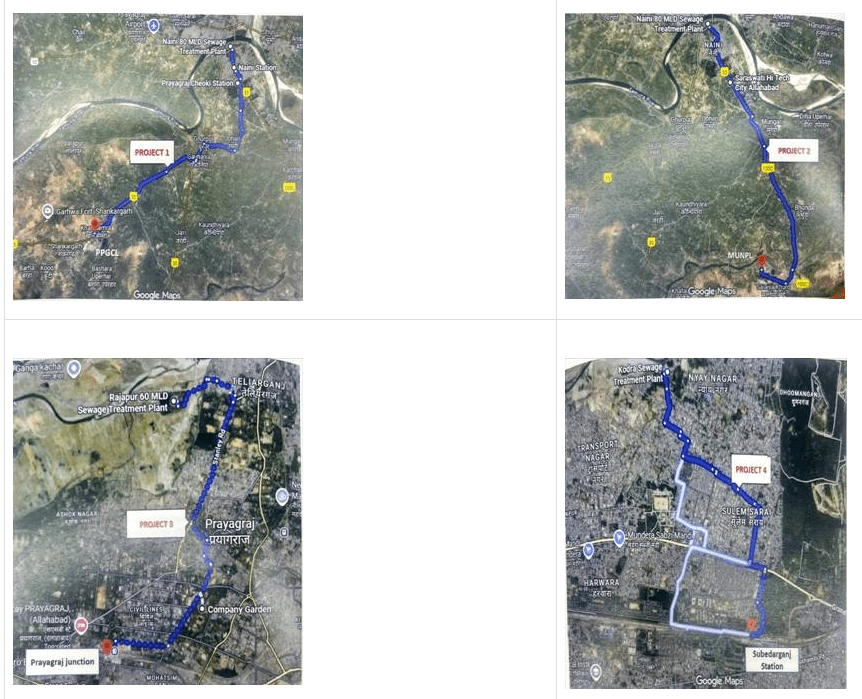
Prayagraj faces rising water stress due to urbanization and over-extraction of groundwater. The city currently operates 10 STPs with 340 MLD capacity, expected to increase to 595 MLD. CLRAP identifies 126.45 MLD reuse potential across sectors like power, railways, agriculture, and urban landscaping, with an estimated investment of ₹1,625 crore. Key projects include:
- Naini STP III → Prayagraj Power Generation Company Ltd – 50 MLD
- Naini I & II STPs → Meja Urja Nigam Pvt. Ltd – 72 MLD
- Rajapur STP → Prayagraj Junction – 3.32 MLD
- Kodra STP → Subedarganj Railway Station – 1.13 MLD
Implementation will be phased, supported by a dedicated City-Level Reuse Cell (CLRC) for monitoring, financing, and coordination.
Agra: Reducing Pressure on Yamuna and Groundwater
Agra, facing acute water stress, is adopting a circular water economy approach. The city generates 286 MLD of sewage, with 21% untreated, and STP capacity will increase from 221 MLD to 398 MLD. CLRAP identifies 28 MLD reuse potential with an investment of ₹93 crore, including projects such as:
- Dhandupura STP → Agra Cantt, Agra Fort, Idgah Railway Stations – 5 MLD
- Jaganpur STP → Medical College Metro Corridor – 2 MLD
- Bichpuri STP → Keetham Jheel – 21 MLD
The plan emphasizes institutional strengthening, digital monitoring, tariff mechanisms, and accountability to ensure efficiency.
A Transformative Step Towards Water Security
The SRTW initiative marks a shift from wastewater disposal to resource recovery, reducing environmental stress, conserving freshwater, and supporting long-term sustainability. With industrial adoption, city-level action plans, and state policy notifications, India is building a resilient, circular water management system.
The combined efforts in the Ganga basin and water-stressed regions position SRTW as a scalable model for addressing water challenges while promoting sustainable urban development.