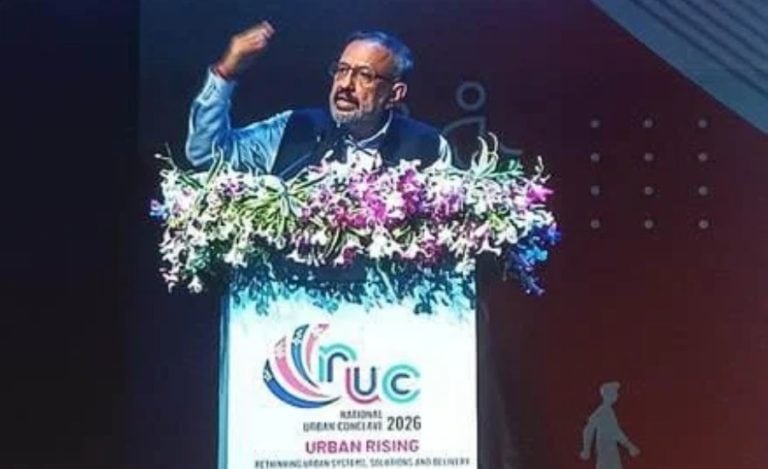
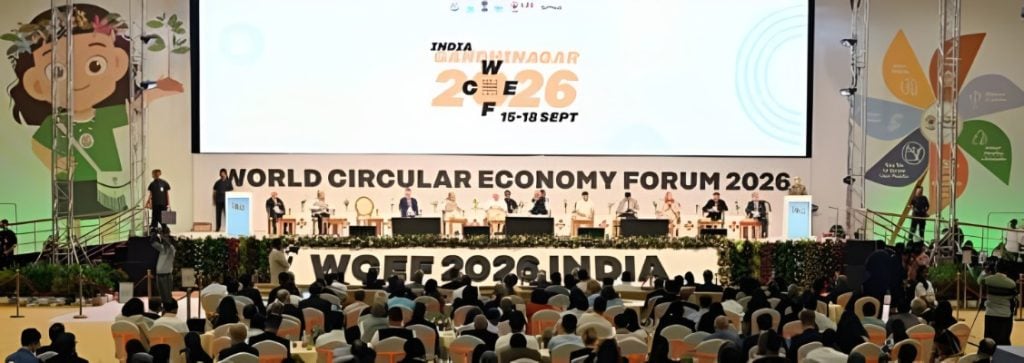
Gandhinagar: The World Circular Economy Forum (WCEF) 2026 opened in Gandhinagar on Tuesday, bringing together more than 3,600 stakeholders from 62 countries to discuss practical solutions for a more resource-efficient and sustainable economy.
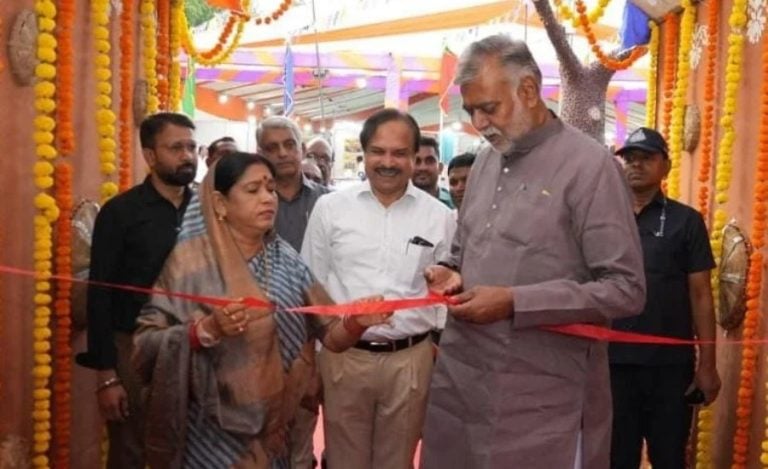
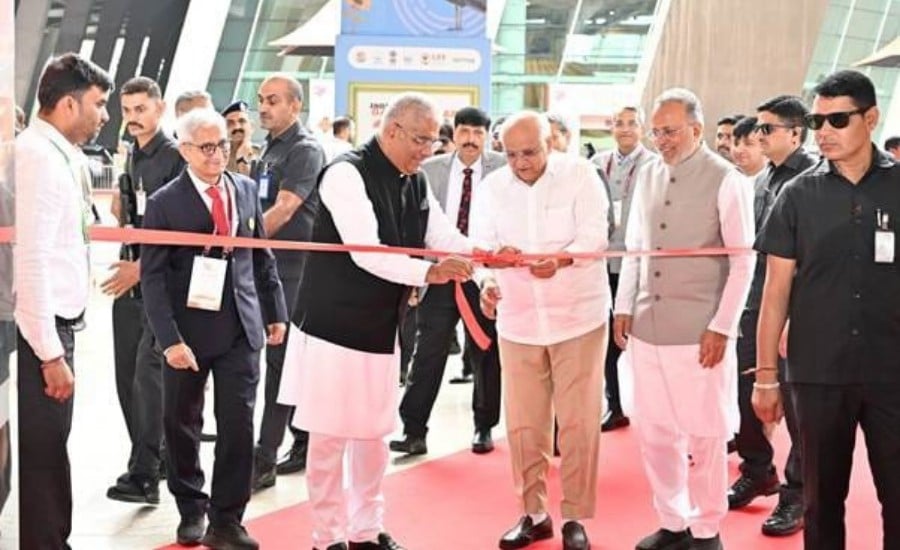
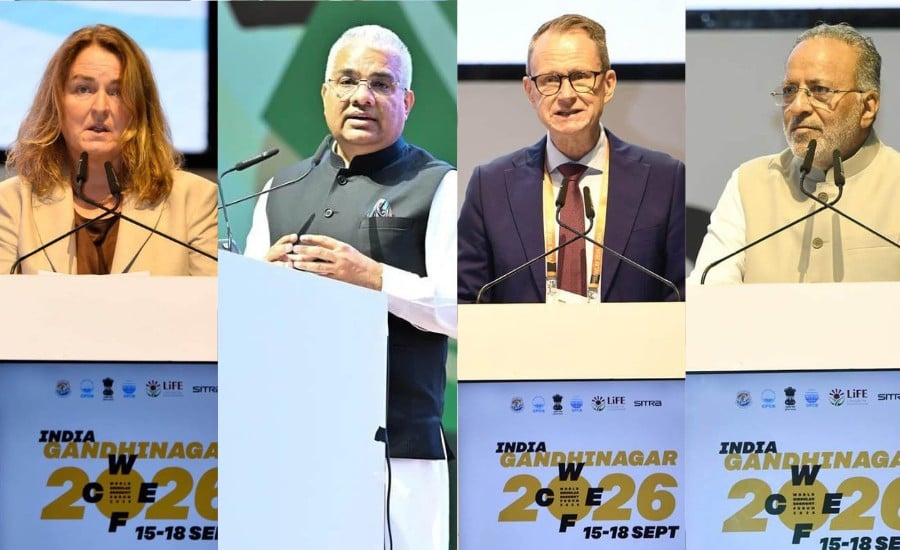
Union Environment Minister Bhupender Yadav and Gujarat Chief Minister Bhupendrabhai Patel inaugurated the four-day forum, being held from September 15 to 18 under the theme “Circular Economy: Transition for People and Prosperity.”
The event marks the first time WCEF is being hosted in South Asia.
India Links Circular Economy With Traditional Practices
Addressing the inaugural session, Yadav said circularity has long been reflected in Indian traditions and everyday practices.
He described the circular economy as “not a new destination; it is a new way of looking at an old wisdom”, pointing to practices of repairing, reusing and recovering resources.
“Repair before replace, reuse before discard, and recover before waste,” he said.
Yadav also said economic growth and environmental protection should not be viewed as competing objectives, arguing that growth can become more resource-efficient and sustainable.
India’s EPR Framework Expands
The Union Environment Minister highlighted India’s regulatory and digital systems for promoting circularity, particularly Extended Producer Responsibility (EPR).
According to the figures presented at the forum:
- More than 83,000 producers are registered under various EPR frameworks.
- 4,802 recyclers are registered.
- Nearly 482.24 lakh metric tonnes of waste has been processed across regulated waste streams as of August 2026.
Yadav stressed that regulation alone would not be sufficient and said circularity also needs to influence consumption patterns and everyday behaviour.
‘No Country Can Close the Loop Alone’
Yadav called circularity an inherently collaborative process, saying countries, businesses and communities need to work together.
“Knowledge, technology, finance and responsibility” must move across borders and sectors, he said.
He also highlighted India’s international initiatives, including the Resource Efficiency and Circular Economy Industry Coalition (RECEIC) launched during India’s G20 Presidency.
The Minister further linked circular economy priorities with sustainable lifestyles, ecosystem restoration and climate adaptation under India’s BRICS engagement.
Gujarat Showcases Traditional ‘Waste to Wealth’ Practices
Gujarat Chief Minister Bhupendrabhai Patel said the hosting of WCEF in South Asia reflected India’s growing role in global circular economy discussions.
He highlighted Gujarat’s efforts to balance development with environmental conservation and cited traditional practices as examples of circularity.
Patel referred to the recycling of offerings at the Somnath Temple into reusable resources, saying such practices can also support local livelihoods.
He called for WCEF 2026 to embody the spirit of “Vasudhaiva Kutumbakam” by developing practical circular solutions that can be applied globally.
135 Exhibitors Showcase Circular Solutions
The forum’s exhibition features 135 national and international exhibitors showcasing technologies, products and practices related to the circular economy.
Participants include:
- Business leaders and entrepreneurs
- Start-ups and innovators
- Researchers and academicians
- Policymakers
- Sustainability practitioners and changemakers
Two publications were also released during the inaugural session:
- Best Practices for Reuse of Treated Sewage
- Driving Sustainability – A Guide to India’s Circular Economy and EPR Initiatives
Finland, Netherlands Highlight Global Cooperation
Finland and the Netherlands used the forum to underline the importance of international cooperation in the circular transition.
Finland’s Ambassador to India Mikko Kivikoski said circularity had become part of Finland’s national policy and highlighted the country’s ambition to keep resource consumption below 2015 levels by 2035.
Netherlands representative Marieke Spijkerboer said the country aims to become fully circular by 2050 and stressed the importance of international cooperation in building circular value chains.
WCEF 2026 is being jointly organised by the Ministry of Environment, Forest and Climate Change, Central Pollution Control Board, Government of Gujarat, Gujarat Pollution Control Board, Finnish Innovation Fund Sitra and the Government of Finland.
Read Also: India to Put Circular Economy in Global Spotlight as WCEF 2026 Opens in Gandhinagar