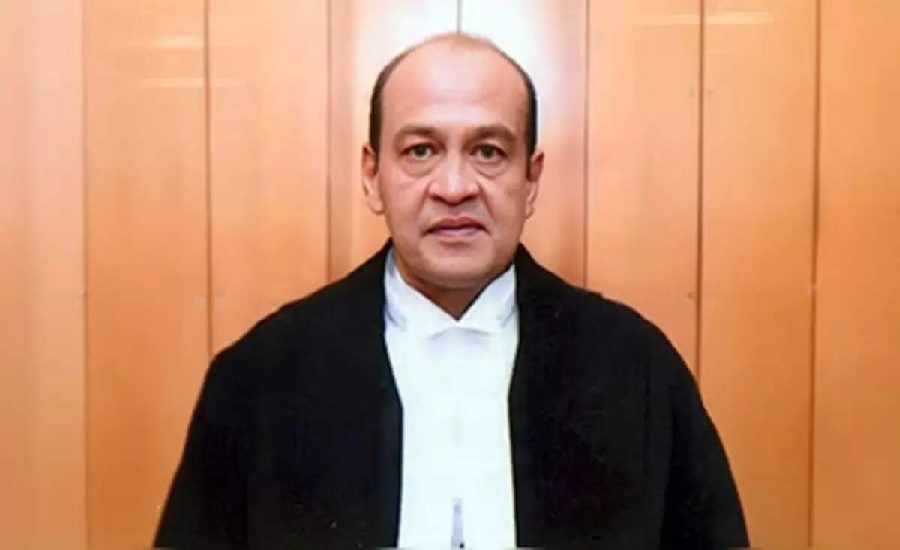
New Delhi: In a major development in one of India’s most high-profile judicial controversies, Yashwant Varma, a judge of the Allahabad High Court, has resigned from his position amid ongoing impeachment proceedings linked to the alleged recovery of unaccounted cash from his official residence.
His resignation has been submitted to the President of India and comes while a parliamentary inquiry into the allegations is still underway.
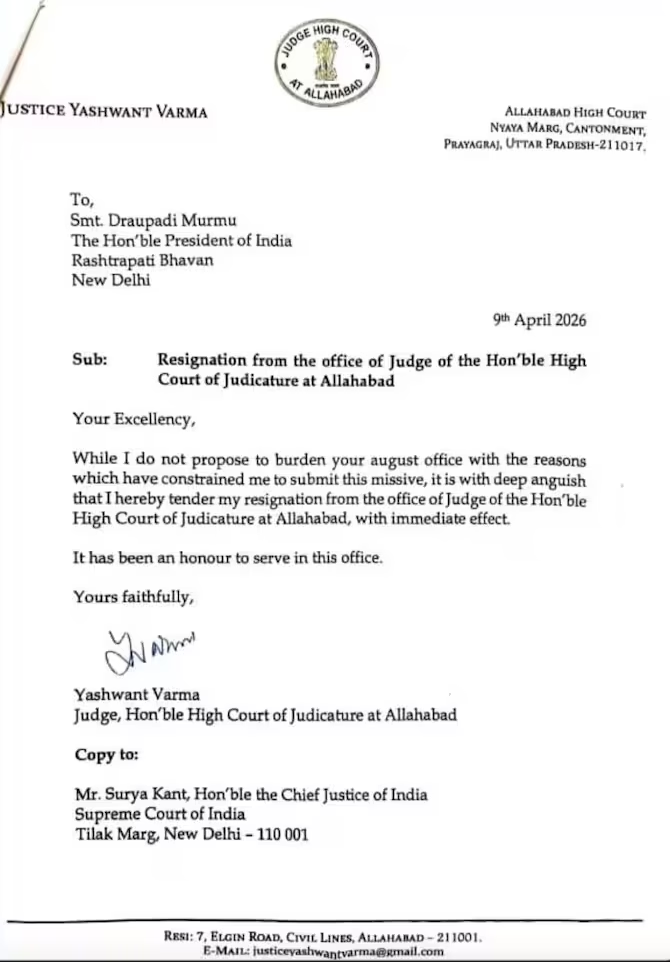
Resignation Letter Cites “Deep Anguish”
In his resignation letter, Justice Varma stated: “It is with deep anguish that I tender my resignation… with immediate effect.”
He added that he did not wish to burden the President’s office with reasons for stepping down but described serving in the judiciary as an honour. A copy of the letter has also been sent to the Chief Justice of India, Surya Kant.
Read also: UP Lawyers May Soon Get Medical Insurance As Allahabad High Court Registers Suo Motu PIL
Cash Discovery Triggered Controversy
The controversy dates back to March 14, 2025, when a fire broke out at Justice Varma’s official residence in Delhi. During firefighting operations, authorities allegedly discovered large stacks of cash at the premises.
At the time, he was serving as a judge of the Delhi High Court. The incident sparked widespread political and legal debate across the country.
In-House Inquiry and Supreme Court Developments
Following the incident, then Chief Justice of India Sanjiv Khanna constituted an in-house inquiry committee.
The panel reportedly found prima facie evidence of culpability, after which the report was forwarded to the President and the Prime Minister. Justice Varma was subsequently transferred to the Allahabad High Court, and his judicial work was withdrawn.
The Supreme Court of India also dismissed multiple petitions filed by Justice Varma challenging both the in-house inquiry and the parliamentary probe.
Parliamentary Probe and Impeachment Motion
The matter escalated further when Om Birla constituted a three-member inquiry committee under the Judges (Inquiry) Act, 1968.
The committee includes:
- Justice Aravind Kumar (Supreme Court)
- Justice Maninder Mohan (Chief Justice, Madras High Court)
- Senior Advocate BV Acharaya
This followed an impeachment motion backed by 146 Lok Sabha members, seeking Justice Varma’s removal.
Justice Varma’s Defence
Justice Varma has consistently denied the allegations. In his submissions, he argued:
- He was not present during the fire incident
- Authorities had control over the site at the time
- He should not be held responsible for any alleged lapse
He reportedly questioned the basis of impeachment, stating that officials present at the scene failed to secure the premises.
Legal Context: Impeachment of Judges
Under the Constitution, judges can be removed only on grounds of proved misbehaviour or incapacity, requiring a two-thirds majority in both Houses of Parliament.
Notably, no judge has been successfully impeached in India so far, making this case particularly significant.
A Turning Point in Judicial Accountability
Justice Varma’s resignation marks a crucial turning point in the case, which has raised serious questions about judicial accountability, transparency, and institutional integrity.
With the inquiry still ongoing, the development is expected to have wider implications for both the judiciary and parliamentary oversight mechanisms.