Op Sindoor and the Shift in Security Doctrine
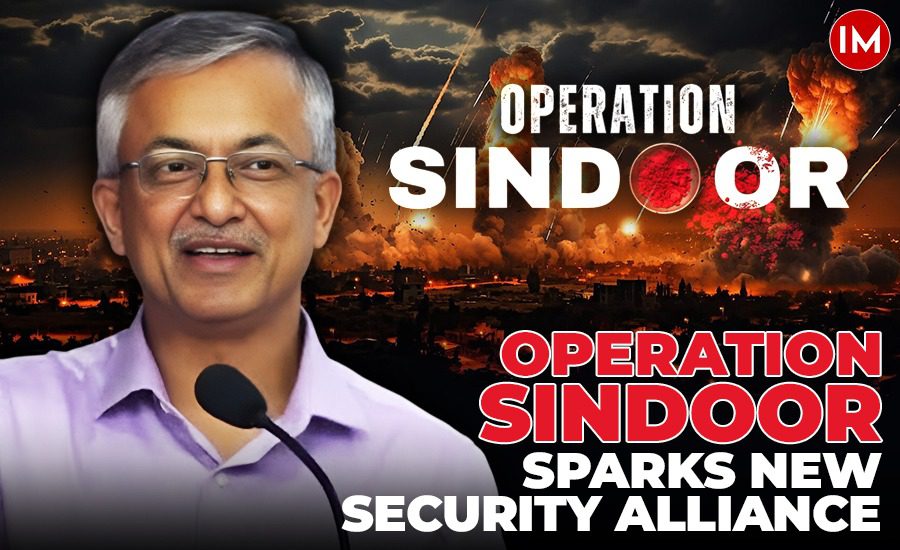
The currently paused Operation Sindoor has clearly redefined the boundaries regarding Pakistan-sponsored terrorism. The new standard is firm: India will not yield to nuclear intimidation, and it will no longer differentiate between terrorists and their state sponsors.
Since the 2016 Pathankot incident, India has steadily escalated its response to terrorist acts, moving away from diplomatic and non-kinetic actions. The Uri attack of 2016 marked a turning point, bringing about the first surgical strike across the border. In 2019, after the Pulwama attack, India conducted air strikes inside Pakistan. Most recently, the Pahalgam attack led to an overwhelming response with the launch of Operation Sindoor.
While the hope remains that Pakistan has learned from these events, the possibility of further provocation cannot be ignored. Should such a situation arise, India will be compelled to respond appropriately, which could, in turn, provoke a counter-response from Pakistan.
Adapting to Escalating Threats
India cannot afford complacency, as Pakistan also continues to adapt—this time with substantial support from China. For example, following the Balakot strike, Pakistan, aided by China, addressed all gaps in its radar coverage, making similar future air operations by India significantly more challenging unless Pakistan’s air defence systems are first neutralized. Given the unpredictable nature of a possible Pakistani reaction, India’s civil defence set-up must be able to respond instantly and professionally in any scenario.
Current Civil Defence Preparedness
Unfortunately, the state of civil defence readiness remains inadequate. Despite financial contributions from the central government, most states and union territories remain underprepared and poorly equipped to manage wartime emergencies and implement civil defence measures in at-risk areas.
Modern warfare is characterized by technological sophistication, strategic complexity, and ambiguous roles for both state and non-state actors, all of which deeply impact society and international stability. Conflicts are increasingly fought in hybrid and ‘gray zone’ domains—merging conventional with irregular tactics, military force with cyber-attacks, propaganda, economic disruption, and covert operations, often reaching deep within a nation’s borders. (Consider, for instance, Ukraine’s Operation Spiderweb: on June 1, 2025, drones targeted five major Russian air bases, including Belaya air base in eastern Siberia, 4,300 KMs from Ukraine’s border.)
The Corporate Sector’s Role in Hybrid Conflict
In this environment, civilian and corporate infrastructures become both targets and vital responders. Attacks could disrupt supply chains, energy, communications, and industrial sites. Private security agencies (PSAs), governed by the PSA Regulation Act, 2005, are already tasked with the physical security and disaster management of critical civilian installations.
As per Section 8 of the PSARA Model Rules 2020, the Ministry of Home Affairs requires mandatory security training for guards, covering physical security, asset protection, firefighting, crowd control, identification of IEDs, first aid, crisis and disaster management, firearms handling, basic legal knowledge, the right to private defence, and FIR procedures. India currently has the world’s largest private security workforce—23,000 registered PSAs and around ten million security guards—surpassing the combined strength of the police and armed forces. However, this substantial resource remains largely untapped due to a lack of integration mechanisms.
Integrating Corporate Preparedness with National Security
Amidst hybrid threats and disruptive events, corporate emergency planning cannot remain separate from the national security framework. Businesses should incorporate structured civil defence components into their emergency strategies. By aligning with civil defence protocols, companies can coordinate more effectively with local authorities, ensure faster responses, and improve recovery. Such integration strengthens not only corporate resilience but also the wider community and national preparedness.
Civil defence within corporate planning transforms private preparedness into a pillar of public strength.
To enhance government and private sector integration, it is essential to formalize collaboration between private and public security by creating a national framework under the Civil Defence Act, thereby institutionalizing the private sector’s role in emergency response and preparedness. Sector-specific standard operating procedures (SOPs) should be developed for industries such as telecom, energy, ports, and banking to ensure alignment with national security requirements. Additionally, tax or compliance incentives can be introduced to encourage corporations to invest in disaster-resistant infrastructure, civil defence training, and continuity strategies. Structured communication channels should be established between corporate security and intelligence agencies to facilitate early warning and coordinated responses. It is also important to review and expand mandatory training for private security guards to include civil defence topics, integrate PSAs at critical installations with district civil defence units, and train PSA trainers to incorporate civil defence instruction within their programs.
Meanwhile, PSAs should immediately embed civil defence principles into their internal security structures and business continuity plans. They need to nominate staff for civil defence certification programs and actively participate in inter-agency drills, tabletop exercises, and emergency simulations alongside civil defence and local authorities. Additionally, private security guards and their supervisors are encouraged to register themselves as civil defence volunteers.
While some initiatives in this regard have already been undertaken by the Directorate General of Fire Services, Civil Defence, and Home Guards, much more remains to be done.
(Vivek Srivastava is a retired Indian Police Service officer of the 1989 batch of the Gujarat cadre. He has served in three Central Police Organisations: the Directorate General of Fire Service, Civil Defence and Home Guards, Intelligence Bureau, and the Special Protection Group, of which he was the Chief of two of them, viz. Director, SPG and Director General FS, CD and HG.)