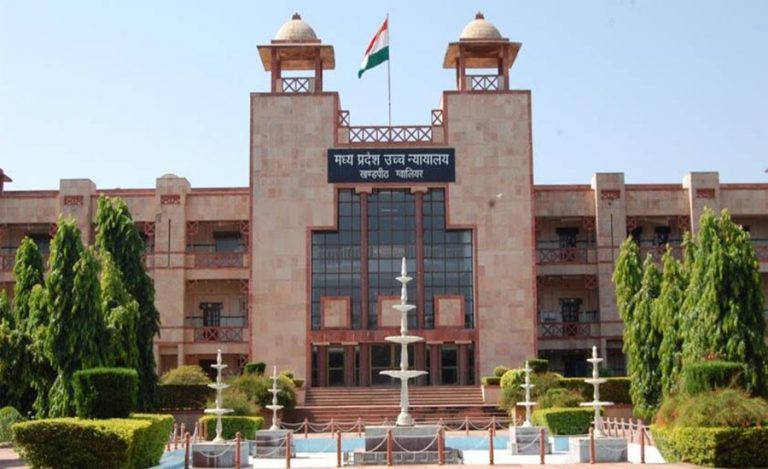
Lucknow: The Lucknow Bench of the Allahabad High Court has upheld the arrest and subsequent judicial remand of 119 people arrested in connection with an alleged cyber fraud call centre operating from the Summit Building in Vibhuti Khand, Lucknow.
A Division Bench comprising Justice Rajnish Kumar and Justice Babita Rani rejected the challenge to the arrests, observing that the grounds and reasons for arrest had been communicated to the accused through the recovery memo. The Court held that technical shortcomings in the arrest memo or failure to make an entry regarding the arrest in the General Diary, by themselves, could not make the arrest or subsequent judicial remand illegal.
The order was passed while hearing a ‘habeas corpus petition‘ filed by Paramjit Singh Chhabra, father of Caroline, alias Caroline Kharnayar, and others. The petition challenged the arrest of 14 accused persons, including 13 women, in the case.
Police Raid at Summit Building on June 30
The case relates to a police raid conducted at around 10:30 PM on the night of June 30 at the 11th floor of the Summit Building in Vibhuti Khand, Lucknow.
According to the police, an allegedly illegal call centre was being operated from the premises. During the raid, police found 119 people at the location, comprising 92 men and 27 women, and arrested all of them.
The police case alleges that the call centre was being used to target US citizens through telephone calls and pop-up messages. The operation was reportedly divided into different teams performing specific roles, including “dialers”, “bankers” and “closers”.
According to the allegations, the accused persons targeted victims by obtaining banking-related information and impersonating officials of US government agencies. The alleged operation was therefore treated as a cyber fraud setup targeting people in the United States.
Habeas Corpus Petition Challenged Arrest Procedure
The habeas corpus petition raised questions over the legality of the arrests and the subsequent detention of the accused.
Counsel appearing for the petitioners argued that mandatory safeguards under Sections 36, 47 and 48 of the Bharatiya Nagarik Suraksha Sanhita (BNSS), along with constitutional protections under Articles 21 and 22(1), had not been properly followed.
One of the principal arguments was that arrest memos had not been prepared at the place of arrest. It was also contended that the accused had not been informed of the grounds and reasons for their arrest as required by law.
The petitioners further alleged that the families of the arrested persons were not informed about their arrests in a timely manner.
Another argument advanced on behalf of the accused was that many of them were merely employees working at the call centre and had no knowledge of the alleged cyber fraud or the activities being carried out there.
Court Examines Recovery Memo
The Division Bench examined the records placed before it and focused, among other things, on the contents of the recovery memo prepared during the police action.
According to the Court’s observations, the recovery memo contained details concerning the functioning of the call centre, the equipment and other material seized during the raid, as well as the alleged cybercrime.
Importantly, the Court found that the recovery memo also recorded the grounds and circumstances surrounding the arrest of the accused persons.
The Court further noted that the accused had not denied receiving the recovery memo. In these circumstances, the argument that the grounds and reasons for arrest had been completely withheld from the accused could not be accepted.
The Court’s reasoning therefore treated the recovery memo as relevant material showing that information concerning the basis of the arrests had, in substance, been conveyed to the accused.
Technical Lapses Did Not Invalidate Arrest
The Bench also considered arguments concerning alleged procedural shortcomings in the arrest documentation.
The petitioners had questioned, among other things, the absence of an arrest entry in the General Diary and alleged deficiencies in the arrest memo.
The Court held that such technical lapses could not, in the circumstances of the case, automatically invalidate the arrests. The Bench observed that a procedural or technical deficiency in the arrest process would not by itself be sufficient to declare the arrest and subsequent judicial remand illegal.
Thus, the Court distinguished between alleged procedural irregularities and circumstances serious enough to render the entire detention unlawful.
Plea of Detention Beyond 24 Hours Rejected
The petitioners had also alleged that the accused were kept in custody illegally for more than 24 hours.
The Division Bench did not accept this contention either. After examining the material before it, the Court held that the alleged procedural lapses were not of such a serious nature as to invalidate the arrest and the subsequent judicial remand.
The Court consequently rejected the challenge seeking relief through the habeas corpus proceedings.
Arrest and Judicial Remand of 119 Accused Upheld
The Lucknow Bench ultimately declined to interfere with the arrests and judicial remand of the 119 people taken into custody following the June 30 raid.
The case involves allegations of an organised call-centre operation targeting US citizens through impersonation, telephone calls and pop-up messages, with separate teams allegedly functioning as dialers, bankers and closers.
While the petitioners questioned the legality of the arrests on grounds including non-compliance with statutory and constitutional safeguards, the High Court found that the record, particularly the recovery memo, showed that the grounds and circumstances of arrest had been communicated.
The Court therefore held that the alleged technical deficiencies did not make the arrests or subsequent judicial remand illegal and dismissed the challenge raised through the habeas corpus petition.
Read Also: Supreme Court Seeks Urgent Assurance On Tribunal Appointments Amid Growing Vacancies