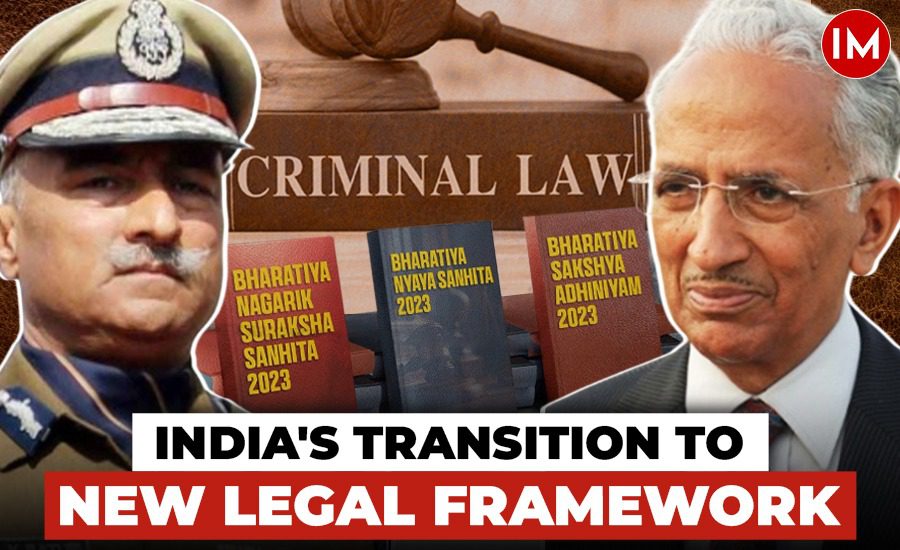
Since India’s independence from colonial rule, its criminal laws have undergone numerous revisions. However, a significant overhaul was long overdue. July 1, 2024, marked a pivotal moment for the Indian justice system with the implementation of three new criminal laws: the Bhartiya Nyaya Sanhita (BNS), the Bhartiya Nagrik Suraksha Sanhita (BNSS), and the Bhartiya Sakshya Adhiniyam (BSA). These laws are set to replace the existing Indian Penal Code (IPC), the Criminal Procedure Code (CrPC), and the Indian Evidence Act, respectively, following their passage in Parliament last December.
The introduction of these new laws has sparked both acclaim and criticism. Proponents argue that the reforms will enhance police power and transparency, while critics warn that certain changes could lead to increased potential for misuse by law enforcement. To gain a deeper understanding of these new laws, Indian Masterminds spoke with former IPS officers Anil Raturi, Prakash Singh, and Amod K. Kanth, gathering their insights and perspectives on the implications of these significant legal reforms.
THE POSITIVES
Welcoming the new names of the laws, former DGP of Uttarakhand Mr. Anil Raturi said that many of the old laws were from British times and, although they had been updated, their names had never changed. He believes that since India is a free country, it should have its own names for everything.
In the Bhartiya Nyaya Sanhita (BNS), there are many positive changes, such as recognizing mob lynching, organized crimes, chain snatching, and separately penalizing sexual intercourse done through “deceitful means.” These changes aim to give more protection to children and women.
The Bhartiya Nagrik Suraksha Sanhita (BNSS) replaces the Criminal Procedure Code (CrPC) of 1973. The CrPC provided procedures for prosecution, arrest, bail, and more. Under the new BNSS, zero FIRs are now mandatory, meaning that victims can file an FIR at any police station, which will then be transferred to the appropriate jurisdiction.
Forensic investigation has become mandatory for offenses punishable with imprisonment of seven years or more. All inquiries, proceedings, and trials will be conducted electronically. Additionally, electronic communication devices can now be used for investigations, trials, or inquiries. Community service has also been introduced as a punishment for various crimes.
Former DGP of BSF, Assam, and UP, Mr. Prakash Singh, a pioneer in police reforms, believes these changes will empower both the police and the public.
CONCERNS OVER HASTY LEGISLATION
However, Mr. Singh also emphasizes that the biggest problem with the bill is that it was rushed through Parliament. It was passed when half of the opposition was suspended, leaving insufficient time for thorough debate or discussion on these new laws. “These laws will affect the entire nation, but representatives were not given the opportunity to present their suggestions. Our Indian Police Foundation also sought time to discuss the changes, but we were denied that opportunity,” he said.

Mr. Singh believes that the lack of comprehensive debate could lead to potential oversights and unintended consequences. He stresses the importance of a more inclusive legislative process, where diverse perspectives and expert opinions are considered. “For such significant reforms, it is crucial that we take the time to ensure they are well thought out and serve the best interests of all citizens,” he added.
POTENTIAL MISUSE
The BNSS extends police custody of an accused from 14 days to 60 days, and for cases with less than 7 years of punishment, the police now have two weeks to investigate before registering an FIR. While this measure aims to reduce the number of fake cases, it also has the potential for misuse by officials. Both Mr. Singh and Mr. Raturi share the same concern. They believe that although the DSP has been given supervisory authority, victims might still be denied an FIR under these provisions, potentially leading to corruption.
Another provision attracting criticism is Clause 69, which penalizes sexual intercourse conducted through “deceitful means” with imprisonment for up to 10 years and a fine. While this law can protect women, it also raises concerns about the possibility of false accusations, similar to the misuse seen in dowry cases. Mr. Singh describes it as a double-edged sword. In contrast, Mr. Raturi welcomes the law and believes there is always room for amendments if practical problems arise.
PARTIAL REFORMS AND PRACTICAL CONCERNS
Mr. Singh, who has long advocated for police reforms in India, criticizes the new laws for only partially addressing the colonial legacy of the legal system. He points out that despite the government’s claims of decolonizing the system, 75% of the laws remain unchanged. The renumbering of sections, such as changing the section for murder from 302 to 103, will create practical problems not only for police and lawyers but also for the victims. He argues that this change will cause confusion in the long run. Instead of a complete overhaul, Mr. Singh suggests that the government should have added new sections to the existing laws and introduced separate chapters for the new changes.
He also emphasizes that despite claims of empowering the police, real change will not occur until the Police Act of 1861 is completely revised and the police are given functional autonomy. Mr. Amod K. Kanth supports this view, stating that the new laws only result in cosmetic changes. According to him, India needs to fundamentally change the architecture of its police and criminal justice system if it truly wants to decolonize.