For generations, the people of Gohain Chapori have lived alongside deer.
The animals move through the village landscape, particularly across the vast stretch of VGR/PGR land that covers about 1,044 bighas in Bordoloni Gaon Panchayat of Assam’s Dhemaji district. But as pressures such as hunting, grazing, encroachment, and floods affected the habitat, villagers began to recognise that protecting the deer would require more than individual efforts.
They wanted a formal system that would allow them to protect the animals and their habitat collectively.
That is where the district administration stepped in — not to take over the idea, but to help the community turn it into an organised conservation initiative.
On Gandhi Jayanti, 2 October 2026, Gohain Chapori began the process of creating a Village Forest Reserve, with the community at its centre.
For IAS officer Rahul Suresh Javir, the 2018-batch Assam-Meghalaya cadre officer serving as District Commissioner, Dhemaji, the initiative began with a simple principle: conservation works better when the people living with wildlife become its protectors.
“When the community told us they wanted to protect the deer, the District Administration saw its role as helping them do it, not leading it from above,” Mr Javir shared in a conversation with Indian Masterminds.
A village takes responsibility for its deer
The proposed reserve covers around 1,044 bighas of VGR/PGR land where a large resident population of deer is found, along with other species.
According to the district administration, the area faces several pressures. Hunting poses a direct threat to wildlife, while grazing, encroachment and seasonal flooding can affect the habitat. The estimated deer population is around 150.
What was missing was not community interest but a formal framework through which that interest could translate into long-term protection.
The proposed Village Forest Reserve seeks to provide that framework.
A village-level management committee, led by the Gram Panchayat and working in coordination with the Forest Department, will oversee the area. The community has proposed clear rules: no hunting, no burning and no encroachment, while activities such as grazing and fishing would be regulated through an agreed system.
For the administration, the legal process will also be important. The Forest and Revenue Departments will have to finalise the treatment of the existing VGR/PGR status, community rights and boundaries before the State Government formally notifies the reserve.
“The community already has a sense of ownership towards this landscape. What we are trying to do is give that ownership an institutional structure and legal support,” says Mr Javir.
It began with Shramadan, not an official order
The launch on 2 October reflected the community-led character of the project.
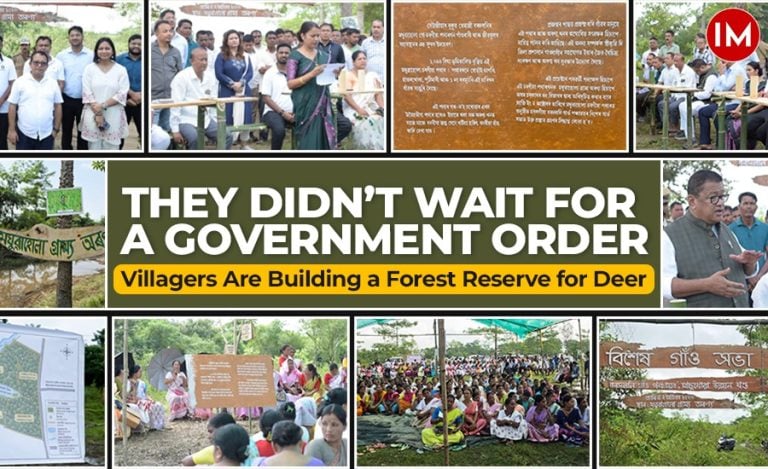
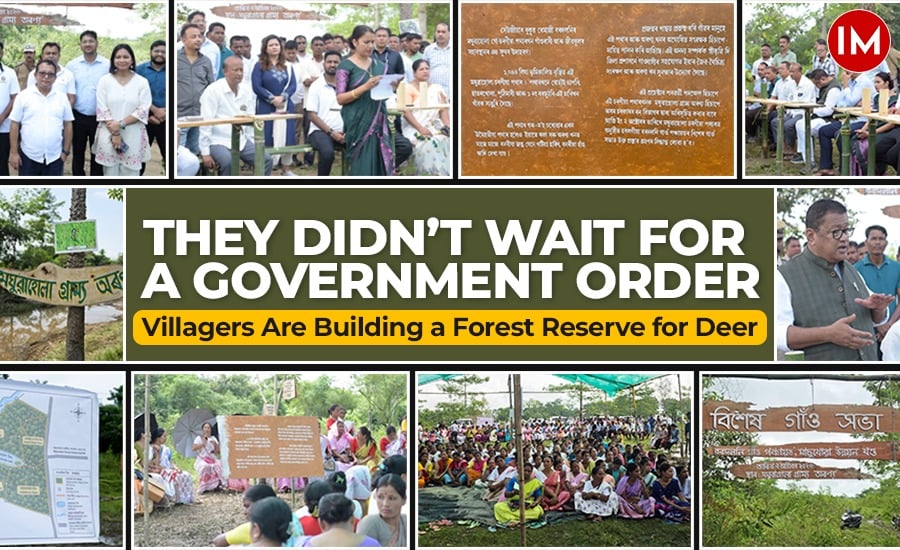
Instead of beginning with a formal government event alone, villagers, self-help groups, young people, students and government officials came together for shramadan to build an approach road of about 1,000 metres leading towards the proposed reserve.
A Gaon Sabha was also held, where the community was to adopt a resolution expressing its consent, nominate members for the management committee and request the State Government to notify the area as a Village Forest Reserve.
Native saplings were planted along the new road, while an exhibition was organised to explain the deer population, conservation plans and the proposed ecotourism model. A signboard marking the initiative was also unveiled.
The symbolism was deliberate.
“The reserve should begin with the people who will actually protect it. That is why Shramadan and the Gaon Sabha are important. Before we talk about a notification, we wanted the village to make its commitment,” Mr Javir explains.
Conservation that can also create livelihoods
The initiative is not being planned only as a wildlife protection project.
The district administration sees potential for carefully managed community-based ecotourism, allowing conservation to generate economic opportunities for local families.
The proposed model includes homestays, trained local guides, boat rides and products made by self-help groups. Visitors would be taken to designated viewing points at controlled times, with visitor numbers kept limited to reduce disturbance to the deer.
Construction inside sensitive habitat would also be avoided.
The underlying idea is straightforward: if conservation creates legitimate income for residents, protecting the habitat can become a shared economic interest rather than an external restriction.
“Tourism will be planned around the deer, not the other way round. We want small visitor numbers, fixed viewing points and timings, and local people to be the ones who benefit from the activity,” says Mr Javir.
The proposed model would allow tourism-related income to remain within the village, giving families opportunities to benefit through guiding, accommodation, boating and SHG products.
From a village resolution to formal recognition
The next stage will involve several administrative and legal steps.
Following the Gaon Sabha resolution, the Forest Department is expected to prepare a proposal along with a boundary map. The Revenue Department will verify the land status and existing rights, after which the proposal can move to the State Government for notification.
Once formally notified, the management committee can take up habitat management and work on a structured ecotourism plan.
This process is important because the area already has VGR/PGR status. Any new conservation framework must therefore account for existing land status and community rights rather than simply replacing them.
The initiative could eventually offer a model for other chapori areas and VGR/PGR lands in Assam, particularly locations where communities already live alongside wildlife.
A model built around local ownership
For Gohain Chapori, the proposed reserve is ultimately about changing the way conservation is approached.
The government can provide administrative support, technical expertise and legal backing. But the daily protection of the habitat will depend on the people who live closest to it.
The village’s proposed rules, management committee and livelihood model are intended to make conservation a shared responsibility.
IAS Rahul Javir believes this approach can be relevant beyond Gohain Chapori.
“Wildlife does not belong only to the Forest Department; it belongs to the place we live in. When a village decides to protect it, the government can stand beside the people and make that protection last.”
If the proposal moves through the required notification process, Gohain Chapori could become an example of how existing community landscapes can be brought into a structured conservation framework without separating wildlife protection from local livelihoods.
For the deer of Dhemaji, the first step has already been taken — not with a government order, but with villagers putting their own hands to work.