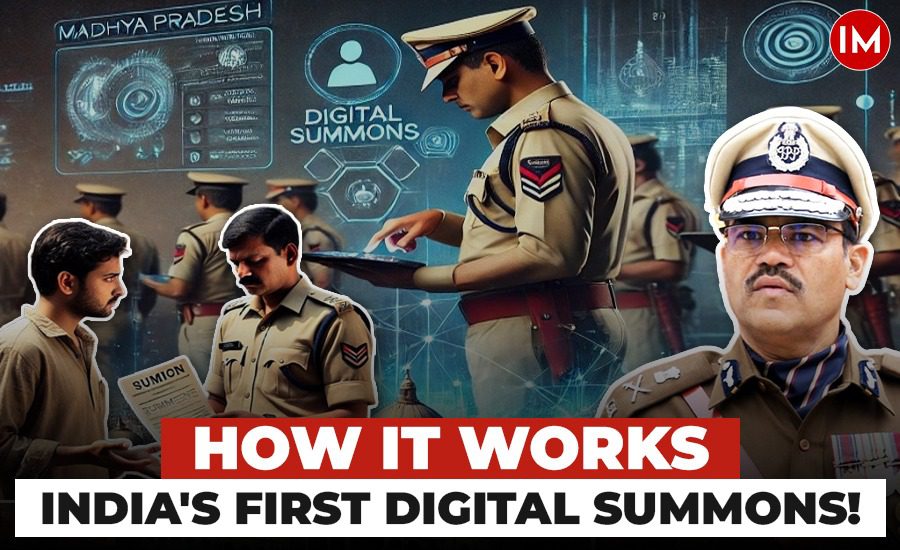
In a groundbreaking initiative, Madhya Pradesh (MP) has become the first state in India to formalize rules allowing for the digital issuance of summons and warrants. This pioneering step permits the use of electronic methods, including email, messaging apps like WhatsApp, and text messages, within its judicial processes. By validating summons and warrants sent through these digital channels, MP is taking significant strides into the digital age, modernizing its legal framework and enhancing accessibility for all.
However, developing this entire system and ensuring its smooth operation was no simple task. It required close collaboration between the police and the judiciary, involving a lengthy process that took about a year and a half. The functionalities were meticulously designed before the system officially came into effect.
The initiative began with a pilot project in Khandwa district, followed by trials in four additional districts. Once successful in those areas, the system was rolled out across all 55 districts of the state. This comprehensive process was structured in three phases: first, the creation of functional modules; second, the drafting of relevant laws; and finally, the implementation of the system. Through this meticulous approach, Madhya Pradesh has set a new standard for digital judicial processes in India.
A total of 22 rules have been established at the government level for this new system, outlining the process for issuing summons and warrants electronically and recognizing them as duly served. This initiative marks a significant step toward reforming the justice system, enhancing efficiency, and ensuring that legal processes keep pace with the digital age.
Indian Masterminds recently spoke with Chanchal Shekhar, a 1995 batch IPS officer and currently the Additional Director General of the State Crime Record Bureau, to gain deeper insights into the entire process and its implementation. During the conversation, he shared valuable perspectives on the challenges faced, the collaborative efforts involved, and the vision behind this transformative initiative.

THE BEGINNING
India’s new criminal laws, which took effect on July 1, 2024, have replaced the Indian Penal Code (IPC), the Code of Criminal Procedure (CrPC), and the Indian Evidence Act with three new legislations: the Bharatiya Nyaya Sanhita (BNS), which replaces the IPC; the Bharatiya Nagarik Suraksha Sanhita (BNSS), which replaces the CrPC; and the Bharatiya Sakshya Adhiniyam (BSA), which replaces the Indian Evidence Act. In crafting and implementing these new laws, careful consideration was given to their compatibility with modern technology and the digital era, ensuring that the work of law enforcement is streamlined while providing convenience to the public.
MP Police has taken this initiative even further by developing a system to send online summons directly to citizens at home, marking a significant achievement in the state’s judicial processes.
The groundwork for this system began in the summer of 2023, with collaboration between the police department and the judiciary.
The new criminal laws emphasize the speedy delivery of justice, incorporating various electronic processes, technical timelines, and efficiencies. Under this framework, there are 17 specific timelines designed to enhance the judicial process.
Traditionally, summons from the trial court – whether bailable or non-bailable – often arrived late, sometimes reaching the concerned police station on the last day or even after the deadline had passed. This backlog created numerous challenges when relying on the physical summons system.
Mr Shekhar said, “Unless a victim appears in court, the trial cannot proceed, even though the accused can still be tried in their absence. This highlights the importance of ensuring that victims receive timely information about their cases. Effective communication and notification systems are essential to keep victims informed, empowering them to participate in the judicial process and seek justice.”
THE PROCESS
To facilitate this initiative, the MP Police undertook extensive research and examined all aspects of the process, collaborating closely with the judiciary. MP Police and the Legal Department have conducted approximately 42 meetings with the NIC CIS headquarters in Pune, focusing on refining and optimizing the implementation of this groundbreaking system.
Justice Sanjeev Kalgaonkar of the Indore bench of the MP High Court played a crucial role in initiating this matter while serving in the Supreme Court registry. The pilot project was launched in Khandwa district, where Justice Kalgaonkar had previously served as District Judge.
Both the Court Information Management System (CIMS) and the Crime and Criminal Tracking Network and Systems (CCTNS) of the police were thoroughly analyzed to ensure seamless integration. This involved designing their applications, interfaces, and data tables. Throughout this process, an efficient team from the police department worked diligently within the National Informatics Centre (NIC) to bring the initiative to fruition.
Mr Shekhar said, “To facilitate this initiative, a matching legal framework was necessary, prompting the state government to draft rules for the online serving of summons. This process involved extensive discussions among officials from the police, judiciary, and Home Department. Once a draft was prepared, the state government approved it, making MP the first state to implement such a scheme.”

HOW THE SYSTEM WORKS?
This system operates based on the data contained in the police chargesheet. It collects and compiles essential information for future trials, including details about victims, accused individuals, witnesses, and experts, along with their mobile numbers. All this data is meticulously entered into the chargesheet.
Once the chargesheet is submitted to the court and a trial begins, the system automatically extracts relevant fields and generates a PDF of the summons, complete with all necessary details. This entire process occurs without the police needing to intervene; it’s fully automated, replacing the manual method that was previously used. After creating the PDF, it is sent to the relevant police station via the CCTNS.
The judge issuing the summons also digitally signs the warrant, ensuring a swift process. Within seconds, the summons reaches all police stations. Officers then send the summons to individuals with mobile numbers through WhatsApp. Under the new law, specifically in sections 73 and 74, electronic communication for serving summons is permitted.
For individuals without mobile numbers, the police still deliver the summons physically. In these cases, a screenshot of the delivery is taken, and an additional software tool is used to inform the court that the police have complied with the summons requirements. After serving the summons or warrant, the staff at the relevant police station will upload a picture of it to the CCTNS.
Under normal circumstances, the summons or warrant will be deemed valid unless the email bounces back; otherwise, it is considered served from the moment it is sent. “This innovative approach significantly enhances efficiency and reduces delays in the judicial process,” Mr Shekhar added.
IMPACT
The implementation of this system has made the process significantly easier and more efficient. To date, over 150,000 summons have been received by the police in digital form from the courts so far. Thanks to this innovative approach, the police have streamlined their operations, allowing them to perform their duties with greater promptness.
Mr Shekhar said, “The backlog that once plagued the police in handling such cases has effectively been eliminated, leading to a more responsive and efficient judicial process.”
The MP Home Department issued a gazette notification implementing this new rule on August 14 this year, with full state-wide implementation occurring on August 15. This initiative has garnered praise from other states, including Telangana, Rajasthan, and Karnataka, which are planning to adopt this process.