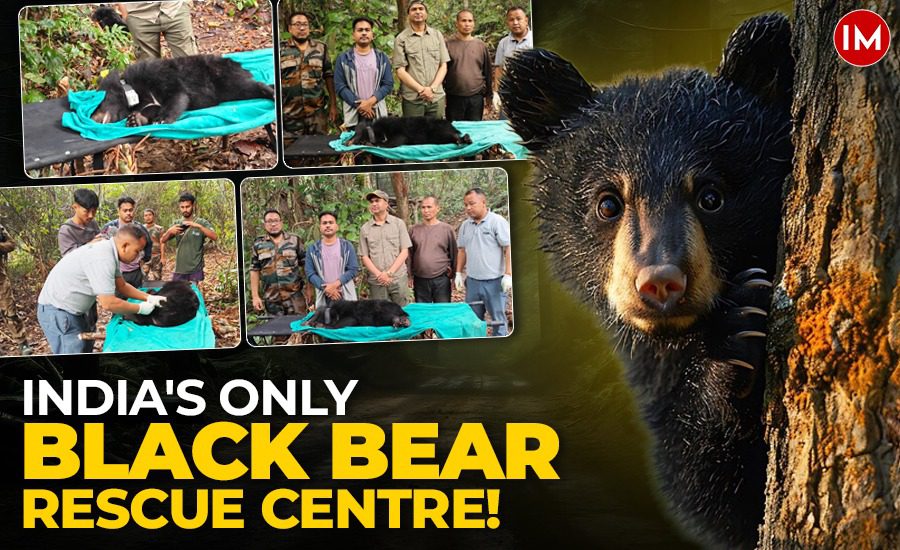
Amidst the verdant expanse of Arunachal Pradesh, Pakke Tiger Reserve stands as a significant site for wildlife protection, particularly for the vulnerable Asiatic black bear. The Centre for Bear Rehabilitation and Conservation (CBRC), a collaborative effort between the Department of Environment, Forests and Climate Change, the Wildlife Trust of India (WTI), and the reserve itself, has been quietly making remarkable strides since its inception in 2002. This initiative has successfully rescued and returned over 60 orphaned Asiatic black bear cubs to their natural habitat, marking a substantial contribution to the region’s biodiversity.
Beyond its focus on black bears, CBRC serves as the primary rescue centre for 23 districts of Arunachal Pradesh. Injured hornbills, Burmese pythons, and other displaced animals find refuge here, receiving necessary treatment before their eventual release back into the wild. This broad scope underscores the centre’s vital role in the regional ecosystem.
WHY BLACK BEARS?
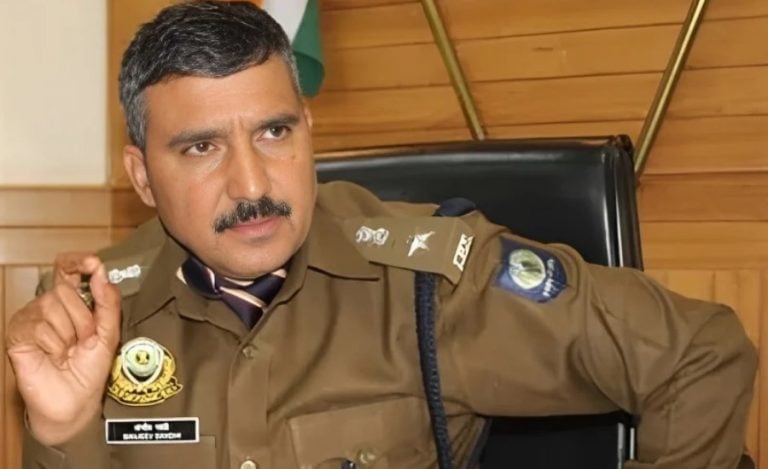
The specialisation in Asiatic black bears stems from a critical conservation need. As IFS Satyaprakash Singh (2015 batch, AGMUT Cadre) DFO, Pakke Tiger Reserve, explained to Indian Masterminds, “Hunting of Asiatic black bears may be occurring in some part of the country, likely driven by the illegal demand for their bile, which is used in traditional medicine in countries like China and Thailand.”
He further elaborates on the centre’s intervention: “Often, villagers would find these distressed cubs and bring them to us. These young ones are under immense stress, so our initial priority is providing them with treatment and care.”
A key learning for CBRC came early in its operations. Initial attempts involved keeping rescued cubs at the centre for extended periods. However, this led to the animals becoming reluctant to return to the wild. “That was a crucial lesson,” Mr Singh recounts. “We realised that prolonged stays in the centre hindered their natural instincts. This led us to develop the concept of ‘soft release’.”
A GRADUAL RETURN TO THE WILD
The soft release protocol involves a gradual transition back to the wild. After initial treatment, cubs are moved to large enclosures within the forest. Here, animal keepers take them on daily walks, covering distances of five to six kilometres. This crucial phase allows the young bears to familiarise themselves with the forest environment, learn to forage for food, and develop essential survival skills. “These cubs are entirely dependent on their mother’s milk initially,” Mr Singh points out. “Around five to six months of age, we begin training them to find their own food within the forest. This guided learning is vital for their successful reintegration.”
POST-RELEASE MONITORING
Once deemed capable, the bears are released. However, the monitoring doesn’t end there. Radio collars are fitted to track their movements, allowing the team to assess their adaptation to the wild and ensure they are not consistently returning to base camps. “For about six months, we diligently monitor their behaviour,” says Mr Singh. “We observe if they are integrating with other wildlife and whether they are able to sustain themselves independently. If a bear doesn’t return to our vicinity for a week or two, we consider it a successful rewilding.”
The selection of Pakke Tiger Reserve as the site for CBRC was strategic. Mr Singh emphasises the area’s ecological significance: “Pakke Tiger Reserve is truly a haven for wildlife in Arunachal Pradesh. It offers a highly protected and secure environment.” He also highlights the crucial support from local communities. “We receive excellent cooperation from the people living around the reserve. They are increasingly aware of the importance of wildlife conservation.”
A COLLABORATIVE CONSERVATION EFFORT
Over the years, CBRC has not only refined its rehabilitation techniques but has also fostered a strong collaborative network. “The success of CBRC is not solely a departmental effort,” Mr Singh asserts. “It thrives on the close collaboration between the Wildlife Trust of India and the local communities.” This partnership extends to well-trained staff, including members of the Special Target Protection Force (STPF). Community initiatives like the Hornbill Nest Adoption Program further contribute to the growing awareness and support for wildlife conservation in the region. “People are understanding that protecting wild animals can also boost ecotourism in their areas,” Mr Singh notes.
CBRC stands out as the first dedicated rescue centre for Asiatic black bears in India, pioneering the soft release model. This approach distinguishes it from other wildlife rescue centres across the country. If an orphaned Asiatic black bear is found anywhere in India, it is likely to be brought to our centre. They serve not just Arunachal Pradesh but other northeastern states as well, applying the same carefully developed rehabilitation process.
ASSESSING IMPACT
Looking ahead, CBRC continues to employ innovative techniques. Radio telemetry remains a vital tool for post-release monitoring. Additionally, the Wildlife Trust of India has initiated a long-term survey within Pakke Tiger Reserve to assess the impact of CBRC’s efforts on the Asiatic black bear population. “This survey, now in its second year, aims to provide concrete data on the project’s success,” Mr Singh states. “We anticipate that in a couple of years, we will have a clearer picture of how the Asiatic black bear population density has changed over the past two decades.”
The journey of CBRC has been one of continuous learning and adaptation. From initial challenges in reintroducing bears to the wild to building trust with local communities, the centre’s evolution reflects a deep commitment to conservation. As Satyaprakash Singh aptly puts it, “This is a long-term project, spanning over two decades. The credit for its achievements belongs to all – the dedicated veterinarians, the committed field directors and staff, and the supportive community members living around Pakke Tiger Reserve. It’s a collective endeavour.”